ALLPCB


Introduction
Rigid printed circuit boards form the backbone of many medical devices, providing stable platforms for complex electronics that demand unwavering reliability. In applications ranging from diagnostic imaging systems to implantable devices, rigid PCBs ensure that electrical signals transmit accurately without compromise. Safety remains paramount, as any failure could lead to life-threatening consequences, making rigid PCB medical safety a critical focus for engineers. Performance factors, such as thermal management and signal integrity, directly influence device efficacy and longevity. Engineers designing for healthcare must prioritize rigid PCB medical standards to meet regulatory expectations and patient needs. This article explores how rigid PCBs deliver both safety and high performance in medical environments.

Rigid PCB medical applications span pacemakers, ventilators, and patient monitors, where mechanical stability supports dense component mounting. Unlike flexible circuits, rigid boards excel in high-layer-count designs required for advanced signal processing. As medical technology advances, the demand for robust rigid PCBs grows, emphasizing the need for precise engineering.
What Are Rigid PCBs and Why Do They Matter in Medical Devices?
Rigid PCBs consist of a solid substrate, typically reinforced with glass fibers in epoxy resin, that resists bending under mechanical stress or thermal cycling. This construction allows for multilayer configurations, vias, and traces that handle high-density interconnects essential for modern electronics. In medical devices, rigid PCBs provide the structural integrity needed for housing microcontrollers, sensors, and power circuits in compact enclosures. Their inability to flex ensures consistent electrical performance over time, which is vital for devices exposed to body fluids or sterilization processes.
The relevance of rigid PCB medical applications becomes clear when considering devices like ultrasound machines or infusion pumps. These systems require boards that maintain dimensional stability during operation, preventing issues like trace cracking or delamination. Engineers select rigid PCBs for their ability to support through-hole and surface-mount components reliably. Without this rigidity, vibrations from portable monitors or thermal expansions in surgical tools could degrade functionality.
Rigid PCB medical performance hinges on material properties that withstand harsh conditions, such as autoclave sterilization or prolonged humidity exposure. Factory insights reveal that rigid boards outperform flex variants in environments demanding high mechanical strength. Compliance with established specifications further underscores their importance, guiding design choices for long-term reliability.
Key Safety Considerations for Rigid PCBs in Medical Devices
Safety in rigid PCB medical applications starts with preventing electrical hazards, such as shorts or arcing, through precise trace spacing and solder mask integrity. Medical devices operate in close proximity to the human body, so insulation resistance must exceed minimum thresholds to avoid leakage currents. Mechanical robustness guards against warpage that could misalign components during assembly or use. Engineers evaluate board thickness and copper weight to ensure they endure handling stresses without fracturing.
Rigid PCB medical safety also addresses environmental resilience, including resistance to chemicals used in cleaning protocols. Delamination risks arise from moisture absorption, necessitating controlled baking processes before assembly. Vias and plated-through holes require uniform plating to maintain barrel integrity under thermal shock. Visual and automated optical inspections verify these features, catching defects early.
Standards like IPC-6012 define qualification criteria for rigid boards, specifying cleanliness and ionic contamination limits. These guidelines ensure that boards meet high-reliability class requirements suitable for medical use. Non-conformances, such as voids in plating, pose risks to patient safety, demanding rigorous process controls.

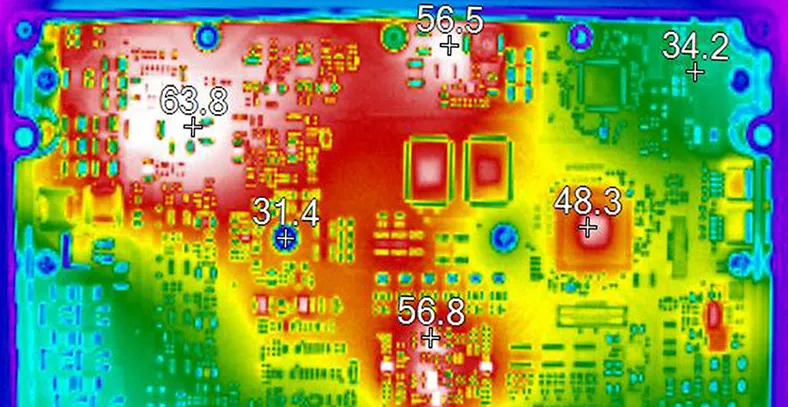
Thermal safety considerations involve managing heat dissipation to prevent hotspots that could damage nearby tissues in implantable applications. Coefficient of thermal expansion mismatches between layers must stay within tolerances to avoid cracking during soldering. Engineers model these effects using finite element analysis for proactive design.
Optimizing Performance of Rigid PCBs in Medical Devices
Performance in rigid PCB medical applications relies on low-loss dielectrics that preserve signal fidelity in high-frequency diagnostics. Trace impedance control minimizes reflections, crucial for data acquisition in ECG monitors. Power planes distribute current evenly, reducing voltage drops across dense circuits. Multilayer stackups enable shielding layers that suppress electromagnetic interference from nearby motors or RF signals.
Rigid PCB medical performance extends to mechanical endurance, where boards face cyclic loading from device portability. High glass transition temperature materials resist softening during elevated temperatures. Solder joint reliability improves with controlled reflow profiles, ensuring voids remain below acceptable levels. Engineers prioritize via stub minimization for better return loss in gigahertz-range signals.
Testing per IPC-TM-650 methods validates thermal cycling and vibration resistance, simulating real-world medical scenarios. These evaluations confirm that boards maintain electrical continuity after thousands of cycles. Signal integrity simulations guide trace routing, optimizing eye diagrams for compliance.
Related Reading: Decoding Medical PCB Certifications: A Comprehensive Guide
Reliability under humidity demands bake-out procedures to remove absorbed moisture, preventing popcorning during reflow. Factory-driven processes incorporate bake stability tests, ensuring performance consistency. These steps elevate rigid PCBs to meet demanding medical operational profiles.
Best Practices for Designing and Manufacturing Rigid PCBs for Medical Devices
Design best practices begin with stackup optimization, balancing layer count against thickness for mechanical stability. Controlled impedance traces require precise dielectric thickness and copper etch control. Engineers incorporate test points for in-circuit verification without compromising board space. Fiducials aid alignment during automated assembly, reducing placement errors.
Material selection favors laminates with low Z-axis expansion to match component leads. High-reliability finishes, such as electroless nickel immersion gold, enhance solderability and corrosion resistance. Design rules enforce minimum annular ring sizes around vias to bolster mechanical strength.
Manufacturing adheres to IPC-A-600 acceptability criteria, inspecting for defects like measling or crazing in the base material. Automated optical inspection scans for opens, shorts, and foreign objects. X-ray analysis verifies hidden solder joints and barrel fills. Electrical testing confirms netlist integrity post-fabrication.
Assembly processes emphasize ESD controls and cleanroom environments to prevent contamination. Reflow ovens follow profiles tuned for lead-free solders, minimizing tombstoning. Post-assembly bake stabilizes the board for subsequent encapsulation.
JEDEC guidelines on moisture sensitivity classification guide handling, with MSL ratings dictating storage conditions. These practices ensure rigid PCB medical standards are met from design through delivery.
Related Reading: Medical PCB Solutions: From Design and Manufacturing to Assembly
Common Challenges and Troubleshooting Insights
Challenges in rigid PCB medical applications include bow and twist exceeding 0.75% of panel dimension, often from asymmetric layering. Troubleshooting involves symmetric stackups and constrained lamination cycles. Ionic residues post-cleaning can cause dendrite growth, addressed by deionized water rinses and no-clean fluxes.
Another issue is via cracking under thermal stress, mitigated by tenting solder mask over vias and using blind vias where possible. Engineers troubleshoot via capacitance tests to detect plating anomalies early.
Conclusion
Rigid PCBs deliver essential safety and performance in medical devices through robust design, manufacturing controls, and adherence to standards. Engineers achieve rigid PCB medical safety via defect-free fabrication and environmental testing. High performance emerges from optimized materials and signal management. By following best practices, teams ensure reliable operation in critical applications. Prioritizing these elements upholds patient trust and device efficacy.
FAQs
Q1: What role do rigid PCB medical standards play in device certification?
A1: Rigid PCB medical standards, such as those from IPC, guide qualification for high-reliability classes used in life-support equipment. They specify criteria for plating integrity, solderability, and contamination control, ensuring boards withstand sterilization and thermal stresses. Compliance streamlines regulatory approvals, reducing risks of field failures. Engineers integrate these from design to verify safety margins.
Q2: How do you ensure rigid PCB medical safety during manufacturing?
A2: Rigid PCB medical safety involves process controls like bake stability and ionic cleanliness testing per IPC guidelines. Automated inspections detect warpage, delamination, or voids early. ESD protection and cleanroom handling prevent contamination. Final electrical tests confirm isolation resistance. These steps minimize hazards in implantable or diagnostic applications.
Q3: What enhances rigid PCB medical performance in high-frequency devices?
A3: Rigid PCB medical performance improves with impedance-controlled traces and low-Dk materials to preserve signal integrity. Multilayer shielding reduces EMI in imaging systems. Thermal vias and plane cutouts manage heat. Vibration testing validates endurance. Stackup simulations predict behaviors under load.
Q4: Why choose rigid PCBs for rigid PCB medical applications over flex circuits?
A4: Rigid PCBs suit rigid PCB medical applications needing high layer counts and mechanical stability, like in MRI controls or pumps. They support heavy components without flex fatigue. Cost-effective for volume production. Flex circuits complement but lack rigidity for dense, stable interconnects. Standards favor rigid for Class 3 reliability.