ALLPCB


In the world of electronics, managing heat in printed circuit boards (PCBs) is crucial for ensuring performance and longevity. One powerful strategy for effective PCB thermal management is leveraging inner layer copper thickness. But how does this work, and why is it so important? Simply put, thicker copper layers inside a PCB can act as a heat spreader, pulling heat away from critical components and distributing it across the board to prevent overheating. In this blog, we’ll dive deep into how inner layer copper aids heat dissipation, explore its role alongside thermal vias and other PCB cooling techniques, and provide actionable tips for optimizing your designs.
Why PCB Thermal Management Matters
As electronic devices become smaller and more powerful, the heat generated by components like processors, power transistors, and LEDs increases significantly. Without proper heat dissipation, this thermal energy can degrade performance, cause component failure, or even lead to safety hazards. Effective PCB thermal management ensures that heat is efficiently removed or redistributed, maintaining optimal operating temperatures—often below 85°C for most components, though this varies by application.
Poor thermal management can result in thermal runaway, where rising temperatures cause further heat generation, or in reduced lifespan of components due to thermal stress. For engineers designing high-power or compact systems, mastering PCB cooling techniques is not just a bonus—it’s a necessity.
The Role of Inner Layer Copper in Heat Dissipation
Copper is a fantastic conductor of heat, with a thermal conductivity of approximately 400 W/m·K, far surpassing materials like FR-4 (the common PCB substrate) at around 0.3 W/m·K. In multilayer PCBs, inner copper layers can serve as heat spreaders, pulling thermal energy away from hot components on the surface and distributing it across a larger area. This reduces localized hot spots and helps maintain a more uniform temperature across the board.
The thickness of these inner copper layers plays a critical role. Standard copper thickness in PCBs is often 1 oz/ft2 (about 35 micrometers), but increasing this to 2 oz/ft2 (70 micrometers) or even 3 oz/ft2 (105 micrometers) can significantly enhance heat dissipation. Thicker copper provides a lower thermal resistance path, allowing heat to flow more easily to areas where it can be dissipated, such as through thermal vias or external heat sinks.
For example, in a power electronics application with a surface-mounted MOSFET generating 10W of heat, a thicker inner copper layer can reduce the junction temperature by several degrees Celsius compared to a standard 1 oz layer. This might mean the difference between operating safely at 70°C versus risking failure at 90°C.
How Inner Layer Copper Thickness Impacts Thermal Performance
The relationship between copper thickness and thermal performance is straightforward: thicker copper means better heat conduction. However, there are practical limits and trade-offs to consider. Let’s break this down:
- Increased Heat Spreading: A 2 oz copper layer can spread heat over a larger area more effectively than a 1 oz layer, reducing the temperature rise at the heat source by up to 20-30%, depending on the board layout and heat load.
- Reduced Thermal Resistance: Thermal resistance decreases as copper thickness increases. For instance, doubling the copper thickness from 1 oz to 2 oz can halve the thermal resistance in the plane of the layer, allowing heat to travel faster to cooling mechanisms.
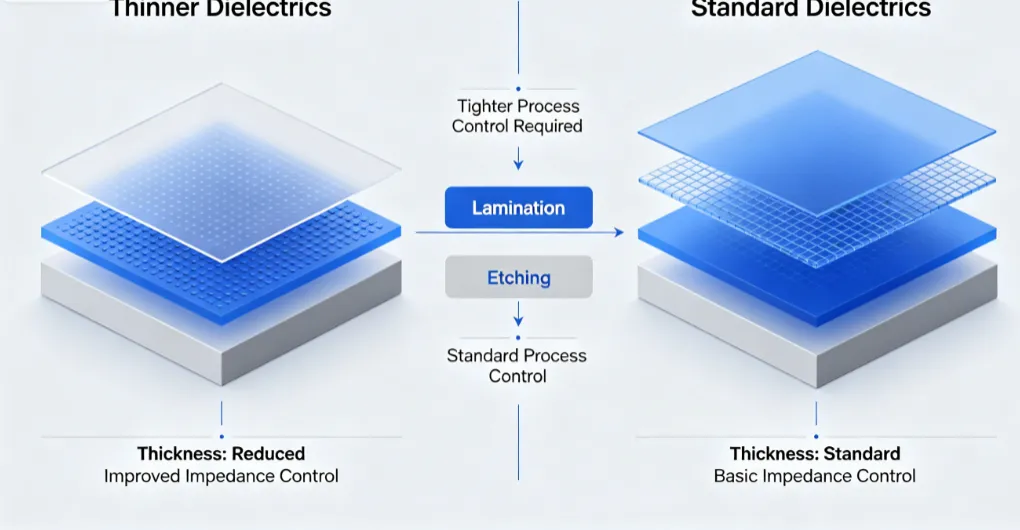
- Cost and Manufacturing Constraints: Thicker copper layers increase material costs and can complicate manufacturing, especially in fine-pitch designs where etching precision is critical. Balancing thermal needs with budget and design constraints is key.
Combining Inner Layer Copper with Thermal Vias for Maximum Cooling
While inner layer copper is excellent for spreading heat, it often needs to work in tandem with other PCB cooling techniques like thermal vias. Thermal vias are small, copper-plated holes that connect surface layers to inner layers or to a heat sink on the opposite side of the board. They provide a low-resistance path for heat to travel vertically through the PCB, complementing the horizontal heat spreading of inner copper layers.
For optimal results, place thermal vias directly under or near heat-generating components, such as power ICs or LEDs. A common guideline is to use a grid of vias with a diameter of 0.3-0.5 mm and a spacing of 1-1.5 mm. Filling these vias with conductive epoxy or copper can further reduce thermal resistance, though this increases manufacturing complexity.
In a typical design, combining a 2 oz inner copper layer with an array of thermal vias can reduce component temperatures by up to 15-25°C compared to a design with neither. The inner copper spreads heat across the board, while the vias channel it to a larger heat sink or ground plane, creating a highly efficient cooling system.
Other PCB Cooling Techniques to Enhance Thermal Management
While inner layer copper and thermal vias are powerful tools, they’re not the only options for PCB thermal management. Here are additional techniques that can complement your design:
1. Copper Pours and Ground Planes
Large copper pours or dedicated ground planes on surface layers act as heat sinks, absorbing and dissipating heat from nearby components. Connecting these pours to inner copper layers via thermal vias creates a continuous heat path, enhancing overall dissipation.
2. Heat Sinks and Thermal Pads
Attaching external heat sinks to high-power components, often with thermal pads or compounds (thermal conductivity around 1-5 W/m·K), can draw heat away from the PCB entirely. Ensure the heat sink is thermally connected to inner copper layers for maximum effect.
3. Component Placement and Board Layout
Strategic placement of heat-generating components can prevent thermal overlap. Spread out high-power parts and place them near board edges or ventilation areas to allow natural convection. Avoid clustering hot components in one area, as this creates concentrated hot spots.
4. Advanced Materials
Consider using substrates with higher thermal conductivity, such as metal-core PCBs (MCPCBs), especially for LED or power applications. These boards often have a thermal conductivity of 1-3 W/m·K, significantly better than standard FR-4, and work well with thick inner copper layers.
Practical Tips for Optimizing Inner Layer Copper in Your PCB Design
Now that we’ve covered the theory behind inner layer copper and PCB cooling, let’s look at actionable steps to apply these concepts in your designs:
- Assess Heat Loads Early: Use thermal simulation software to identify hot spots and estimate heat dissipation needs before finalizing your design. Aim to keep critical components below their maximum operating temperature (often 85-100°C).
- Choose the Right Copper Thickness: For moderate heat loads (1-5W per component), a 1-2 oz inner layer may suffice. For high-power applications (above 5W), consider 3 oz or higher, if manufacturing constraints allow.
- Integrate Thermal Vias: Place vias under heat-generating components and connect them to thick inner copper layers or ground planes. A grid pattern often works best for uniform heat transfer.
- Balance Cost and Performance: Thicker copper and additional vias increase costs, so prioritize them in areas with the highest thermal stress. Use standard thickness elsewhere to save on expenses.
- Test and Validate: After prototyping, use thermal imaging or temperature probes to measure actual board temperatures under load. Adjust copper thickness or via placement if needed to meet thermal goals.
Challenges and Limitations of Using Thicker Inner Copper Layers
While thicker inner copper layers offer clear benefits for heat dissipation, they come with challenges that engineers must address:
- Manufacturing Complexity: Thicker copper can be harder to etch precisely, especially for fine traces or small vias, potentially leading to higher defect rates or costs.
- Board Weight and Thickness: More copper adds weight and may increase the overall thickness of the PCB, which can be a concern in compact devices.
- Signal Integrity Issues: In high-speed designs, thicker copper can affect impedance control, requiring careful layer stack-up planning to avoid signal degradation.
To mitigate these issues, work closely with your PCB manufacturer to ensure the chosen copper thickness aligns with both thermal and electrical requirements. Simulations can also help predict potential signal integrity problems before production.
Conclusion: Mastering PCB Thermal Management with Inner Layer Copper
Effective PCB thermal management is essential for building reliable, high-performance electronics, and leveraging inner layer copper thickness is a proven strategy to achieve this. By using thicker copper layers, you can spread heat more efficiently across the board, reducing hot spots and protecting critical components. When combined with thermal vias and other PCB cooling techniques like heat sinks or optimized layouts, this approach creates a robust system for heat dissipation.
Remember to balance thermal needs with practical constraints like cost and manufacturability. Start by assessing your design’s heat load, choose the appropriate copper thickness, integrate complementary cooling methods, and validate your results with testing. With these steps, you can ensure your PCBs stay cool under pressure, delivering consistent performance and a longer lifespan for your electronic devices.
At ALLPCB, we’re committed to helping engineers tackle thermal challenges with innovative solutions and expert support. Whether you’re designing for power electronics, LED systems, or compact consumer devices, optimizing inner layer copper can be a game-changer for your PCB thermal management strategy.