 ALLPCB


Introduction
Polyimide PCBs stand out in the electronics industry for their exceptional thermal stability and flexibility, making them ideal for applications in aerospace, automotive, and medical devices where circuits must endure extreme conditions. These flexible circuits, often based on polyimide substrates, face unique challenges such as repeated bending, high temperatures, and exposure to harsh chemicals or moisture. Conformal coating emerges as a critical protection layer, a thin polymeric film that conforms to the contours of the PCB assembly to shield it from environmental stressors without adding significant weight or stiffness. Polyimide PCB conformal coating enhances reliability by preventing issues like corrosion, short circuits, and mechanical fatigue. As electric engineers design for demanding environments, understanding flexible PCB protection through conformal coating becomes essential for ensuring long-term performance. This article explores the principles, materials, application methods, and best practices tailored to polyimide-based flexible circuits.
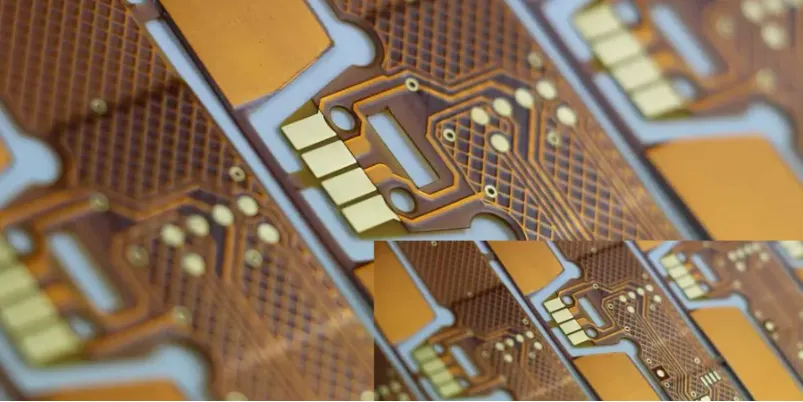
What Is Conformal Coating and Why It Matters for Polyimide PCBs
Conformal coating refers to a protective dielectric layer applied to printed circuit boards to safeguard components and traces from moisture, dust, chemicals, vibration, and thermal extremes. For polyimide PCBs, which excel in high-flexure scenarios due to their inherent ductility and temperature resistance up to demanding operational limits, this coating adds an extra barrier against degradation. Without proper flexible PCB protection, polyimide circuits risk ionic contamination from humidity or mechanical wear from repeated flexing, leading to failures in dynamic applications. Industry standards like IPC-CC-830 outline qualification requirements for these coatings, ensuring they maintain insulation properties under stress. The relevance intensifies in sectors where downtime is costly, as conformal coating extends service life and complies with reliability benchmarks. Engineers must prioritize it to meet performance specs in environments involving thermal cycling or chemical exposure.
Polyimide substrates inherently resist warping and delamination better than other flex materials, but unprotected surfaces remain vulnerable to creepage and clearance failures. Conformal coating mitigates these by providing a uniform barrier that flexes with the substrate, preserving signal integrity. Its importance grows with miniaturization trends, where trace spacing narrows and protection becomes paramount for preventing arcing or electromigration.
Technical Principles of Conformal Coating on Polyimide PCBs
The mechanism of conformal coating involves forming a pinhole-free film that adheres to the PCB surface, components, and solder joints while allowing heat dissipation. On polyimide PCBs, the coating must accommodate the substrate's low modulus of elasticity to avoid stress concentrations during bending. This flexibility prevents microcracks that could propagate under cyclic loading, a common failure mode in unprotected flexible circuits. The coating's dielectric strength, typically evaluated per IPC-CC-830, ensures it withstands voltage gradients without breakdown, crucial for high-density polyimide designs. Thermal expansion mismatch between coating and polyimide is minimized by selecting materials with compatible coefficients.
Protection against moisture ingress follows Fick's laws of diffusion, where the coating's low permeability blocks water vapor transmission. In demanding environments, this prevents hydrolysis of solder joints or corrosion of copper traces. Vibration damping occurs through the coating's viscoelastic properties, reducing fatigue in flex zones. For polyimide PCB conformal coating, engineers consider cure mechanisms—solvent evaporation, UV, or thermal—to achieve optimal cross-linking without substrate damage.
Conformal Coating Materials Suitable for Flexible PCB Protection
Selecting conformal coating materials for polyimide PCBs requires balancing flexibility, adhesion, and environmental resistance. Acrylic resins offer easy application and rework but provide moderate flexibility, suiting less dynamic uses. Urethane-based coatings excel in abrasion resistance and flexibility, ideal for polyimide circuits undergoing frequent bending as they elongate without cracking. Silicone materials provide superior high-temperature performance and low modulus, maintaining protection during thermal shocks common in automotive or aerospace applications.
Parylene, deposited via vapor phase, delivers unparalleled uniformity and pinhole-free coverage, though it demands specialized equipment. Each type undergoes qualification per IPC standards to verify fluorescence, adhesion, and dielectric properties. For protecting polyimide PCB assemblies, engineers favor urethanes or silicones to match the substrate's compliance, avoiding brittleness that could compromise flex life. Compatibility testing ensures no adverse reactions with polyimide's imide groups.
- Acrylic: Fast cure, reworkable; moderate flex, general use.
- Urethane: Tough, flexible, chemical resistant; suited for high flex cycles.
- Silicone: High temperature capability, low stress; for extreme environments.
- Parylene: Highly conformal and thin; precision, uniform coverage.
This list aids material selection based on application demands.
Related Reading: Choosing the Right Conformal Coating Material: A Comprehensive Guide for Engineers
Conformal Coating Application Methods for Polyimide PCBs
Proper surface preparation precedes all conformal coating application on polyimide PCBs, involving ultrasonic cleaning to remove flux residues and achieve low ionic contamination levels. Spray coating suits high-volume production, delivering even coverage with atomized droplets that conform to flex contours without pooling. For intricate polyimide designs, selective coating via robotic dispensing targets critical areas, minimizing masking needs. Dip coating immerses the assembly for full coverage but requires controlled withdrawal speeds to prevent drips on flexible tails.
Vapor deposition for parylene ensures isotropic protection ideal for tight geometries in polyimide circuits. Thickness control, typically 25 to 127 microns, prevents bridging or insulation failures. Post-application curing varies by material—air dry for acrylics, heat for urethanes—to achieve full properties. Masking connectors and test points maintains accessibility while enabling flexible PCB protection.
Challenges arise from polyimide's smooth surface, potentially reducing adhesion; plasma treatment enhances wettability. Factory processes integrate bake steps to volatilize solvents fully.
Related Reading: Conformal Coating: Protecting PCBs from Environmental Damage
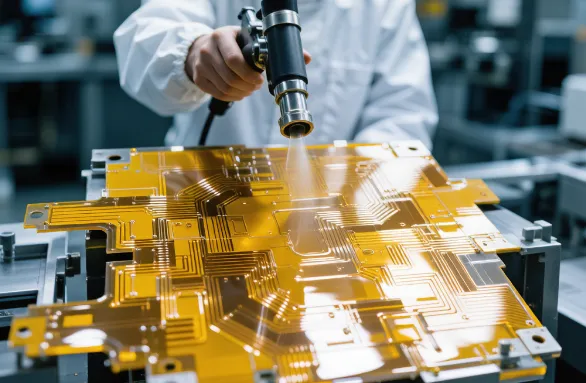
Best Practices for Protecting Polyimide PCBs with Conformal Coating
Adhere to standardized procedures for reliable polyimide PCB conformal coating. Pre-coat inspection verifies cleanliness using ion chromatography, aligning with IPC guidelines. Apply in controlled environments to avoid particulate contamination, targeting uniform thickness via automated systems. Post-cure verification includes UV inspection for coverage and dye penetrant for defects.
Flex testing post-coating simulates end-use bending to confirm no delamination, per IPC-6013 for flexible board qualification. Documentation of process parameters ensures traceability. Rework involves solvent stripping or abrasion, followed by reapplication.
Quality control emphasizes edge coverage and holiday detection to eliminate voids.
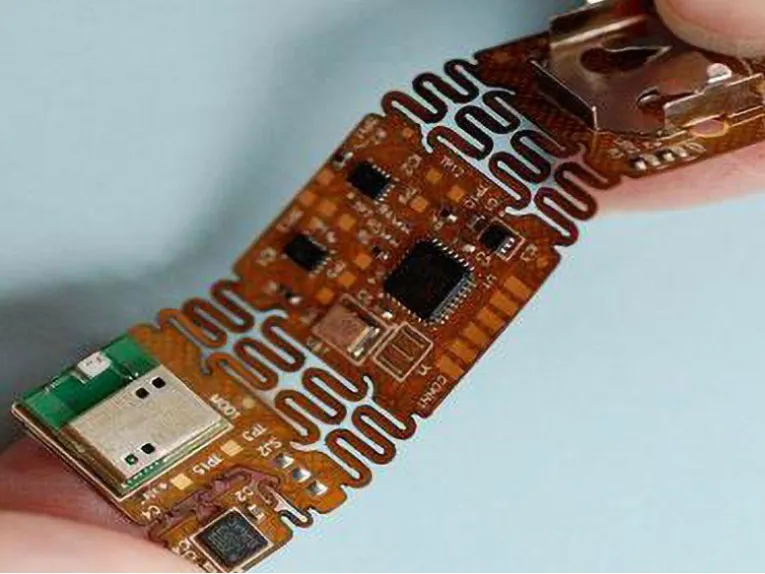
Common Challenges and Troubleshooting in Flexible PCB Protection
Cracking during flexure signals overly rigid coatings; switch to silicone or urethane alternatives. Poor adhesion from residues causes delamination—enhance with plasma activation. Bubbles from trapped air in spray applications resolve via vacuum degassing pre-coat.
Thickness variations lead to hotspots; calibrate equipment precisely. Thermal shock failures indicate cure incompleteness; extend bake times. Troubleshooting logs guide iterative improvements in conformal coating application.
Conclusion
Conformal coating fortifies polyimide PCBs against demanding environments, ensuring flexible circuits deliver reliable performance. By selecting appropriate materials, mastering application techniques, and following standards like IPC-CC-830 and IPC-6013, engineers achieve robust protection. Prioritizing these practices minimizes failures and extends operational life in critical applications.
FAQs
Q1: What is polyimide PCB conformal coating and its primary benefits?
A1: Polyimide PCB conformal coating applies a thin protective polymer film to flexible circuits, shielding against moisture, chemicals, vibration, and temperature extremes. It maintains flexibility to prevent cracking during bending while enhancing dielectric strength and corrosion resistance. This extends reliability in aerospace and automotive uses without adding bulk. Standards like IPC-CC-830 guide material qualification for consistent performance.
Q2: Why is flexible PCB protection crucial for polyimide substrates?
A2: Flexible PCB protection via conformal coating prevents environmental degradation on polyimide boards, which endure high flex cycles but remain susceptible to ionic migration and mechanical wear. It blocks contaminants that could cause shorts or trace corrosion in dynamic settings. Proper selection ensures compliance with bend radii and thermal specs, boosting longevity. Factory insights emphasize pre-cleaning for adhesion.
Q3: What conformal coating materials work best for protecting polyimide PCBs?
A3: Urethane and silicone conformal coating materials suit protecting polyimide PCBs due to their elasticity and resistance to flex-induced stress. Acrylics offer reworkability for prototypes, while parylene provides uniform thin films. Match properties to application per IPC-CC-830 to avoid brittleness. Test for adhesion on polyimide surfaces.
Q4: What are key steps in conformal coating application for flexible circuits?
A4: Conformal coating application for flexible circuits starts with thorough cleaning, followed by masking and precise spraying or dipping for even coverage. Cure fully to develop properties, then inspect for voids using UV light. Control thickness to 25-127 microns to preserve flex. Troubleshoot adhesion issues with surface activation.
References
IPC-CC-830C - Qualification and Performance Specification for Electrical Insulating Compounds for Printed Wiring Boards. IPC
IPC-A-610H - Acceptability of Electronic Assemblies. IPC
IPC-6013E - Qualification and Performance Specification for Flexible and Rigid-Flex Printed Boards. IPC





