ALLPCB


Introduction
Lead-free HASL remains a widely used surface finish for printed circuit boards because it delivers excellent solderability at a reasonable cost. In this process, flux plays a central role by preparing copper surfaces for molten solder application. Without the correct flux formulation, wetting becomes inconsistent, leading to defects such as dewetting or excessive intermetallic growth. Engineers must therefore understand how different solder flux types interact with lead-free alloys and board materials. Selecting an appropriate lead-free HASL flux directly influences yield, reliability, and downstream assembly performance.
What Is Flux and Why It Matters in Lead-Free HASL
Flux is a chemical agent that removes oxides from metal surfaces, lowers surface tension, and promotes uniform solder wetting during hot air solder leveling. In lead-free HASL, operating temperatures typically exceed those of traditional tin-lead processes, placing greater demands on flux thermal stability and activity. Solder flux types range from low-activity rosin-based materials to higher-activity organic formulations, each offering distinct residue characteristics and cleaning requirements. No-clean flux options have gained popularity because they leave minimal residues that do not require post-process cleaning while still supporting reliable soldering. Proper flux selection helps maintain consistent coating thickness and surface planarity across panels.
Technical Principles of Flux Action
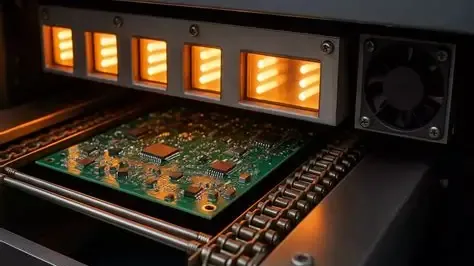
Flux functions through a combination of chemical reduction and physical effects. Active compounds within the formulation dissolve existing oxides on copper traces and pads, exposing clean metal for solder bonding. At the same time, flux reduces the surface tension of molten solder, allowing it to flow evenly into vias and across fine-pitch features. Flux activity level, classified under industry standards such as those outlined in IPC J-STD-004, determines how aggressively oxides are removed without causing excessive corrosion or residue issues. Higher activity fluxes perform well on oxidized or aged copper but may leave more residues, while low-activity variants suit cleaner surfaces and no-clean processes. Thermal decomposition behavior also matters because lead-free solders require prolonged exposure to elevated temperatures.
Lead-free alloys such as SnCu or SnAgCu exhibit different wetting dynamics compared with tin-lead solders. Flux must therefore maintain effectiveness throughout the preheat and immersion stages without boiling off prematurely. Residue chemistry after soldering influences long-term insulation resistance and electromigration risk, making formulation balance critical for high-reliability applications.
Practical Guidance for Selecting the Right Formulation
Engineers begin by matching flux activity to the expected surface condition of incoming panels and the specific lead-free alloy in use. Low-residue no-clean flux suits high-volume production where cleaning equipment is limited or environmental regulations restrict solvent use. Water-soluble fluxes offer stronger oxide removal but require thorough rinsing to prevent corrosion. Compatibility with board laminate and solder mask materials must also be verified to avoid delamination or mask degradation during thermal cycling.
Process parameters such as flux solids content, application method, and preheat profile further guide selection. Consistent flux deposition thickness ensures uniform activation across the entire panel. When switching between different lead-free HASL flux products, trial runs on representative boards help confirm wetting performance and residue levels before full production. Documentation of flux classification according to established standards supports traceability and quality audits.
Troubleshooting Common Flux-Related Issues
Inconsistent wetting often traces back to insufficient flux activity or improper application coverage. Increasing flux solids percentage or switching to a medium-activity formulation frequently resolves the problem without introducing excessive residues. Solder balling or bridging may indicate overly aggressive flux that generates gas during reflow; adjusting preheat ramp rates or selecting a lower-activity no-clean flux can mitigate these defects. Post-HASL residue analysis helps identify whether cleaning is required or if a true no-clean flux meets product specifications.
Conclusion
Flux selection remains one of the most influential variables in achieving reliable lead-free HASL finishes. Understanding the interplay between flux activity, alloy composition, and process conditions enables engineers to optimize wetting while controlling residues. Adherence to recognized classification standards ensures consistent quality across production lots. Careful evaluation of available solder flux types, including no-clean flux options, supports both manufacturing efficiency and long-term board reliability.
FAQs
Q1: What role does flux activity play in lead-free HASL soldering?
A1: Flux activity determines the effectiveness of oxide removal and wetting promotion during the high-temperature lead-free HASL process. Higher activity levels handle more challenging surfaces but may require residue management, while lower activity supports no-clean flux strategies that minimize post-process cleaning.
Q2: How do different solder flux types affect HASL outcomes?
A2: Rosin, resin, organic, and inorganic flux types each provide varying degrees of activation and residue characteristics. Organic-based formulations often balance performance and cleanability for lead-free HASL, whereas rosin-based options frequently align with no-clean flux preferences in controlled environments.
Q3: When should engineers choose no-clean flux for lead-free HASL?
A3: No-clean flux is preferred when production volumes are high and cleaning steps must be eliminated to reduce cost or meet environmental goals. It delivers adequate activity for most copper surfaces while leaving residues that do not compromise electrical performance or require additional processing.
Q4: What standards guide flux selection for lead-free HASL applications?
A4: IPC J-STD-004 provides the primary classification system for soldering fluxes based on composition, activity, and halide content. Following this standard helps ensure the chosen lead-free HASL flux meets performance and reliability expectations across different board designs.
References
IPC J-STD-004C — Requirements for Soldering Fluxes. IPC
IPC-6012E — Qualification and Performance Specification for Rigid Printed Boards. IPC, 2017