ALLPCB


Overview
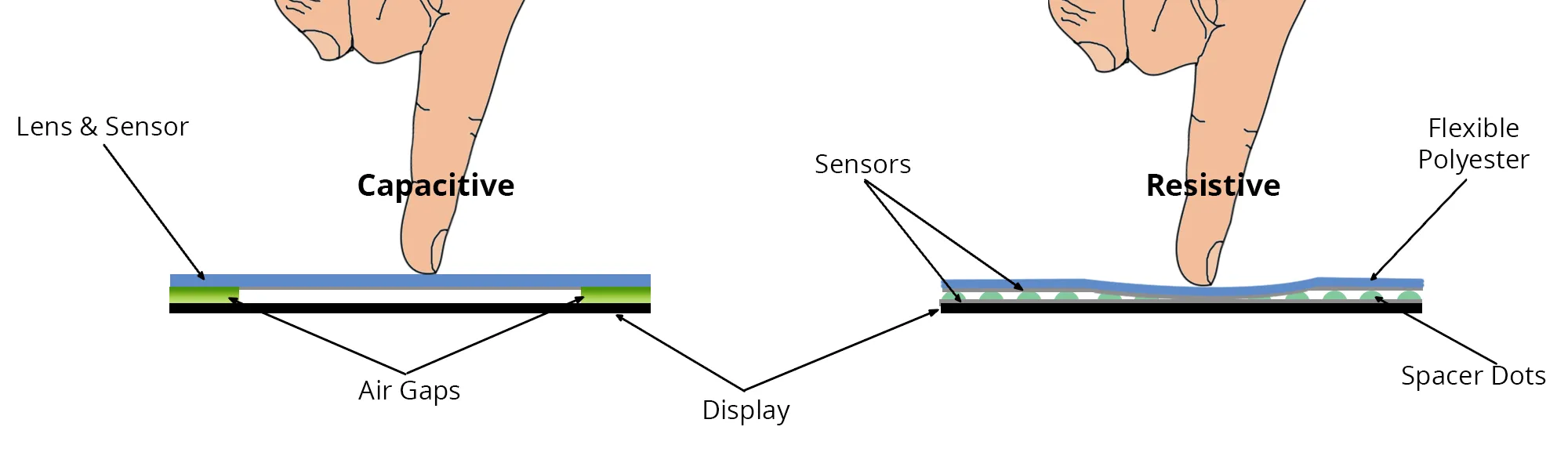
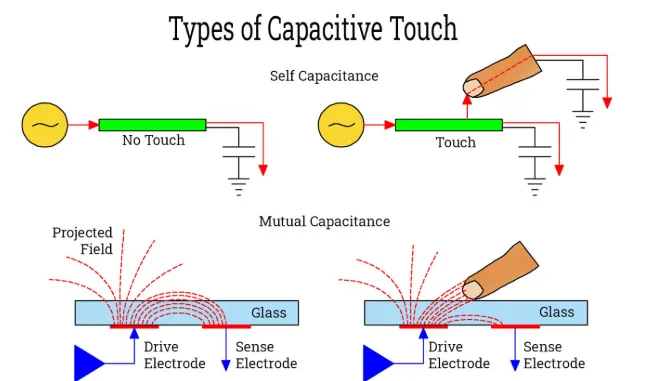
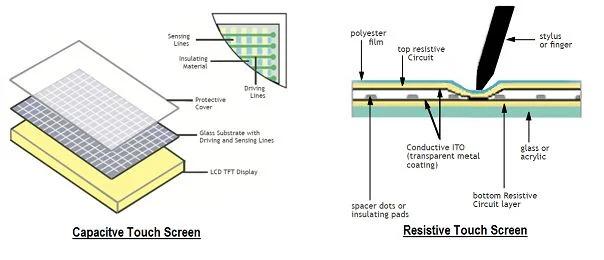
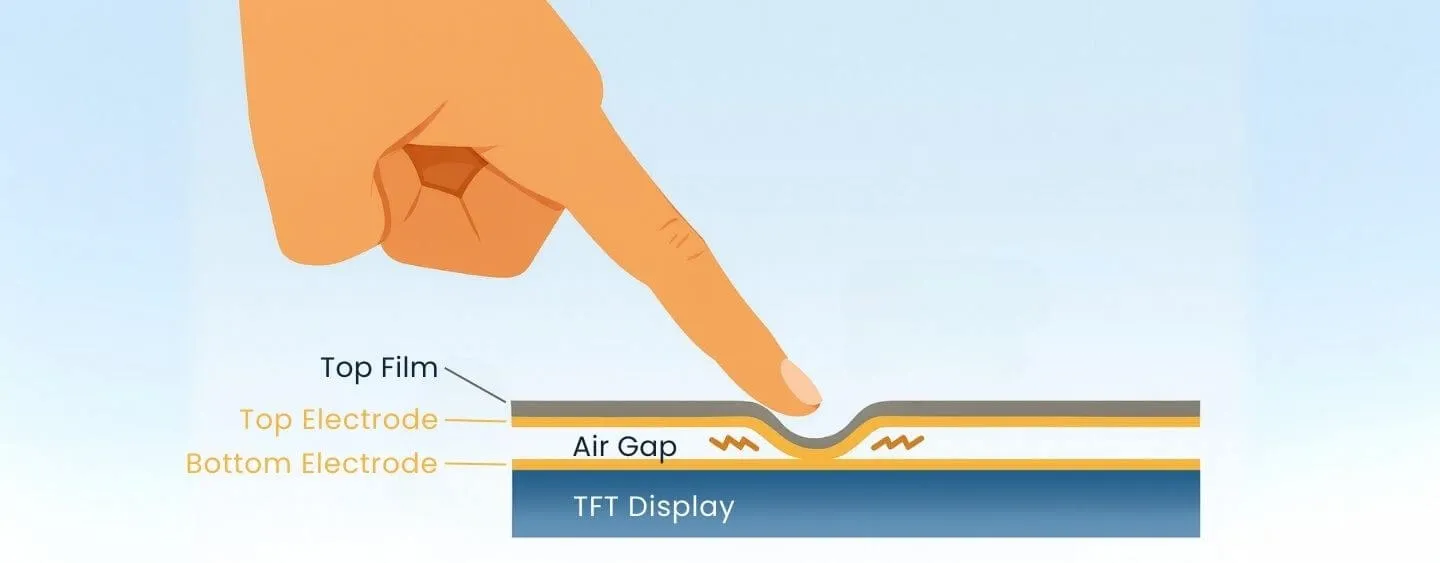
A touch switch is a wall switch based on touch sensing IC principles. It has no traditional mechanical mechanism, and is robust, wear-resistant, insulating, dust- and water-resistant. With a novel appearance and longer service life, touch switches are widely used across many fields, including high-end hotels. By operating principle, touch switches are classified as resistive or capacitive. By wiring method, they are classified as single-live (no neutral) or live-and-neutral touch switches.
Choosing between single-live and live-and-neutral
When selecting a touch switch for a home, the main consideration is whether to use a single-live switch or a live-and-neutral switch.
Single-live touch switches
A single-live touch switch can directly replace a traditional household switch, since a traditional switch typically has one incoming live conductor and one outgoing conductor to the appliance, hence "single-live". The wiring is the same as a traditional switch. Internally, a single-live smart switch integrates a variable resistor in series with the lamp. To turn the lamp off, the resistor is set to a very high value, approaching an open circuit but not fully open; a small current still flows in the circuit to power the control chip. Single-live touch switches are generally limited to devices under about 800 W.
Single-live touch switch single-control wiring example
Single-live touch switch two-way wiring example
Live-and-neutral touch switches
A live-and-neutral touch switch connects both neutral and live conductors to the control chip terminals. When the lighting is off, the chip still has both live and neutral supply, allowing support for higher-power loads, typically up to about 2500 W. If you plan to control high-power lighting, confirm that a neutral conductor is available at the switch location, because traditional switch wiring may include only the incoming live and the outgoing load conductor, without a neutral at the box.
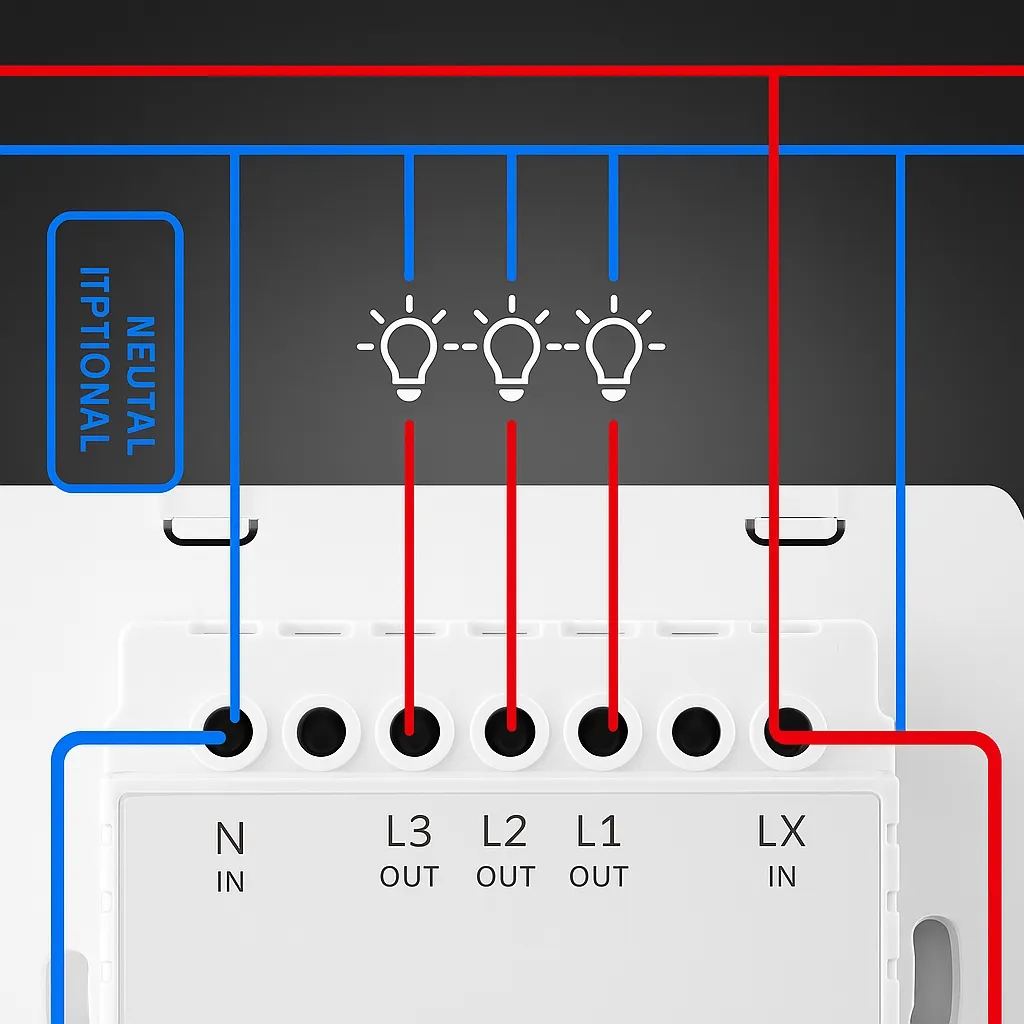
Live-and-neutral touch switch wiring example
Combined switches and selection advice
Many modern touch switches support both single-live and live-and-neutral wiring and include connectivity such as WiFi and Bluetooth, plus companion apps.
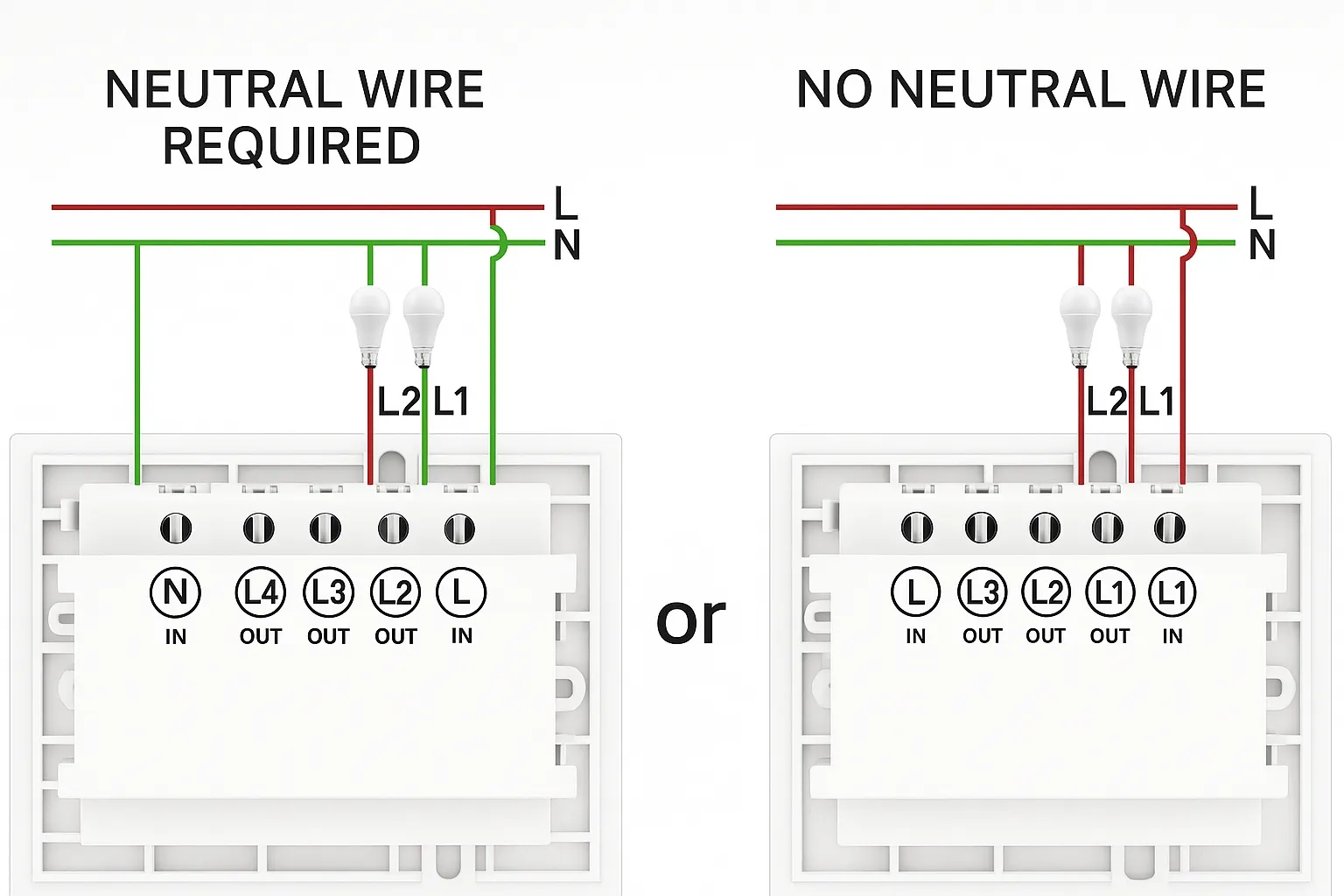
Wiring example for a switch supporting both single-live and live-and-neutral
If you are unsure which type to purchase, consider a switch that supports both single-live and live-and-neutral wiring, since it fits more installation scenarios and supports higher power loads.