ALLPCB


Overview
There are several common types of sensor lights: sound-and-light controlled lights, human infrared sensor lights, and radar sensor lights. This article focuses on the key component of infrared motion-sensing lights—the pyroelectric sensor.
Infrared motion-sensing lights can switch on quietly. A typical system combines a pyroelectric sensor, a Fresnel lens, and peripheral control circuitry.
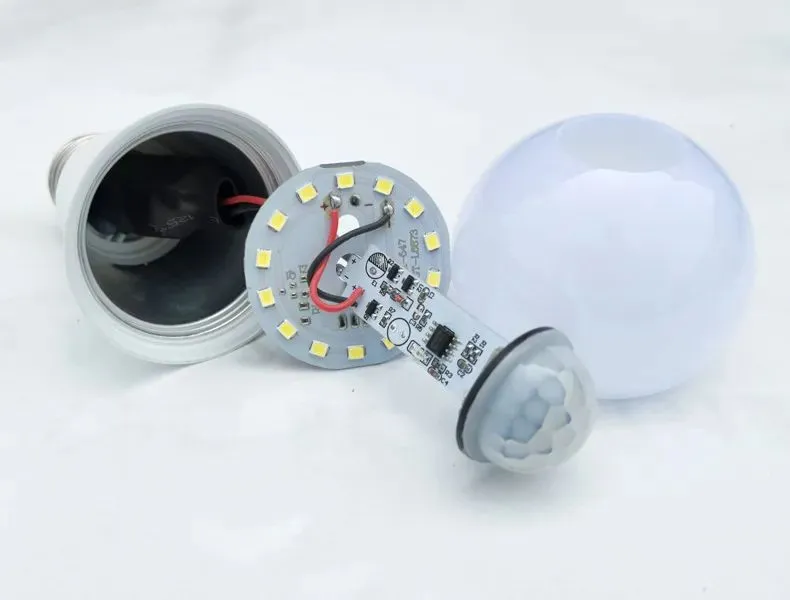
The pyroelectric sensor detects thermal radiation emitted by the human body, while the Fresnel lens collects and focuses that infrared radiation.
When a person appears within the detection zone, the Fresnel lens focuses the infrared radiation emitted by the body onto the pyroelectric sensor. The sensor then outputs a control signal to the downstream circuitry to control the light.
Working Principle
All objects with temperature emit thermal radiation, and the emitted wavelength depends on temperature. The human body maintains a relatively constant temperature and therefore emits infrared radiation with a characteristic wavelength. PIR human infrared sensors are sensitive to this wavelength, causing a change in current that triggers detection.
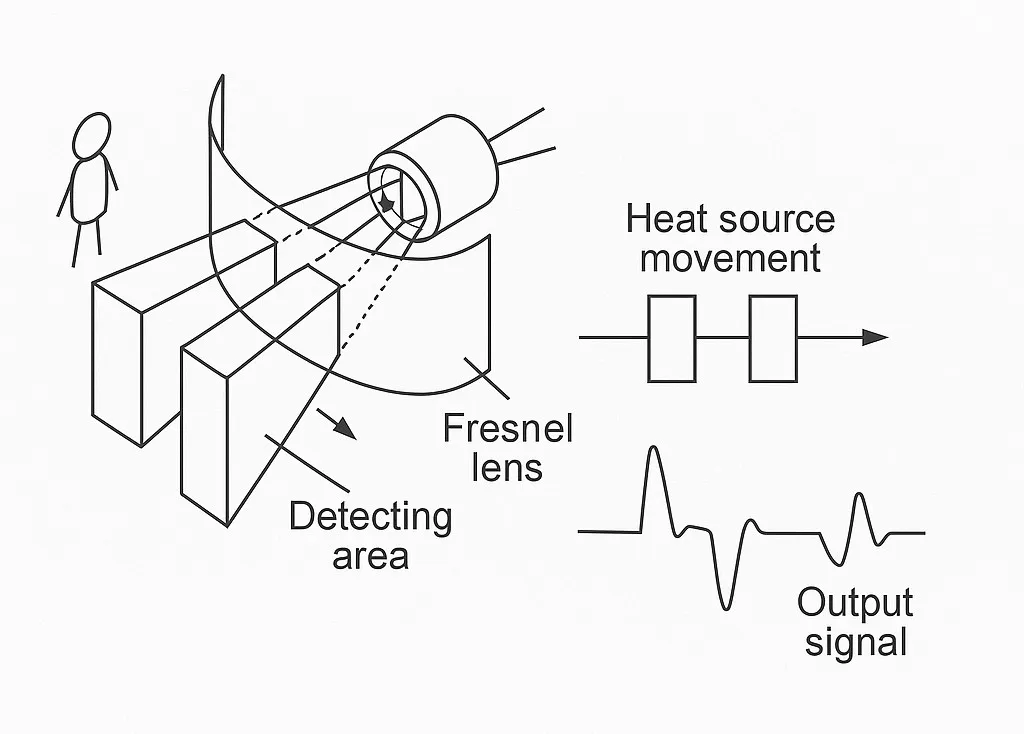
Passive infrared (PIR) sensors operate by detecting infrared radiation emitted by the human body. The main principle is that body-emitted infrared around 10 μm is enhanced by a Fresnel lens and concentrated onto the pyroelectric detection element.
When a person moves, the position of the emitted infrared changes, causing the pyroelectric element to lose charge equilibrium and release charge via the pyroelectric effect. The infrared sensor converts changes in received infrared energy, through the Fresnel lens, into electrical signals via this thermal-to-electric conversion.
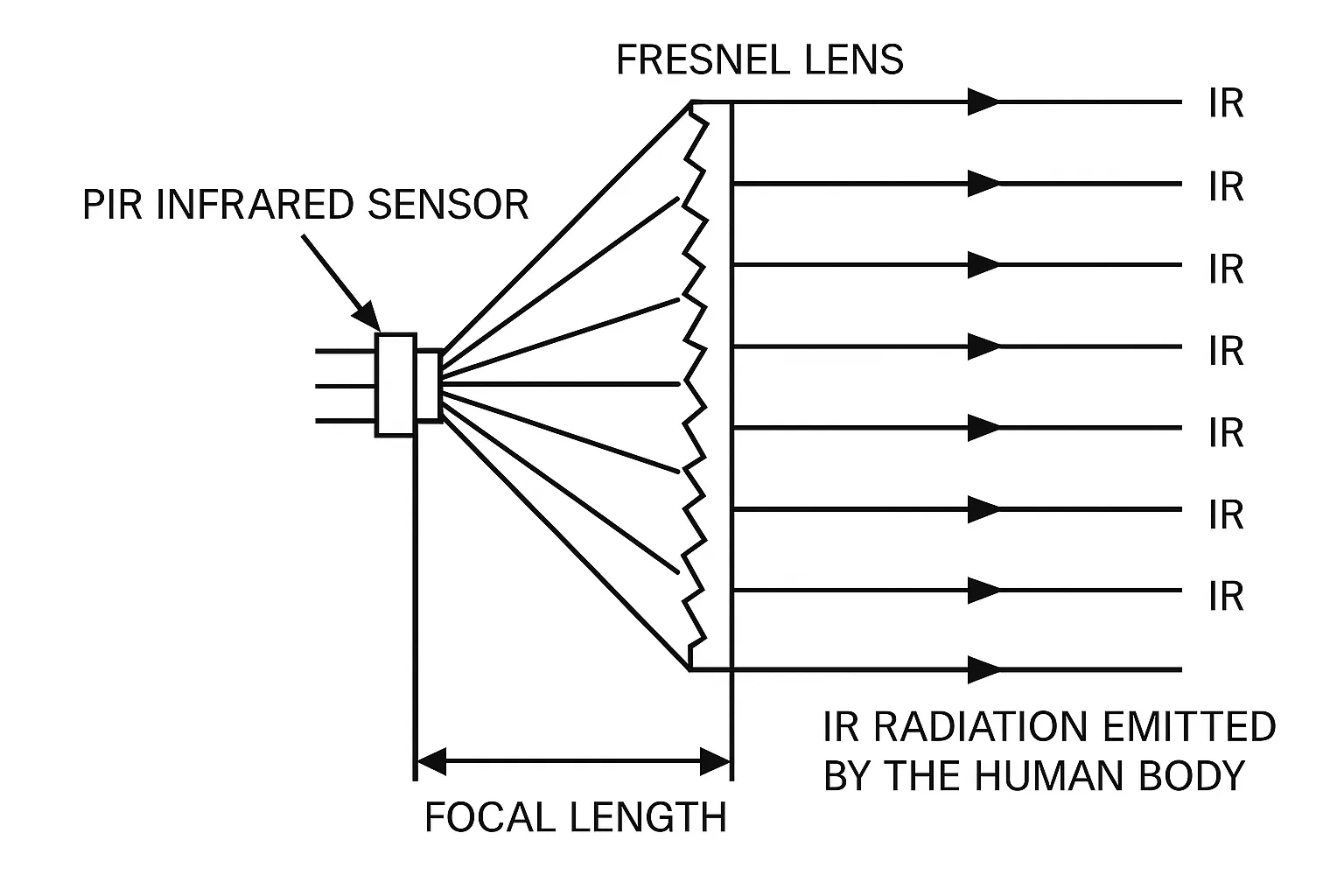
When there is no movement in the passive infrared detector's area, the sensor only detects background temperature. When a person enters the detection area, the Fresnel lens causes the sensor to detect the temperature difference between the body and the background. The collected signal is compared with existing detection data in the system to determine whether a human or other infrared source has entered the area.
Fresnel Lens
The Fresnel lens, invented by Augustin Fresnel in 1822, is a microstructured optical element. From the front it resembles a dartboard composed of concentric rings. A Fresnel lens uses concentric grooves to refract or reflect light within a specified spectral band.
This lens reduces cost compared with traditional polished optical components. In PIR detectors, a small plastic cap with grooves—acting as a Fresnel lens—is fitted over the detector. The grooves limit the incident wavelength peak to around 10 μm, matching the peak of human infrared radiation.
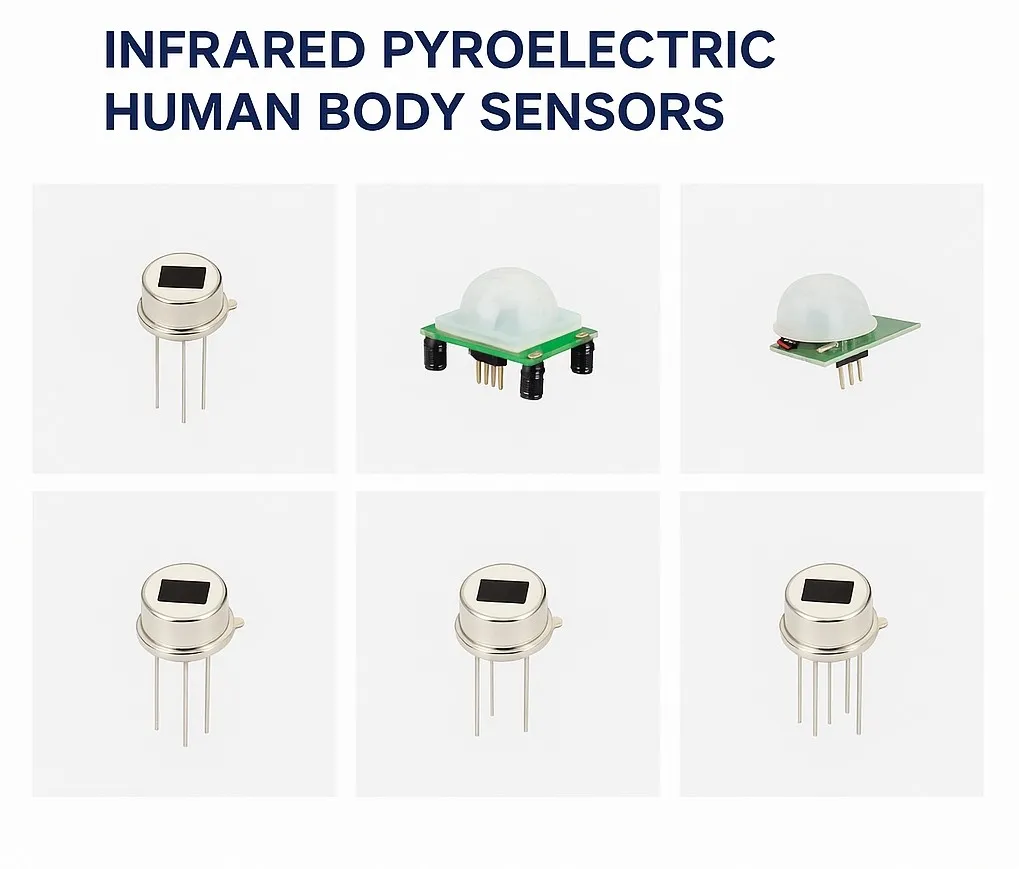
Pyroelectric Infrared Sensor
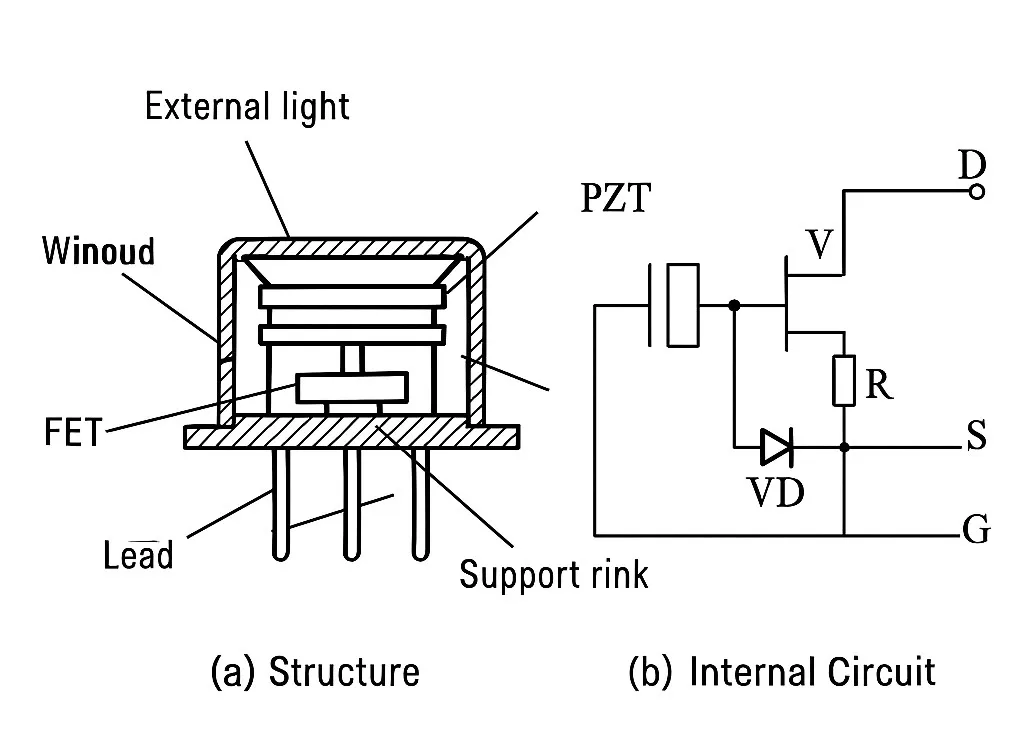
Pyroelectric infrared sensors use detection elements made from materials with high pyroelectric coefficients, such as lead zirconate titanate ceramics, lithium tantalate, or triglycine sulfate. The detector element is typically about 2 × 1 mm in size.
Each detector may contain one or two elements. Two elements are often connected in anti-parallel to suppress interference caused by the detector's own temperature change. The detector converts received infrared radiation into a weak voltage signal, which is amplified by a field-effect transistor inside the probe before output.
To increase sensitivity and detection range, a Fresnel lens is mounted in front of the detector to create alternating blind zones and high-sensitivity zones, improving the received signal variation. When a person walks across the lens, the body-emitted infrared alternately passes through blind and high-sensitivity zones, producing a pulsed input signal that increases amplitude.
With a Fresnel lens and amplification circuit, the signal can be amplified by more than 70 dB, allowing the pyroelectric sensor to detect human movement at distances of about 10–40 meters.
The peak wavelength of human-emitted infrared is about 9–10 μm, while detector wavelength sensitivity is nearly constant across roughly 0.2–20 μm. A filter window at the sensor head transmits wavelengths of about 7–10 μm, which matches human infrared emission and attenuates other infrared wavelengths, creating a sensor optimized for human detection.
Installation Requirements
PIR sensors are generally intended for indoor use, and sensitivity is closely related to installation position. Correct installation should meet the following conditions:
- Place the sensor away from heat sources such as heaters, air conditioners, refrigerators, and stoves, which cause air temperature fluctuations.
- Avoid pointing the sensor directly at windows to prevent outdoor heat flows and passing people from causing false alarms.
- Do not install the sensor at doorways or in strong airflow paths.
- Ensure there are no partitions, furniture, large plants, or other obstructions within the detection area.
Key Usage Factors
The two critical environmental factors for infrared human sensors are temperature difference and movement. They are unsuitable for detecting stationary targets or when there is little temperature difference between the target and the environment.