ALLPCB


Overview
As digital services expand, demand for reliable identity authentication has increased. In this context, a contactless biometric method that works without removing a face mask and that improves hygiene and convenience in public spaces is especially relevant.
How palm-vein recognition works
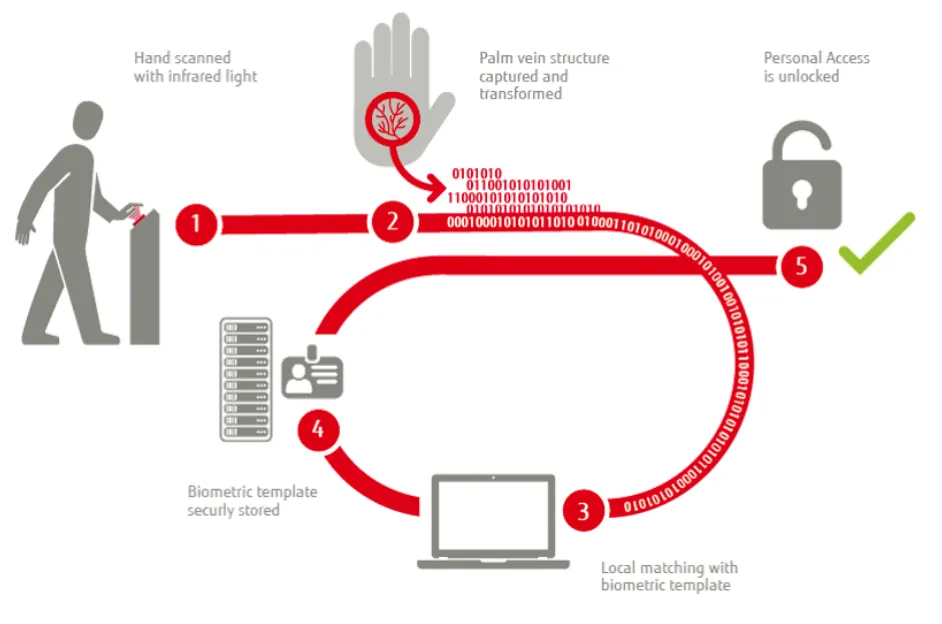
Palm-vein recognition uses the near-infrared absorption characteristics of hemoglobin in blood to capture an image of the palm vein pattern. Because palm veins are internal features, they are harder to forge than surface characteristics. Compared with conventional biometrics such as fingerprint, face, and iris recognition, palm-vein patterns tend to be more stable and less affected by surface conditions such as wear, moisture, or dirt, which leads to high recognition accuracy.
Device operation and applications
Palm-vein readers use near-infrared sensors to capture the distribution map of veins in the palm and store templates to build a unique database for each user. The stored palm-vein data is used for biometric authentication and access control. These devices can interface with access controllers, external equipment, and networks, and typically provide audio prompts and display output. Key advantages include resistance to spoofing, high recognition rate, fast identification, and non-contact operation. Palm-vein systems are used in security, financial services, and mass transit.
Fujitsu PalmSecure palm-vein authentication
PalmSecure is Fujitsu Frontech's palm-vein pattern recognition biometric technology. It captures a palm-vein pattern using near-infrared light, generates a biometric template, and encrypts the template within the sensor before transmission. PalmSecure has been deployed commercially and is reported to provide high accuracy for biometric authentication.
Why choose palm-vein over traditional credentials
Traditional authentication methods such as passwords and smart cards have limitations. Passwords and PINs can be shared or guessed, and lost, stolen, misplaced, or damaged cards create security risks. Data breaches and poor password practices exacerbate these issues.
Findings from a RoboForm survey include:
- Only 41% of respondents used six or more unique passwords across accounts, while 23% used the same password consistently.
- Over 60% of users could not remember all their passwords.
- 26% shared passwords with a spouse, and 15% shared passwords with friends.
- 52% wrote down passwords or stored them in unsecured documents.
Biometric traits are unique and bound to an individual, which addresses many risks associated with traditional credentials.
Benefits of replacing passwords with PalmSecure
- Easy to use
- Non-contact and hygienic
- Suitable for public use
- Embeddable into flat products such as laptops, copiers, printers, fax machines, access control systems, and mobile devices
Technical features and F Pro sensor
PalmSecure technology builds on Fujitsu's image-recognition experience and is applicable across industries, including physical access control for visitors and employees, time and attendance systems, and enterprise IT access to reduce password resets.
The PalmSecure F Pro sensor series improves template capture and authentication. Compared with the previous generation, the F Pro sensor is 50% thinner, enabling easier integration into constrained product spaces. It offers faster capture and authentication times and improved tolerance to ambient daylight and temperature variations, which supports reliable operation in a wider range of environments.