ALLPCB


Overview
As the full-screen smartphone concept has become popular, traditional fingerprint unlocking—whether front swipe, press, or rear-mounted—affects the appearance of smartphones and other smart devices. Fingerprint recognition requires a dedicated sensing window, which reduces the screen-to-body ratio; therefore under-display fingerprint recognition has emerged.
Fingerprint recognition implementation methods
Current approaches to smartphone fingerprint recognition can be divided into three main types:
1. Capacitive fingerprint recognition (most widely used)
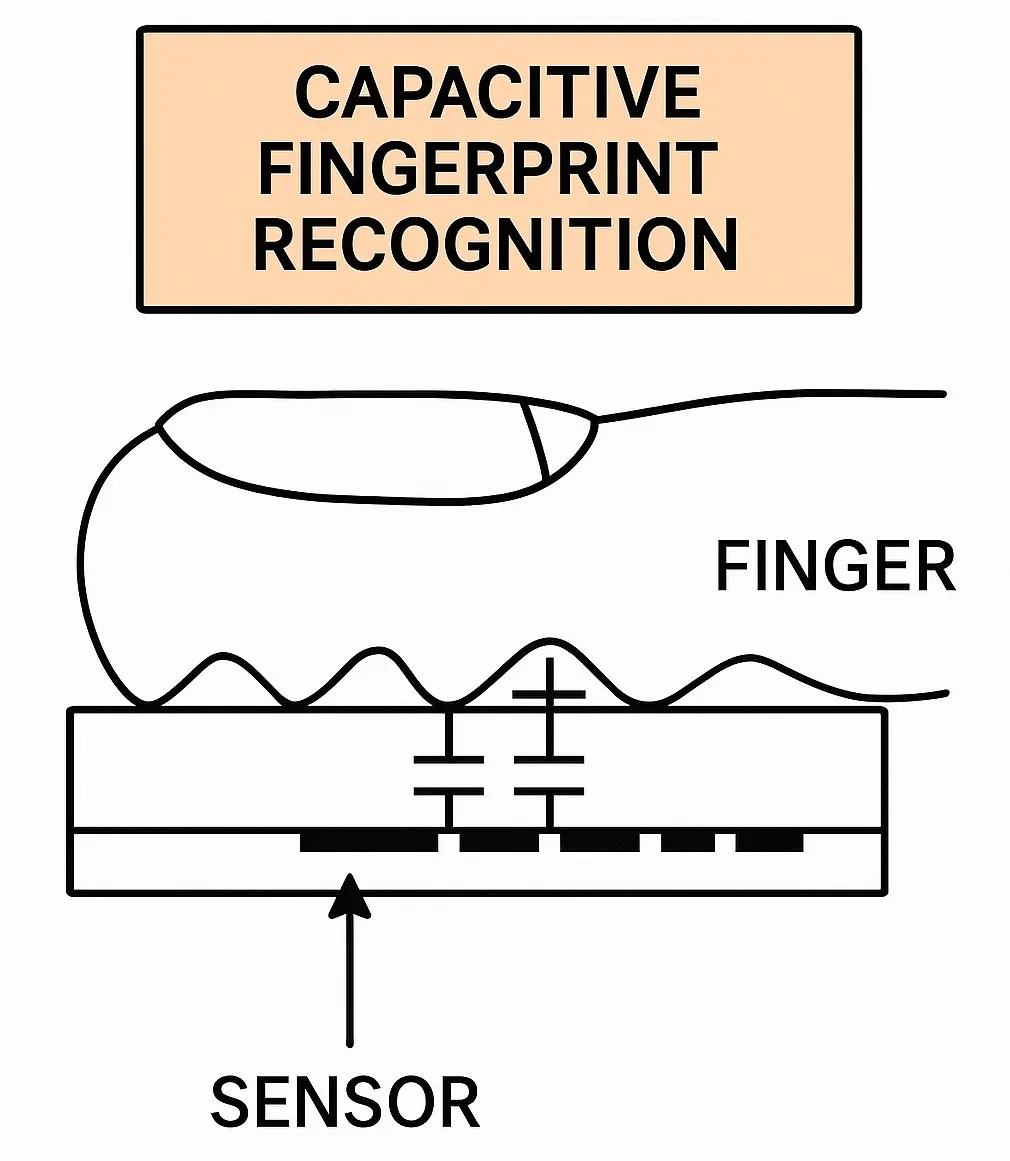
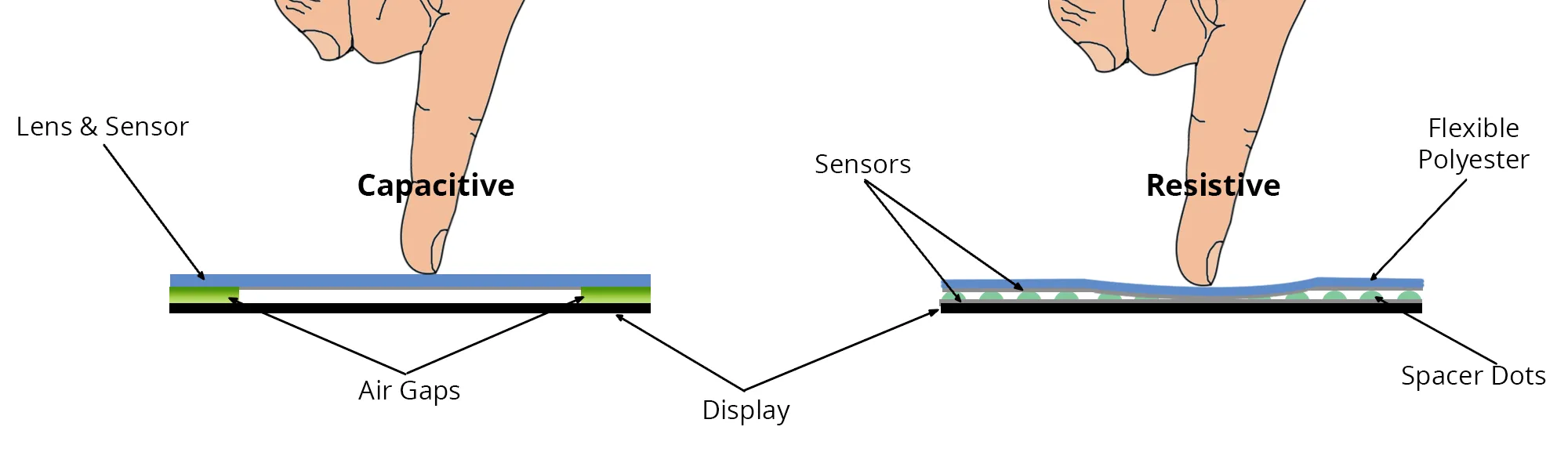
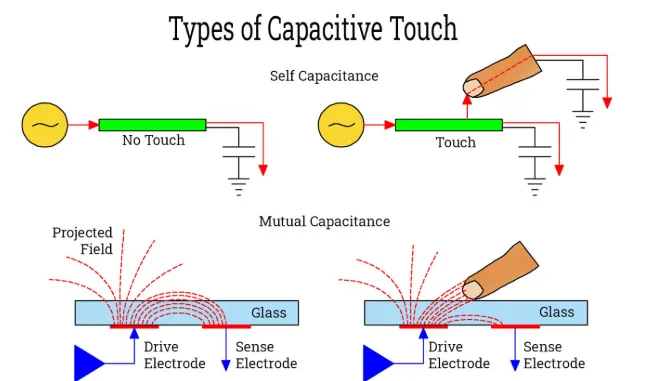
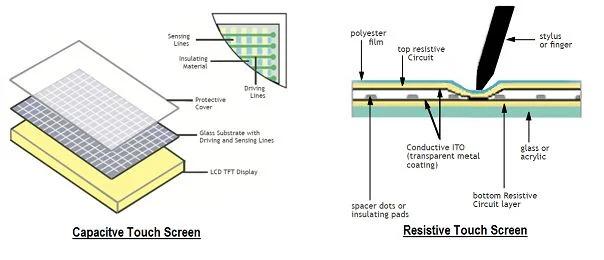
Capacitive sensors form an electric field with the conductive subdermal electrolyte. The ridges and valleys of the fingerprint create local capacitance differences, which can be measured to produce an accurate fingerprint map. This approach is robust, has no special environmental requirements, and the silicon die and related sensing components fit within acceptable space limits for smartphone design.
Capacitive modules are available as swipe-type and press-type devices. Although swipe sensors are smaller, they have disadvantages in recognition rate and convenience. For this reason, manufacturers have focused on press-type capacitive sensors, which are easier to operate and have higher recognition rates. Capacitive technology is mature, but it is less compatible with full-screen designs.
Typical integrations on phones include rear, front, and side placements. There have also been examples of embedding the fingerprint sensor in a device logo, as seen in some models.
2. Ultrasonic fingerprint recognition
One representative implementation is Qualcomm Sense ID used in certain smartphone models. Unlike capacitive sensors that detect surface capacitance, ultrasonic sensors use penetrative acoustic waves. The sensor emits ultrasonic pulses at specific frequencies to scan the finger; differences in how the fingerprint structure reflects the waves allow construction of a 3D fingerprint map. As a result, surface cleanliness is less critical.
Ultrasound can also penetrate common phone materials such as metal and glass, which reduces constraints on device appearance. For these reasons, ultrasonic fingerprint recognition is considered a promising direction for future development.
However, ultrasonic technology is not yet fully mature. Penetration capability is affected by ultrasonic transducer size, operating frequency, and the material and thickness of the screen cover. Some manufacturers have introduced design compromises, such as recessing the screen at the sensing location to reduce cover thickness, but user experience has not always been satisfactory.
3. Optical fingerprint recognition
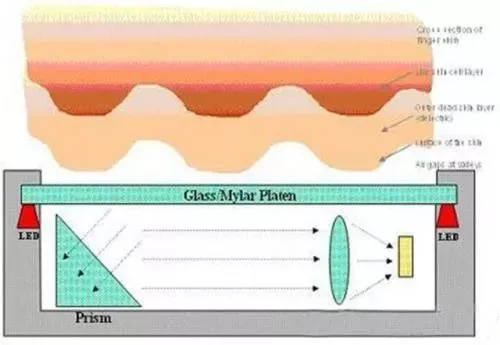
Optical recognition is an earlier and well-established fingerprint technology, used in many access control and attendance devices. It relies on refraction and reflection of light. The finger is placed on an optical lens and illuminated by an internal light source. Light passes through a prism and is reflected off the fingerprint surface; the angle and intensity of the reflected light vary depending on ridge and valley geometry.
The prism projects the reflection onto a CMOS or CCD image sensor, producing a grayscale digital fingerprint image where ridges appear dark and valleys appear light. This image can then be processed by fingerprint-matching algorithms and compared against a database.
Development trends for under-display fingerprint recognition
Optical under-display fingerprint recognition is currently more mature, with multiple suppliers in the supply chain. Several manufacturers have achieved mass production of optical under-display sensors, and many commercial devices that include under-display fingerprint recognition use optical solutions. Based on current adoption, optical under-display fingerprint technology is expected to remain the market mainstream for the foreseeable future.
Ultrasonic under-display solutions have not yet reached large-scale production and are primarily driven by companies such as Qualcomm. Qualcomm introduced a 3D ultrasonic fingerprint solution in 2015 and released a newer generation in 2017; reported specifications claim the ability to penetrate up to 1200 μm of OLED, 800 μm of glass, or 650 μm of aluminum under certain conditions.
In addition to Qualcomm, Fingerprint Cards (FPC) has developed ultrasonic under-display technology that supports fingerprint capture at arbitrary positions on the display, potentially removing certain physical design constraints for device manufacturers. FPC's approach also supports OLED and LCD screens.
Nevertheless, all ultrasonic approaches face challenges in mass production. Given the current market advantage of optical under-display sensors, it is uncertain whether manufacturers would switch to ultrasonic solutions even if production challenges are overcome.
Among capacitive under-display approaches, one notable example was introduced by JDI using a technology called Pixel Eyes, which integrates a capacitive fingerprint sensor with the TFT display glass substrate. The glass substrate detects changes in capacitance to identify touch and fingerprint regions without adding a separate fingerprint module. Capacitive under-display technology can support LCD screens and thus potentially lower overall device costs, but widespread production and adoption remain distant.
For the near future, optical fingerprint recognition will likely remain dominant in the under-display segment. Ultrasonic and capacitive under-display technologies need to resolve technical issues to catch up, and advances in next-generation display technologies such as MicroLED could influence future directions.
At the same time, progress in under-display camera development may enable 3D structured-light systems to be hidden beneath the display. If 3D structured-light can be implemented under the screen, manufacturers may choose between that approach and under-display fingerprint recognition based on design trade-offs. The long-term trajectory of under-display fingerprint technology will become clearer over time.