ALLPCB


Introduction
Conformal coatings provide essential protection for printed circuit boards in demanding environments, shielding circuits from moisture, contaminants, chemicals, and mechanical stress. These thin polymeric films conform to the contours of the PCB assembly, maintaining electrical performance over extended periods. However, the effectiveness of conformal coatings hinges on strong adhesion to the substrate, which directly depends on meticulous surface preparation. Poor PCB cleaning for conformal coating often leads to conformal coating adhesion problems, compromising reliability in applications like automotive electronics or aerospace systems. Engineers must prioritize this step to avoid premature failures that could result in costly rework or field returns. Factory processes emphasize cleaning as a foundational element in achieving durable protection.
Why Proper PCB Cleaning Matters for Conformal Coating
Flux residues, handling oils, dust particles, and manufacturing contaminants create barriers that prevent conformal coatings from bonding effectively to PCB surfaces. These ionic and non-ionic residues promote delamination under thermal cycling or humidity exposure, accelerating conformal coating failure analysis findings in quality control labs. In high-reliability sectors, unclean surfaces exacerbate issues like electrochemical migration, where trapped moisture facilitates dendritic growth between conductors. Proper surface preparation for conformal coating ensures molecular-level contact between the coating and substrate, enhancing mechanical integrity and dielectric properties. Factories report that assemblies cleaned to specified ionic thresholds exhibit significantly fewer adhesion defects during accelerated life testing. This preparation step aligns with industry expectations for robust, long-term PCB performance.
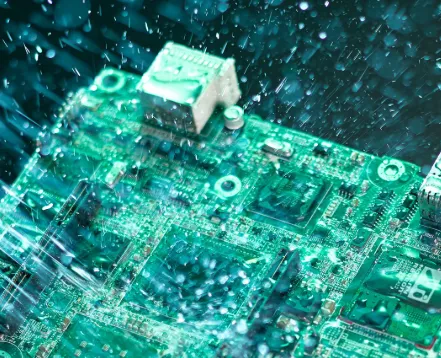
The Role of Contaminants in Conformal Coating Adhesion Problems
Organic residues from soldering fluxes, such as rosin-based or water-soluble types, leave behind hygroscopic films that absorb moisture and weaken interfacial bonds. Inorganic salts from no-clean fluxes can ionize under bias, promoting blistering or cracking in the coating. Fingerprints and machining oils introduce non-polar hydrocarbons that repel polar coating chemistries like urethanes or silicones. These conformal coating adhesion problems manifest as peeling edges or pinholes, detected during visual inspections or environmental stress screening. Failure analysis reveals that inadequate removal of these contaminants correlates with reduced coating thickness uniformity and insulation resistance. Engineers conducting root cause investigations often trace issues back to insufficient dwell time in cleaning baths or improper rinsing protocols.
Surface Preparation for Conformal Coating: Key Cleaning Mechanisms
PCB cleaning for conformal coating involves removing both polar and non-polar contaminants through solvent immersion, ultrasonic agitation, or vapor degreasing. Aqueous cleaning uses alkaline or neutral detergents to saponify organic residues, followed by deionized water rinses to achieve low resistivity readings. Vapor degreasing leverages solvent boiling points to penetrate crevices, ensuring flux activators dissolve without leaving aqueous traces. Plasma cleaning, an advanced dry method, etches surfaces with reactive gases to increase surface energy and remove nano-scale contaminants. Each method targets specific residue types, with selection based on assembly complexity and material compatibility. Post-clean verification confirms readiness for coating application.
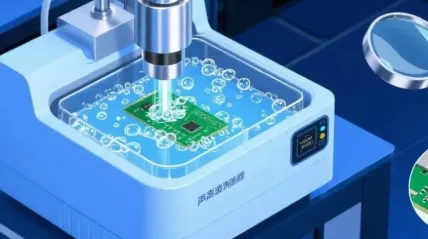
Industry standards like IPC J-STD-001 outline cleanliness requirements for soldered assemblies, mandating residue levels that support subsequent coating processes. This ensures surfaces meet resistivity of extract solution thresholds before advancing to coating stations.
Best Practices in PCB Cleaning for Conformal Coating
Begin with incoming inspection to identify gross contaminants, followed by a multi-stage cleaning sequence tailored to flux chemistry. For water-soluble fluxes, employ spray-in-air systems with heated rinses to flush ions from under components. Solvent-based processes suit no-clean residues, using fluorinated or hydrocarbon solvents with vapor zones for complete drying. Drying is critical, as trapped moisture leads to outgassing bubbles during coating cure. Implement inline monitoring with ion chromatography or surface insulation resistance probes to quantify cleanliness. Factories integrate these practices to minimize variability across production lots.
Testing Conformal Coating Adhesion: Essential Verification Methods
After application, testing conformal coating adhesion confirms bond strength through standardized procedures. The cross-hatch test involves scribing a grid pattern and applying adhesive tape, assessing removal percentage under magnification. Peel tests quantify force required to lift coating from substrate, revealing cohesive versus adhesive failures. Thermal shock cycling combined with adhesion pulls simulates operational stresses. These methods, aligned with IPC-A-610 criteria for electronic assemblies, classify adhesion quality from complete retention to significant loss. Engineers use results to validate cleaning efficacy and coating parameters.
ASTM D3359 provides a tape adhesion rating scale, commonly referenced for quick factory checks on coated coupons.
Conformal Coating Failure Analysis: Linking Back to Cleaning Deficiencies
Delamination often stems from incomplete flux removal, where residues act as weak planes under hygroscopic swelling. Blistering indicates trapped volatiles from inadequate drying, expanding during cure or reflow. Microscopic examination of failed samples highlights residue islands correlating with peel initiation sites. Dye penetrant tests reveal void networks beneath coatings, tracing to surface topography altered by uncleaned particles. Spectroscopic analysis identifies elemental signatures of activators like chlorides or bromides. Comprehensive conformal coating failure analysis guides process refinements, reinforcing the primacy of rigorous PCB cleaning for conformal coating.
Advanced Surface Preparation Techniques for High-Reliability Applications
Plasma etching not only cleans but activates surfaces by introducing oxygen or nitrogen functional groups, boosting wetting and adhesion for low-viscosity coatings. Corona treatment offers similar benefits for larger panels, generating ozone to oxidize hydrocarbons. These methods excel in no-clean flux environments, where traditional solvents fall short. Combined with vapor phase cleaning, they achieve sub-ppm ionic contamination levels. Factories adopt these for mission-critical PCBs, balancing cost with enhanced reliability margins. Integration into lean manufacturing lines ensures consistent surface preparation for conformal coating.
Optimizing the Coating Application Post-Cleaning
With a pristine surface, spray or dip application yields uniform films typically 25 to 250 microns thick. Masking selective areas prevents bridging on low-profile components. Cure schedules vary by chemistry, from ambient for silicones to thermal for epoxies. Inline UV inspection flags adhesion anomalies early. Proper sequencing from cleaning to cure minimizes handling recontamination. This factory workflow sustains conformal coating performance in vibration-prone or corrosive settings.
Conclusion
Proper PCB cleaning for conformal coating forms the cornerstone of reliable protection, directly mitigating conformal coating adhesion problems through contaminant elimination and surface activation. By adhering to structured processes and verification tests like those in IPC standards, engineers ensure coatings withstand environmental rigors without delamination or failure. Factory-driven insights underscore the ROI of investing in robust surface preparation for conformal coating, reducing long-term maintenance and enhancing product lifespan. Prioritizing these practices delivers confidence in PCB assemblies across diverse applications.
FAQs
Q1: What causes common conformal coating adhesion problems?
A1: Conformal coating adhesion problems typically arise from flux residues, oils, or particulates left on the PCB surface after assembly. These contaminants create weak interfacial bonds, leading to delamination under thermal or mechanical stress. Thorough PCB cleaning for conformal coating, including rinsing and drying, removes these barriers. Factories verify cleanliness via ionic testing to prevent such issues.
Q2: How does surface preparation for conformal coating impact reliability?
A2: Surface preparation for conformal coating enhances molecular adhesion, preventing moisture ingress and electrochemical failures. Cleaning methods like ultrasonics or plasma ensure residue-free surfaces compatible with coating chemistries. This step aligns with standards for soldered assemblies, extending operational life in harsh environments. Poor preparation accelerates degradation, as seen in failure analysis.
Q3: What are effective ways to test conformal coating adhesion?
A3: Testing conformal coating adhesion involves cross-hatch tape tests or peel strength measurements to quantify bond integrity. Apply a grid cut, adhere tape, and pull at 90 degrees, rating removal percentage. These align with established methods for assemblies. Regular testing post-cleaning validates PCB cleaning for conformal coating effectiveness.
Q4: How is conformal coating failure analysis conducted?
A4: Conformal coating failure analysis starts with visual and microscopic inspection for blisters or peels, followed by dye-and-peel to map voids. Cross-sectioning reveals residue pockets linking to cleaning oversights. Spectroscopic tools identify contaminants. This process informs process tweaks for better surface preparation for conformal coating.
References
IPC J-STD-001GS — Requirements for Soldered Electrical and Electronic Assemblies. IPC, 2020
IPC-A-610H — Acceptability of Electronic Assemblies. IPC, 2019
IPC-CC-830C — Qualification and Performance of Electrical Insulating Compounds for Impregnating and Coating Printed Boards. IPC, 2020
ASTM D3359-17 — Standard Test Methods for Rating Adhesion by Tape Test. ASTM, 2017