ALLPCB


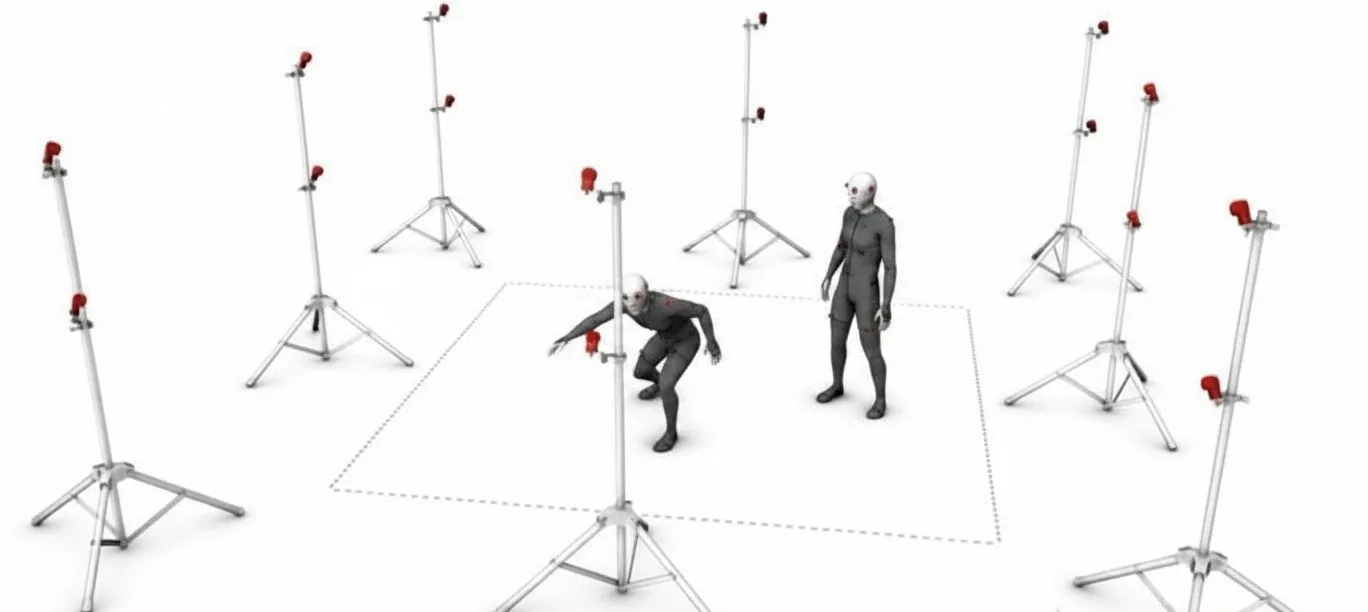
Among released VR headsets, the HTC Vive leads in user experience largely because it uses the Lighthouse spatial tracking system, which provides stronger interaction capabilities than many rivals.
The other two major players, Oculus Rift and PlayStation VR, are also developing their own tracking systems. That leaves an open question: when will mobile VR gain reliable spatial tracking?
Mobile VR faces multiple challenges
Spatial tracking is only one of several issues for mobile VR, and its priority has not always been highest. Oculus CTO John Carmack said in February that he is researching spatial tracking for Gear VR using an inside-out approach, which means the smartphone would handle all data processing.
Why not reuse PC tracking technology?
Some may ask why mobile VR cannot simply adopt the tracking solutions used on PCs, such as Lighthouse. There are efforts in that direction: a company named Dapeng announced, at a Connect conference during CES Asia, a laser-based tracking system developed with G-Wearable that resembles Lighthouse.
However, adopting that approach limits headset mobility because it depends on external hardware (laser base stations). That undermines the core mobility advantage of mobile VR. Such systems are more acceptable for business-to-business deployments where higher cost is tolerable, but less suitable for the consumer market.
Mobility is likely why Carmack favors an inside-out approach. Inside-out systems typically use cameras mounted on the headset to track changes in the external environment and infer position, without requiring external infrastructure. Implementing this reliably on mobile devices is, however, challenging.
Why is it difficult?
1. Limited sensors
One major obstacle is that the sensors needed for robust position tracking often have limited use beyond tracking, making it harder to justify their inclusion in a smartphone. As ARM developer relations manager Nizar Romdan noted, mobile form factors are constrained: a smartphone is essentially a thin body with a 5-inch screen, and there is limited physical space to add many sensors. Phone makers may not include additional sensors specifically for VR if VR adoption remains low.
This situation is changing. Google introduced the Daydream VR platform and set requirements for phones that support Daydream, covering sensors, performance, and displays. This should encourage more phones optimized for VR. Before such phones become widespread, standalone all-in-one VR headsets are a viable option.
2. Processing and power constraints
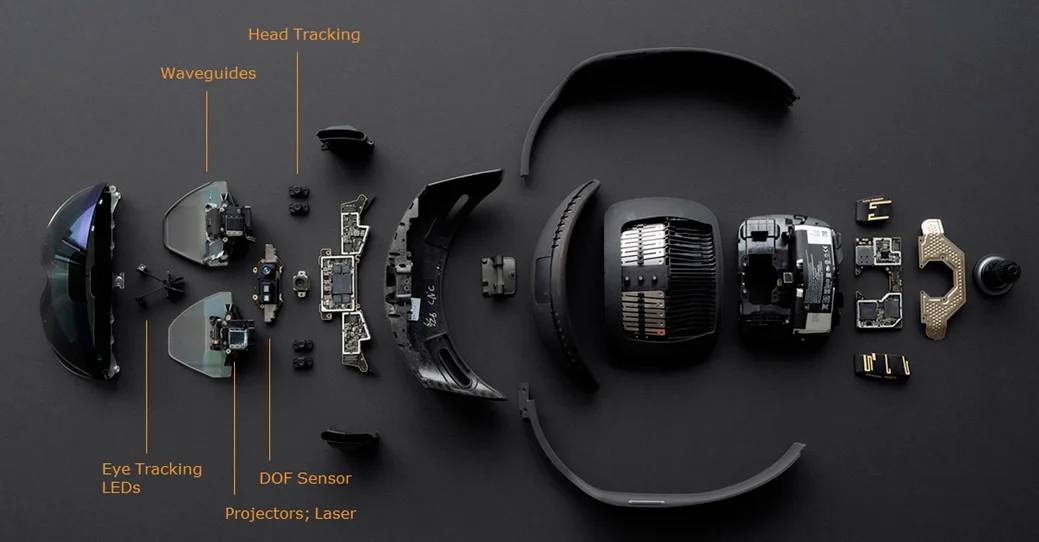
Mobile headsets with spatial tracking already exist in the AR space: devices from Microsoft and Magic Leap include spatial tracking, and public analysis suggests Microsoft HoloLens relies on SLAM techniques. Those devices use PC-class processors and are optimized for AR use cases, however. Even phones that are optimized for VR face a large power gap when attempting to run similar tracking algorithms.
As Romdan observed, adding sensors increases the amount of data to process, but the power envelope does not grow accordingly. A typical smartphone operates at roughly 3 W, larger designs may reach 5 W, and very few approach 10 W. By contrast, desktop PCs can consume hundreds of watts. That disparity makes it difficult to run compute-intensive tracking algorithms on mobile hardware while keeping power consumption acceptable.
Possible approaches and current work
In principle, implementing spatial tracking on mobile VR is feasible, but meeting the combined consumer requirements of low cost, low power, high performance, and portability is hard. He Jie, founder of Ximmerse, said that mobile VR tracking can be experimented with, but achieving an optimal product balance is challenging.
Ximmerse is developing an optical approach that uses cameras on the headset and illuminated markers on the controller, combined with inertial tracking, to achieve six degrees of freedom. Dapeng's standalone headset exhibited at a launch event appeared to use Ximmerse's solution, and Ximmerse has indicated that production is planned in the coming months.
A VR industry practitioner suggested that SLAM-based tracking has strong potential as compute efficiency improves and power consumption falls. He also noted that optical marker-based solutions can provide good tracking precision at relatively low cost.
Carmack has stated he is spending most of his time on Gear VR spatial tracking. Given his software expertise, a practical combined hardware-software solution for mobile spatial tracking may emerge in time.