ALLPCB


Overview
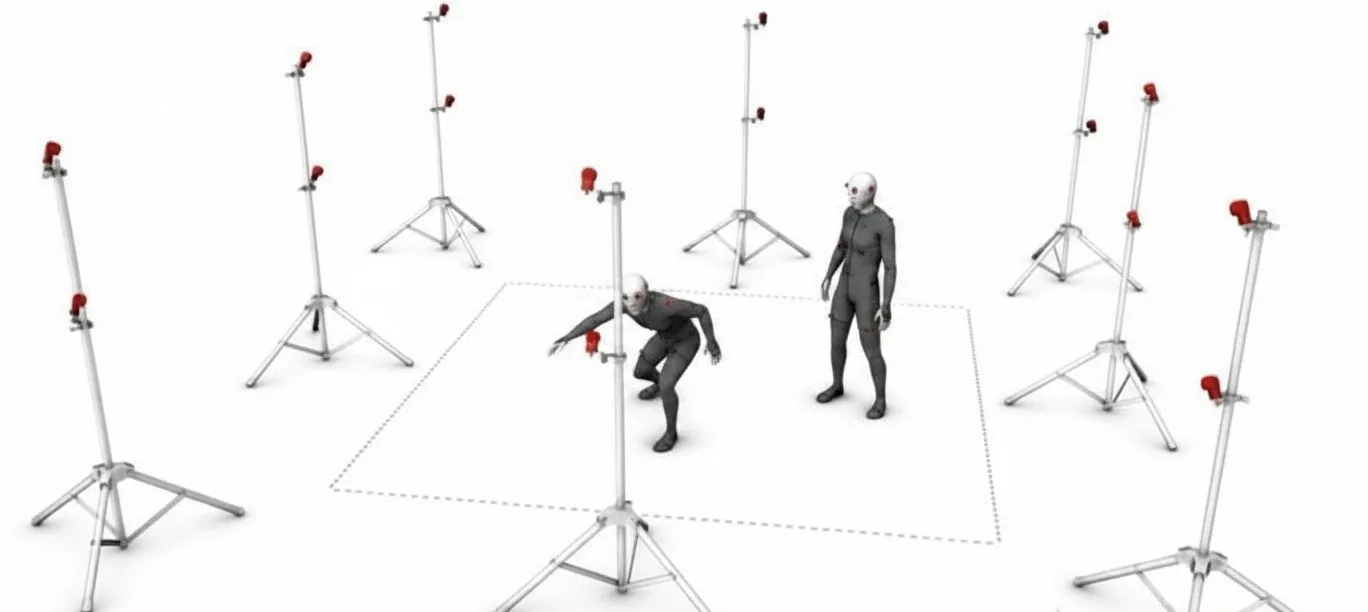
In virtual reality, how is six-degree-of-freedom tracking achieved? Traditional inertial sensors can only track rotation of the headset; to track translational movement an optical system is required. Conventional optical systems use cameras to track marker points placed on the headset. For example, Oculus' Constellation system uses cameras plus active infrared marker points. Valve's Lighthouse system, used by some VR products, takes a different approach and is considered one of the higher-performance optical tracking solutions.
System Components and Operation
The Lighthouse system consists of two base stations. Each base station contains an array of infrared LEDs and two rotating infrared laser emitters mounted on orthogonal axes. The lasers rotate with a period of 10 ms per revolution. The base station operates on a 20 ms cycle: at the start of the cycle the infrared LEDs flash to provide a sync signal. During the first 10 ms the X-axis rotating laser sweeps the space while the Y-axis does not emit; during the next 10 ms the Y-axis laser sweeps the space while the X-axis is off.
Sensors and Timing Measurement
Valve places multiple photosensors on the headset and on the controller. After the base station LED flash provides a synchronization signal, each photosensor records the arrival times of the X-axis and Y-axis lasers. These arrival times correspond to the angles at which the rotating lasers intersect the particular sensor. Because the angular position of each sensor on the headset or controller is known, the difference in timing across the distributed sensors can be used to compute the headset or controller position and motion trajectory relative to the base stations.
Advantages
One major advantage of this approach is its low computational requirement. Camera-based optical tracking requires image capture and image processing to identify marker points. The richer the image detail, the higher the processing load. A monochrome camera is simpler than a color camera, and an infrared camera is simpler still. Lighthouse, however, relies only on timing parameters rather than full image processing, so position calculations can be performed locally on the tracked device with much lower processing overhead.