ALLPCB


Overview
Under-display optical fingerprint recognition has become the leading technical direction, and the related chip market has grown rapidly with the full-screen trend.
As full-screen smartphones have become popular, traditional fingerprint placements—front swipe or press, rear, or side—affect device appearance. Fingerprint recognition requires a sensing window, which impacts screen-to-body ratio; under-display fingerprint technologies therefore emerged to address this constraint.
Fingerprint implementation methods
Current smartphone fingerprint implementations can be grouped into three main approaches.
1. Capacitive fingerprint sensors
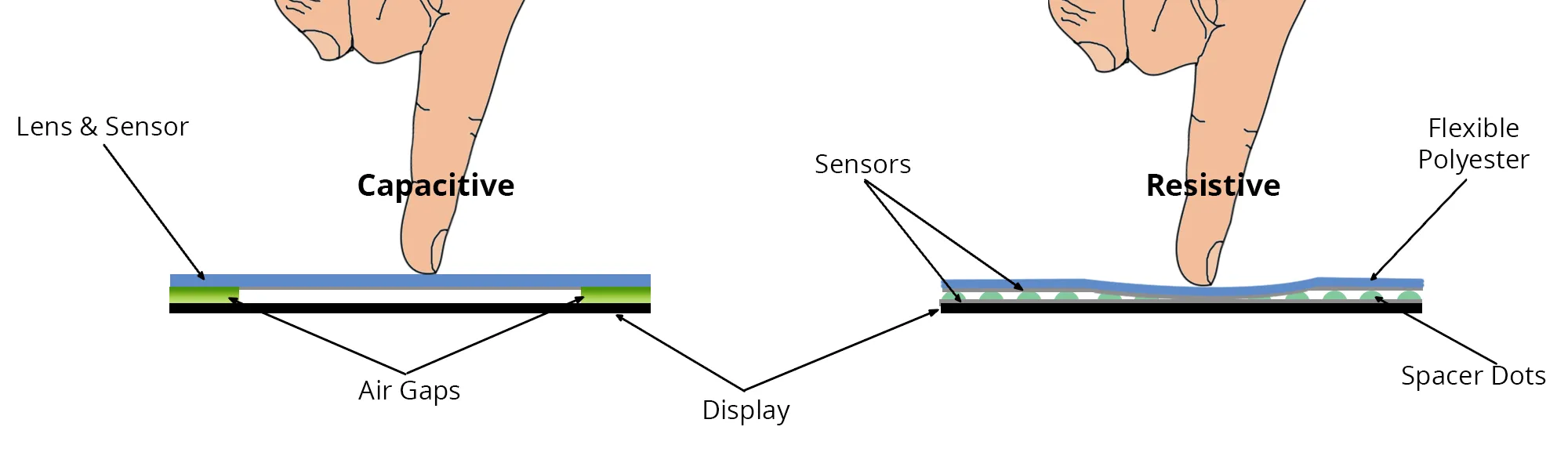
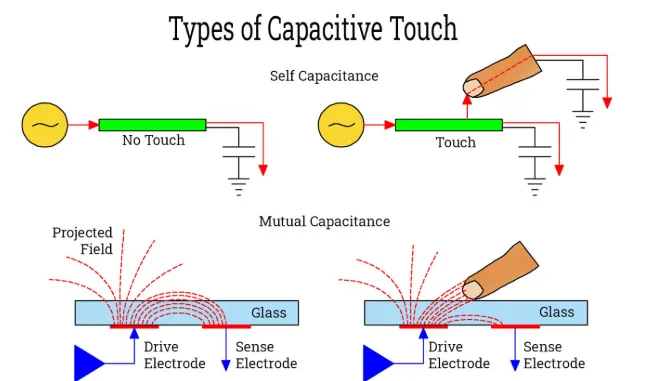
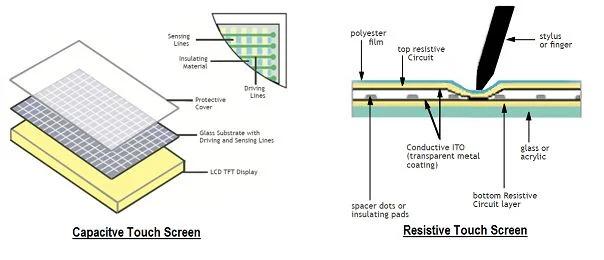
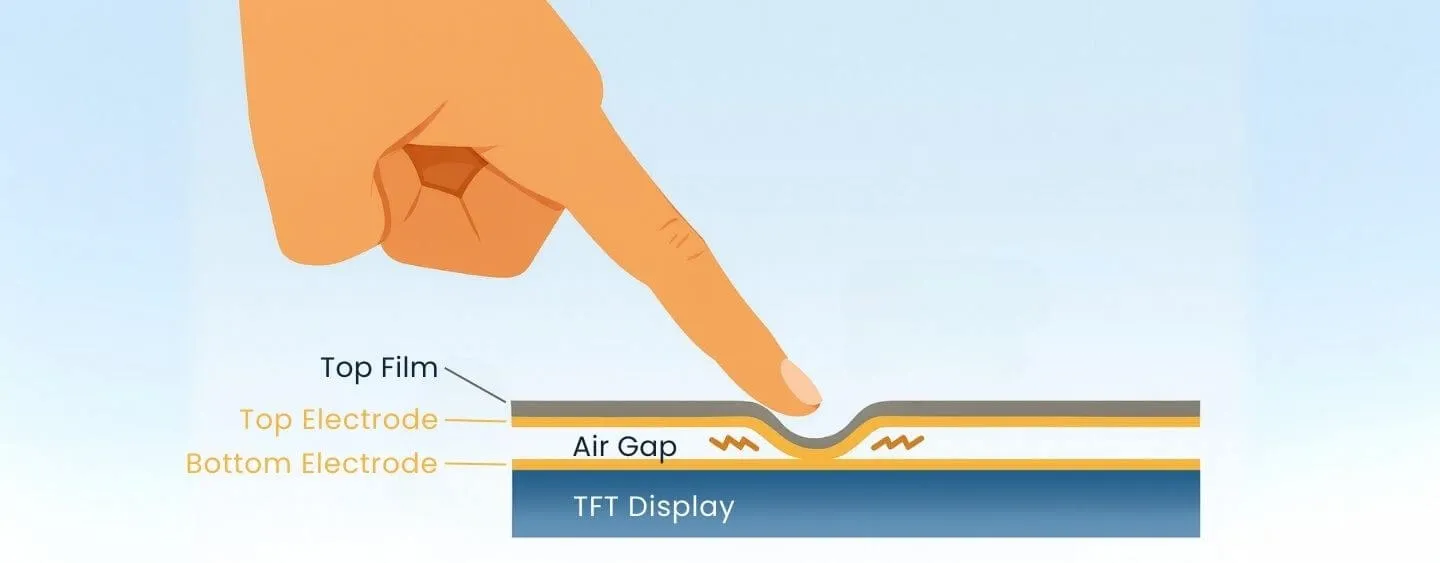
Capacitive fingerprint sensors are the most widely used today. They form an electric field between the fingerprint sensor and the conductive subdermal fluids. The ridges and valleys of a fingerprint cause local changes in capacitance, which enables accurate fingerprint acquisition. This approach is robust across environments, and the silicon die and related sensing components occupy an acceptable amount of space for phone design.
Capacitive modules come in swipe and press types. Swipe modules are smaller but have disadvantages in recognition rate and convenience, which has driven vendors to focus on press-type capacitive modules that allow more flexible operation and higher recognition rates. Because this technology is widely adopted, it is mature; however, for full-screen devices, capacitive sensors can be less compatible with the form factor.
Common integrations of fingerprint sensors in phones include rear, front, side, and some unique placements, such as embedding the sensor within a logo.
2. Ultrasonic fingerprint sensors
Ultrasonic solutions, such as Qualcomm's Sense ID 3D ultrasonic fingerprint technology used in some devices, differ from capacitive sensors by using ultrasonic waves that penetrate the fingerprint surface. The module emits ultrasonic waves at specific frequencies and scans the finger; differences in the reflection allow construction of a 3D fingerprint image, reducing sensitivity to the cleanliness of the finger surface.
Because ultrasonic waves can penetrate common phone materials like metal and glass, this approach imposes fewer constraints on device appearance. For this reason, ultrasonic fingerprint recognition is considered a potential major development direction.
However, the technology is not yet fully mature. Penetration capability is limited by the ultrasonic transducer size, frequency, and the screen cover material and thickness. For example, some implementations required carving a recess in the display assembly to reduce glass thickness above the sensor to ensure adequate recognition rates, which affected user experience.
3. Optical fingerprint sensors
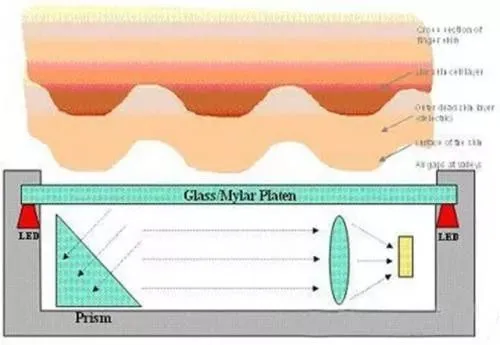
Optical recognition is an earlier and well-established fingerprint technique, historically used in many access control and time-attendance systems. It relies on refraction and reflection of light. When a finger is placed on an optical lens under an internal light source, light is projected through a prism and reflected differently by ridge and valley features of the fingerprint. The reflected light is then captured onto a CMOS or CCD sensor, producing a grayscale fingerprint image where ridge lines appear dark and valleys appear light. The image is then processed by fingerprint-matching algorithms against a database.
Development trends for under-display fingerprint recognition
Optical under-display fingerprint technology is currently more mature and supported by numerous suppliers in the supply chain, including Goodix and Synaptics, both of which have achieved volume production of optical under-display sensors. Many devices that have adopted under-display fingerprint recognition to date use optical implementations. Based on current market penetration, optical under-display fingerprint sensors are likely to remain the mainstream for an extended period.
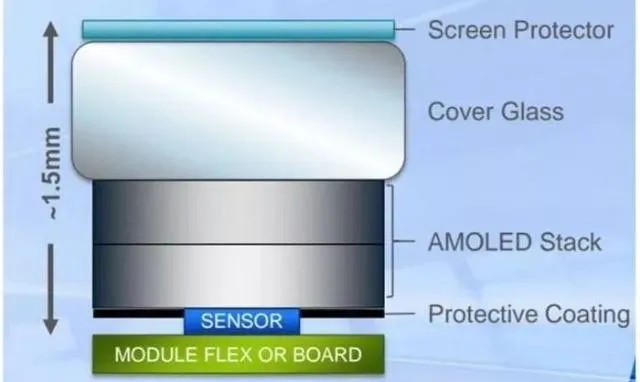
Ultrasonic under-display solutions have not yet reached mass production widely and have been mainly advanced by Qualcomm. Qualcomm's Sense ID started in 2015 and later generations claim the ability to penetrate up to 1200 micrometers of OLED, or 800 micrometers of glass and 650 micrometers of aluminum for fingerprint recognition.
In addition to Qualcomm, companies such as FPC (Fingerprint Cards) have developed ultrasonic under-display technologies that support capturing and recognizing fingerprints at arbitrary locations on the display, reducing design constraints for OEMs and supporting both OLED and LCD screens.
Nevertheless, all ultrasonic approaches face challenges for commercial mass production. Given the current dominant market position of optical under-display sensors, even if ultrasonic technology overcomes technical hurdles, it is uncertain whether device makers would replace mature optical solutions with ultrasonic ones. The future outlook for ultrasonic under-display fingerprint recognition therefore remains uncertain.
In contrast, capacitive under-display solutions have seen limited product releases so far; for example, JDI has announced a product that integrates a capacitive fingerprint sensor with a TFT display glass substrate using a technology called Pixel Eyes. The glass substrate detects capacitance changes to identify touch and fingerprint regions without an additional fingerprint module.
Capacitive under-display sensors can support LCD panels and thus potentially reduce device cost, which could promote wider adoption. However, at present, substantial work remains before such solutions can reach mass production.
For the foreseeable future, optical fingerprint recognition is expected to remain the dominant under-display technology. For ultrasonic and capacitive under-display solutions to overtake optical, they must resolve their technical limitations. The emergence of next-generation display technologies, such as microLED, could also influence the competitive landscape.
Meanwhile, advances in under-display camera and sensing technologies may allow other hidden 3D sensing approaches. Currently, under-display fingerprint recognition helps avoid notches and cutouts; if 3D structured light can be implemented under the display, it remains unclear whether manufacturers will favor 3D sensing or under-display fingerprint methods. The long-term evolution of under-display fingerprint recognition will depend on technical progress and market choices over time.