ALLPCB


Summary
With masks still in use, ear recognition may be a more convenient biometric option. In the post-pandemic era, widespread mask wearing and increased hygiene awareness have heightened the need for efficient identity verification. Ear recognition offers several advantages: it is passive, contactless, non-invasive, and not affected by facial expressions.
Research Context
A recent study at the University of Georgia proposes using the ear for biometric recognition instead of the face or fingerprints.
Thirimachos Bourlai, an associate professor in the University of Georgia engineering school, noted that the ear is one of the few body parts that remains relatively stable over time. Because of that stability, the ear can serve as an alternative to face or fingerprint recognition. Bourlai's team developed an ear recognition system that can verify identity with reported accuracy up to 99%.
Uniqueness and Aging
Ears are unique to each individual, similar to fingerprints. The researchers report that even identical twins have distinguishable ear structures. Another benefit is that, aside from gradual earlobe elongation with age, ears do not exhibit the same aging-related changes as faces.
How It Works
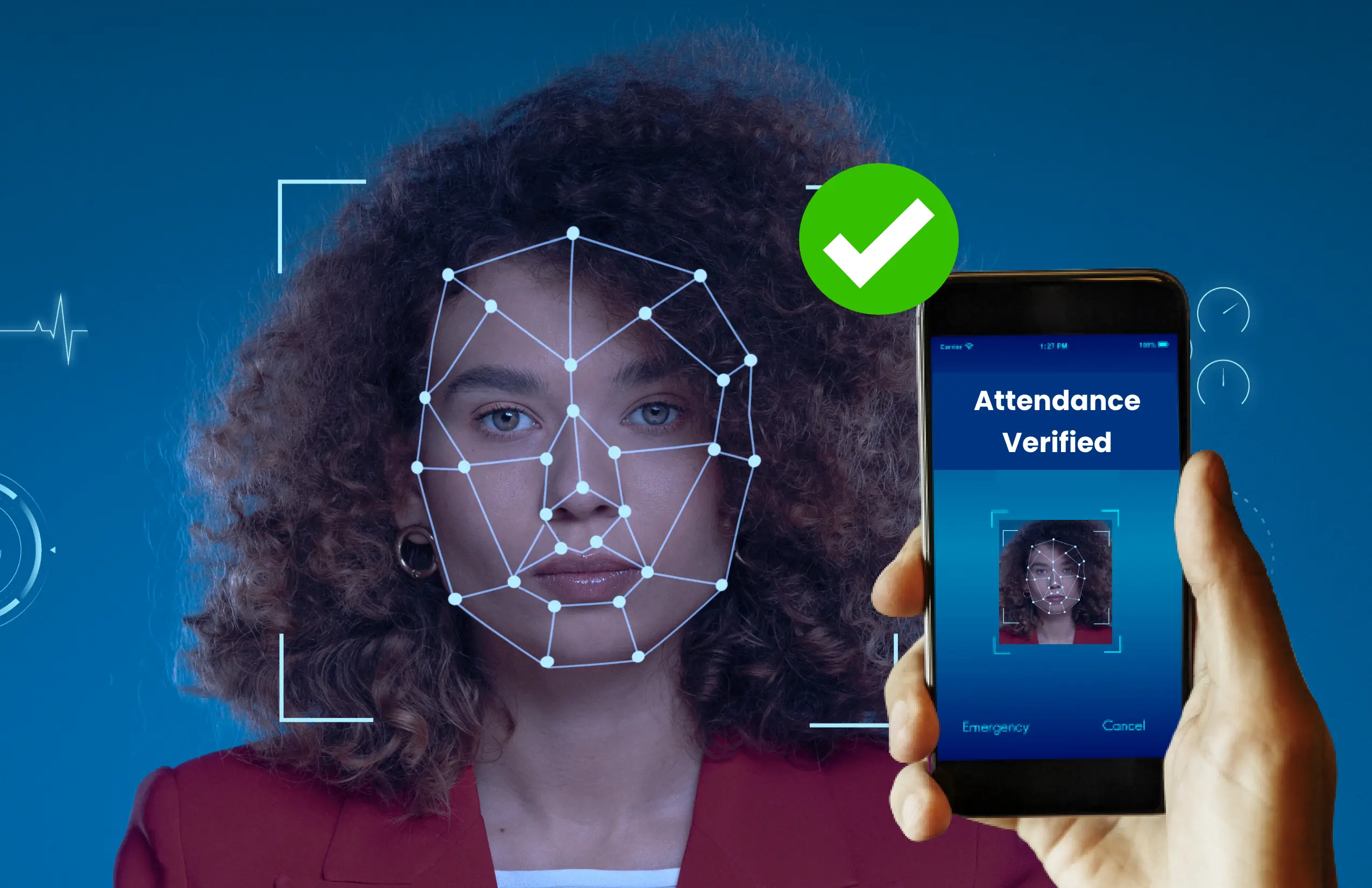
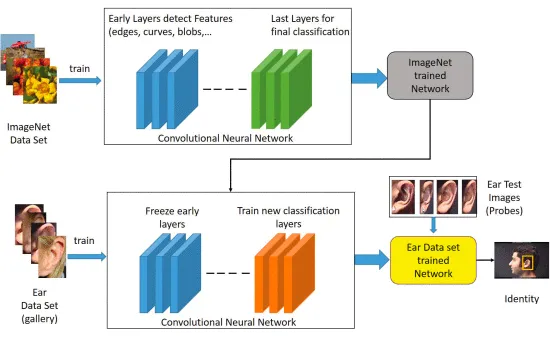
The operation of ear recognition software is similar to face recognition. When users set up a new smartphone, they register fingerprints or a face so the device can later identify them. Devices typically require repeated placements of a finger on a sensor to capture a complete fingerprint image. Face recognition relies on users moving their face in front of a camera so the device can capture facial features. Bourlai's ear recognition algorithm follows a similar enrollment and live-sample comparison process.
Enrollment and Verification
The phone captures multiple identity samples that are temporarily stored on the device. As with live fingerprint authentication, unlocking requires presenting a live ear sample that is compared against the registered samples.
Bourlai noted that ear recognition has been explored previously and that there are many established biometric modalities such as face, fingerprint, and iris. Ear recognition merits further discussion due to its potential benefits, although capturing high-quality ear images presents practical challenges.
Algorithm and Datasets
When configuring a biometric device, the algorithm collects multiple identity samples, such as face images or fingerprints, and records them on the device. Unlocking requires a live sample to be compared to the stored records; in this study those samples are ear images.
Bourlai's software uses an ear recognition algorithm to evaluate ear scans and determine whether they are suitable for automated matching. The team tested the software on several ear datasets and on varied ear morphologies.
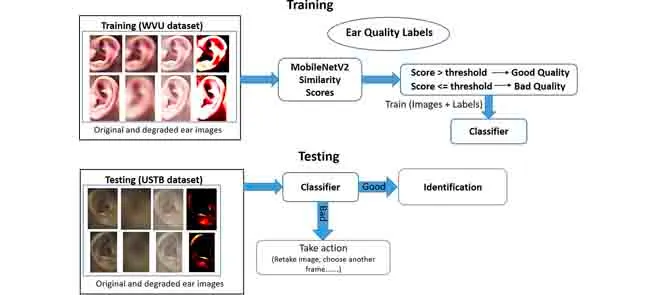
The ear image quality assessment tool uses a dataset composed of original and degraded images from the WVU ear dataset.
Bourlai tested his algorithm on two existing ear image datasets. On one dataset, system performance improved from 58.72% to 97.25% compared with prior ear recognition software. On another dataset, performance rose from 45.8% to 75.11% relative to the baseline method.
Robustness and Model Comparison
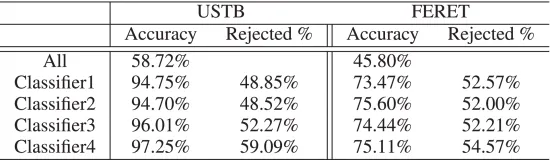
To ensure the system functions under degraded imaging conditions, the team evaluated several models using ear images affected by noise factors including blur, brightness, and contrast variations.

As shown in the results, DenseNet achieved the best recognition performance on the WVU and USTB datasets, while SqueezeNet produced the lowest rank-1 scores.
Applications and Future Work
Bourlai suggested ear recognition software could enhance existing security systems, such as those used at airports and other camera-based surveillance systems. His team plans to improve the algorithm to better handle thermal imaging and low-light environments, since conventional visible-light cameras may struggle to capture clear images under such conditions.
More details are available in the original paper.