ALLPCB


Engineers working in wearable technology face two primary design challenges: overall compactness and the power budget. A compact form factor improves wearer comfort, while reduced power consumption helps extend operating time. Both attributes are increasingly adopted, but they can negatively impact each other.
Although the physical size of microelectronic components is shrinking, their complexity is increasing, enabling new features that place additional demands on available battery energy. Battery management must support fast charging while allowing the wearable to run long enough to avoid frequent charging, which degrades user experience. This requires innovations in power management integrated circuits (PMICs).
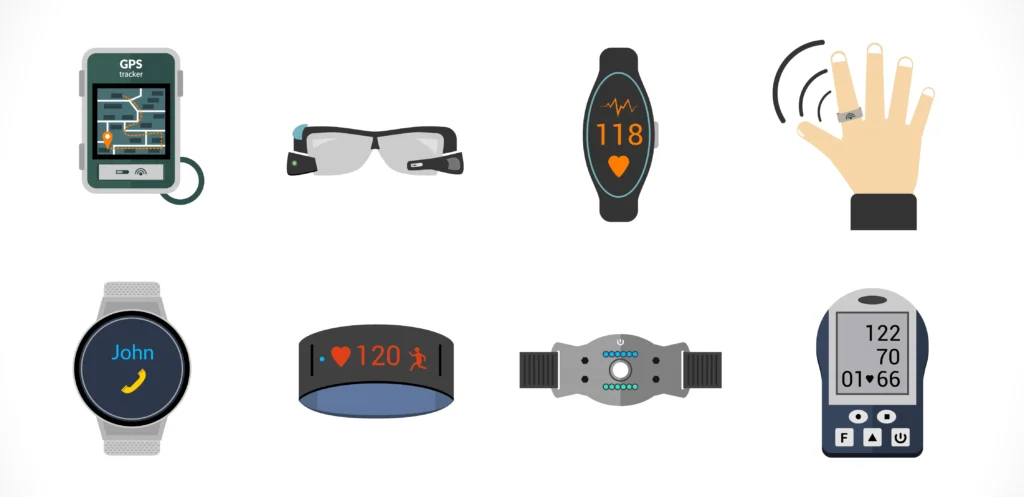
Modern wearables allow monitoring of various physiological and environmental parameters. The device location on the body largely determines which parameters can be measured. The wrist is typically the most suitable location for health and fitness monitoring because it offers both reliable sensing points and convenient access for the wearer.
The design challenge is to support ultra-low-power operation while also achieving a compact enclosure. Streamlined, lightweight designs are most attractive to consumers and have greater commercial value, so engineers must prioritize them during product development. However, enclosure constraints limit battery size and therefore runtime, and users consider short battery life one of the worst product experiences.
Power Management Design: Efficient Energy Handling
Battery size is constrained by the wearable form factor, so maintaining a low system power baseline makes it difficult for design teams to select circuit topologies that yield a fully optimized product. Wearables must host various multimedia and sensing capabilities while providing enough battery energy without becoming bulky. A common design approach partitions the design into analog and digital modules and optimizes each accordingly. Many circuit blocks can be powered down when not needed, while others must remain continuously active.
A typical wearable architecture includes a microcontroller, memory, a small display, appropriate sensors, communications ICs, and associated power management circuitry. Power management typically comprises a PMIC responsible for charging, several buck converters, and multiple low-dropout regulators (LDOs), plus support for Bluetooth and Wi-Fi connectivity.
The power management system must cover multiple voltage rails: one for the microcontroller, one for the display, and one for sensors. The microcontroller and sensors spend most of their time in sleep mode and are awakened to perform scheduled tasks or respond to user input. Many wearable sensors operate at voltages down to 0.8 V. If a load is highly active, for example a heart-rate sensor sampling every few seconds, microcontroller current consumption is often estimated at 35 to 40 uA per MHz, so supporting ultra-low-power designs requires careful attention to this metric.
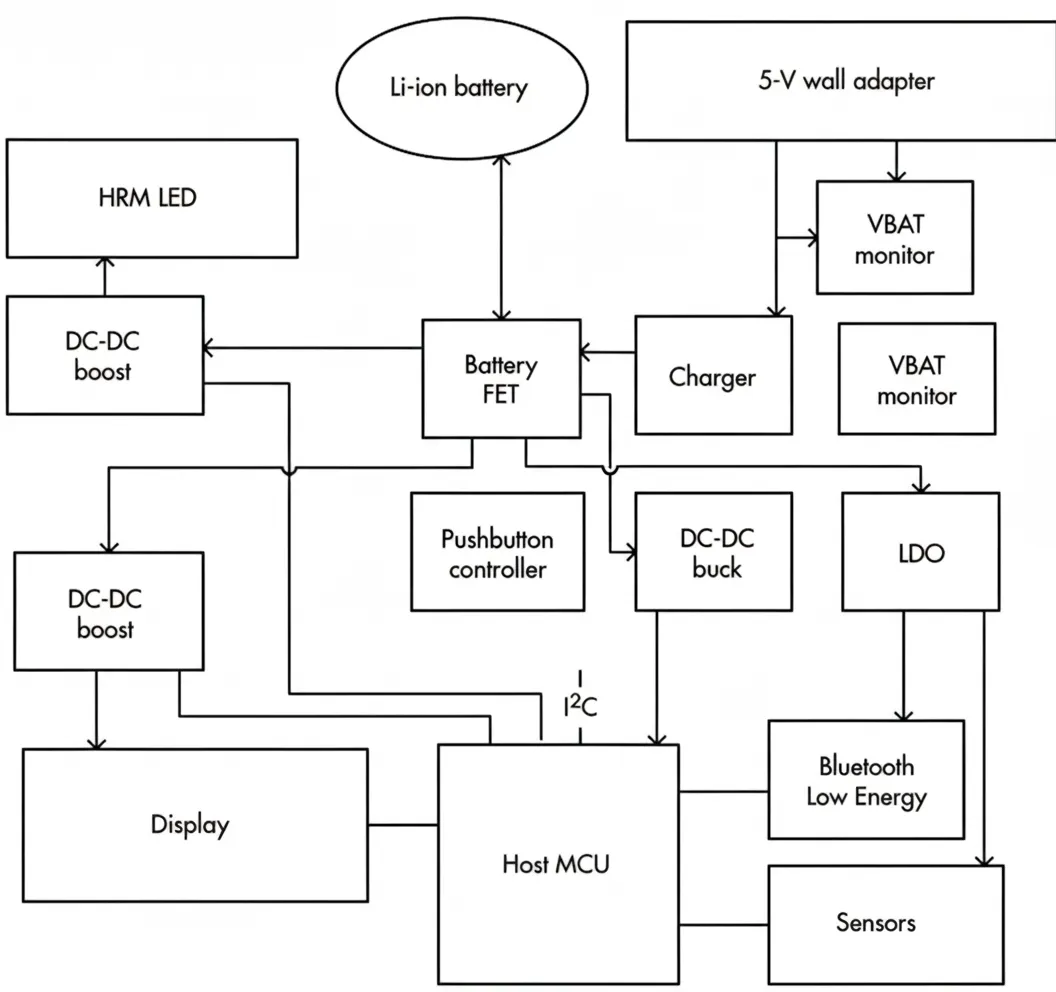
DC/DC power conversion in power management is typically implemented in two forms:
- Via linear regulators integrated into the PMIC, offering scalability in voltage output.
- Via inductor-based switching regulators, which provide higher efficiency and voltage scalability but are often implemented with discrete components rather than fully integrated solutions.
These regulators differ in physical size, flexibility, and efficiency. When initiating a wearable design project, consider:
- Using regulators with ultra-low quiescent current (IQ) to reduce standby power for sensors or peripherals that must remain always on. This helps extend battery life and supports smaller batteries.
- Using efficient regulators to reduce active power during measurements or data transmission.
- Adopting high integration when space is severely limited to realize complex power architectures.
Choosing the right voltage regulator is key to higher efficiency, and both active-mode and standby-mode power consumption must be evaluated. Interfaces with strong impedance matching help maintain low current requirements and extend battery life. Some advanced LDO controllers, such as Renesas' ISL9016, provide up to 150 mA per channel with static resistance values up to 200 mOhm and typical quiescent currents around 60 uA.
Although switching configurations are more efficient than LDOs, they require various inductors to provide multiple voltage rails, which increases cost and board area and can be impractical for many wearable designs. The preferred power management architecture for these constraints is single-inductor multiple-output (SIMO).
The MAX77650 SIMO buck-boost regulator from Maxim Integrated uses a single inductor and can regulate up to three output voltages across a wide range per circuit requirements. Eliminating the need for multiple discrete components can significantly save space.
Battery Capacity and Product Size
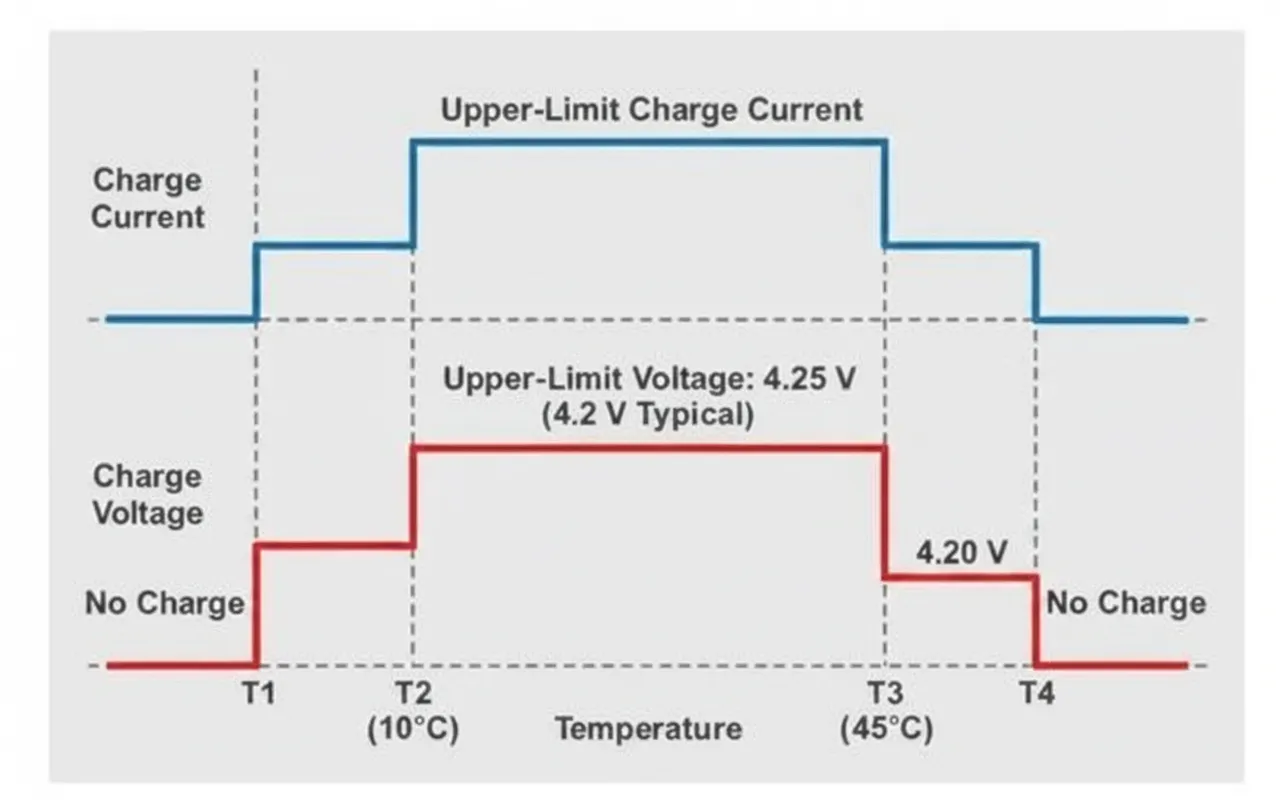
A common design challenge for wearables is maintaining long battery life across varied use cases. Smartwatches often have space for a single-cell lithium-ion battery with a nominal voltage of 3.8 V and capacities between about 130 mAh and 410 mAh. Lithium-ion cells are the most common chemistry for small rechargeable batteries; battery management and charging systems must closely monitor current, voltage, and temperature during charge and discharge. The primary challenges are minimizing the system's own power consumption, reducing required charging time, and maximizing usable battery energy. High-integration PMICs such as TI's BQ25100 are designed for single-cell lithium-ion charging and allow use of low-cost adapters with unregulated outputs. These PMICs also support other chemistries such as lithium-polymer.
Compared with battery technologies, supercapacitors cannot match batteries in energy density but offer advantages in power delivery, size, and cycle life. As wearables shrink, internal space becomes more precious. A current trend is replacing rechargeable batteries with supercapacitors to enable new energy storage approaches based on nanotechnology. Unlike batteries, supercapacitors integrate well with energy-harvesting devices and can be charged in seconds, supporting virtually unlimited charge cycles. Murata's ultra-thin DMH supercapacitor offers 35 mF at a nominal 4.5 V with an ESR of 300 mOhm in a 20 mm x 20 mm x 0.4 mm package.
Research is also exploring energy-harvesting solutions as auxiliary power sources to enable continuous wearable operation without strict ultra-low-power constraints. One approach uses relative motion between material layers to generate small currents via triboelectric charging. When different materials move relative to one another, friction produces charge. Placing different material layers between two conductive electrodes can generate a few microwatts from routine human motion, which can help charge the wearable's battery and improve overall power system performance.
Conclusion
Specialized and increasingly efficient hardware is guiding the wearable market toward larger volumes of mobile devices. New PMICs and application-specific SoCs from vendors such as Microchip and Analog Devices provide options that help balance energy efficiency, compute capability, and compactness. If electronic devices are required to reach volumes similar to earbuds or medical patches, battery capacity will be severely constrained. Implementing comprehensive engineering approaches can find optimal ways to extend battery life and preserve each microampere of available energy.