ALLPCB


Introduction
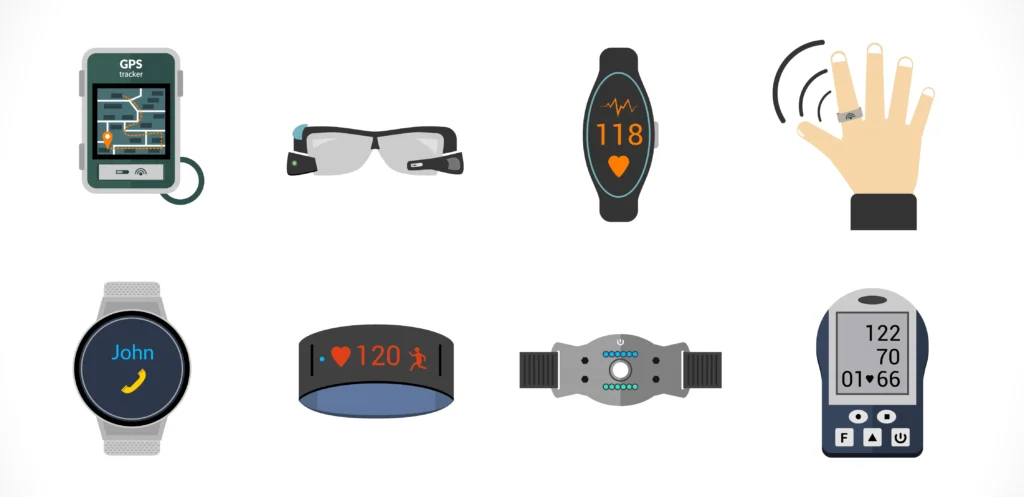
Wearable electronic products place unique demands on electrostatic discharge (ESD) protection: lower capacitance, lower clamp voltage, and smaller package sizes. Wearables are interactive devices that typically track or monitor information about the wearer. Popular categories include smart glasses, ring or finger-worn scanners, footwear, wrist-worn accessories such as smartwatches and bands, ties, headbands, and emerging smart textiles.
ESD Risks in Wearables
Because these devices are worn in direct contact with the skin, they are exposed to ESD events generated by users. Even simple human contact can produce transient discharges. Without appropriate protection, sensors, battery charging interfaces, buttons, or data input/output ports can provide paths for ESD to enter a device and cause irreparable damage.
Design Considerations for ESD Protection
1. Minimize capacitance to avoid interfering with high-speed signals
ESD protection components must protect circuits without degrading normal functionality. For RF interfaces such as Bluetooth or WLAN, or wired ports like USB 2.0, protection must not distort signals or reduce signal strength. To preserve signal integrity, protection device capacitance must be minimized without reducing protection effectiveness. For example, the Littelfuse SP3022 series TVS diodes offer extremely low capacitance (0.35 pF), keeping them effectively transparent to high-speed signals.
2. Low clamp voltage to protect sensitive circuits
During an ESD event, the protection device should transfer and dissipate the transient voltage as efficiently as possible. This is achieved by reducing static or dynamic resistance during the pulse so the protection device absorbs more of the impact current than the protected circuit. Lower dynamic resistance reduces the ESD stress on integrated circuits and improves survivability. For example, the Littelfuse SP3014 series TVS diode arrays have dynamic resistance below 0.1 ohm, providing strong low-clamp performance.
3. Compact packages to fit limited board space
Even high-performance protection devices are impractical if they cannot fit the available board area. Wearables are becoming thinner and smaller, leaving minimal PCB space for ESD protection. Discrete-device protection schemes offer PCB layout flexibility to address this design constraint. Devices such as the SP1020 (30 pF) and SP1021 (6 pF) series diodes are available in 01005 package sizes to minimize occupied area. The SP1012 series provides five-channel protection in an enclosed 0.94 x 0.61 mm package, reducing the number of protection components and pins required.
Conclusion
Wearable devices present ongoing challenges for designers, who must ensure reliable operation regardless of user activity or exposure to ESD transients. Protection-device manufacturers continue to develop solutions that provide effective ESD protection without interfering with core wearable functions.