ALLPCB


Q1. What is MIMO and what functions does it provide?
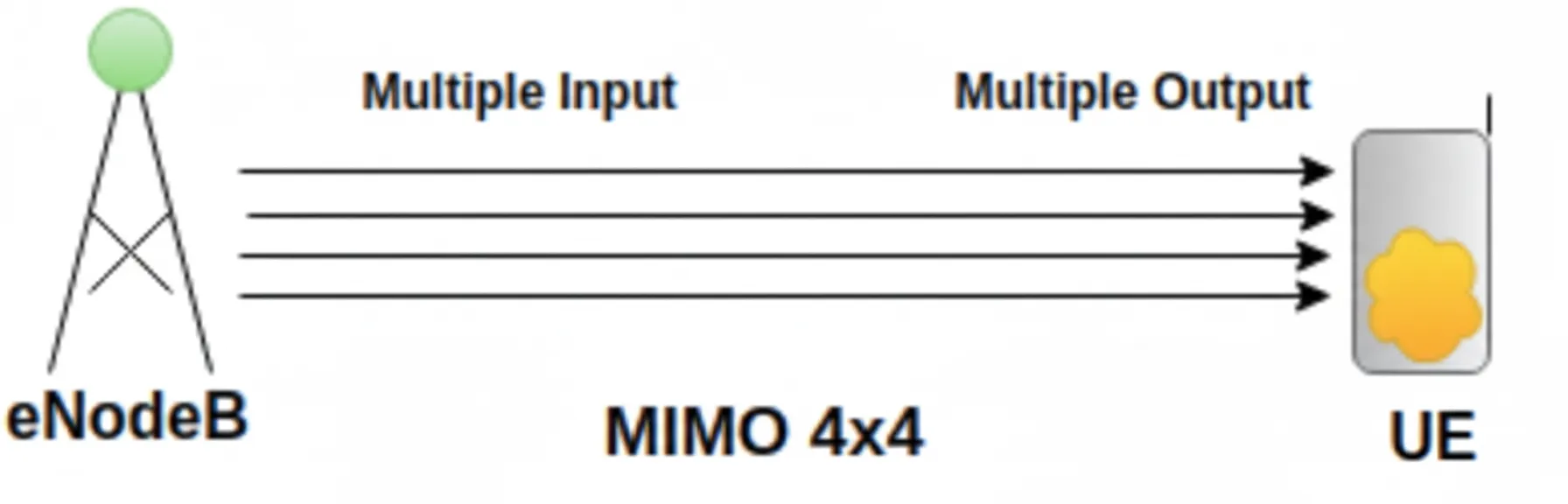
MIMO stands for Multiple Input Multiple Output.
The basic idea of MIMO is to have multiple antennas at the transmitter and multiple antennas at the receiver.
Q2. What is diversity and why is it used in MIMO?
Diversity is used to improve system reliability. In a diversity scheme, the transmitter sends the same data via different propagation paths.
In MIMO systems, to achieve either reliability or high data rates, two main techniques are used: 1. spatial diversity 2. spatial multiplexing.
Q3. What is spatial diversity?
Spatial diversity is one of the fundamental advantages of MIMO technology.
In short, diversity aims to improve reliability by transmitting the same data over different spatial or propagation paths.
Q4. What is spatial multiplexing in MIMO?
Spatial multiplexing (SM or SMX), also called space-division multiplexing (SDM), transmits data over spatially separated, independent channels.
Think of it as multiple parallel pipes between a base station and a mobile device. With one antenna at the base station and one at the mobile, only a limited amount of data can be transmitted. By installing more antennas at the base station and providing spatial separation, it is possible to create multiple virtual pipes in space between the base station and the mobile.
This creates multiple paths for transmitting more data between the base station and the mobile device.
Q5. What are the advantages of MIMO?
UEs with good coverage (high SNR) can exploit spatial multiplexing gain to receive multiple parallel data streams.
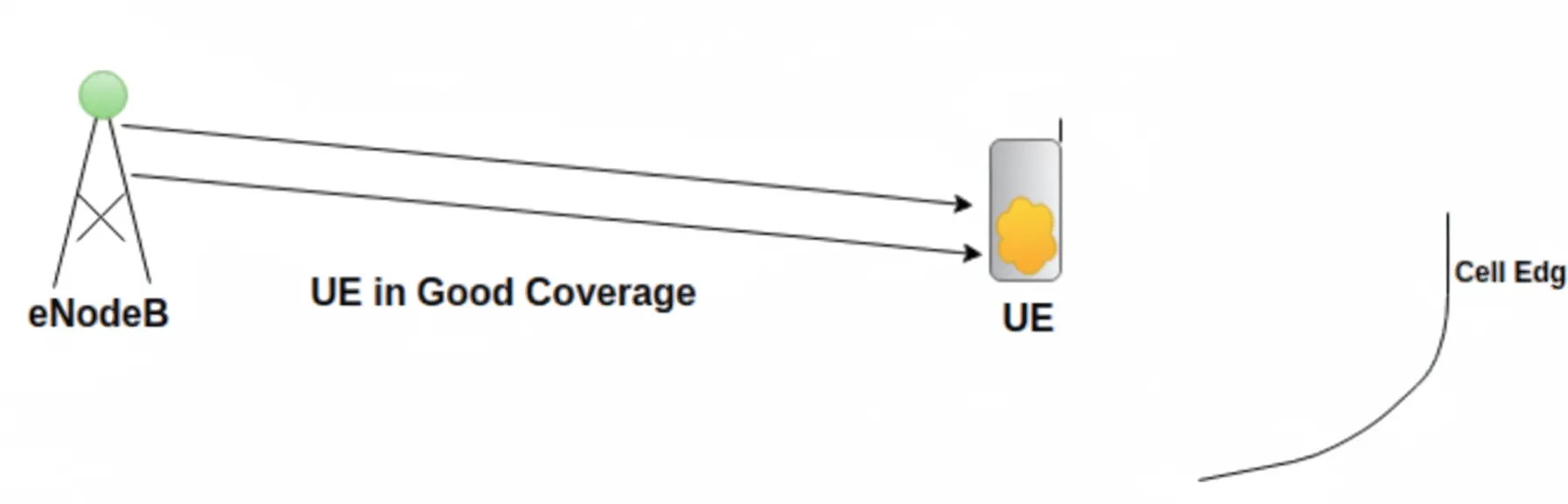
For example, 2x2 MIMO, 4x2 MIMO and 2x4 MIMO configurations can all transmit up to two parallel data streams.
UEs with poorer coverage (lower SNR) can exploit diversity gain to improve the received SNR.
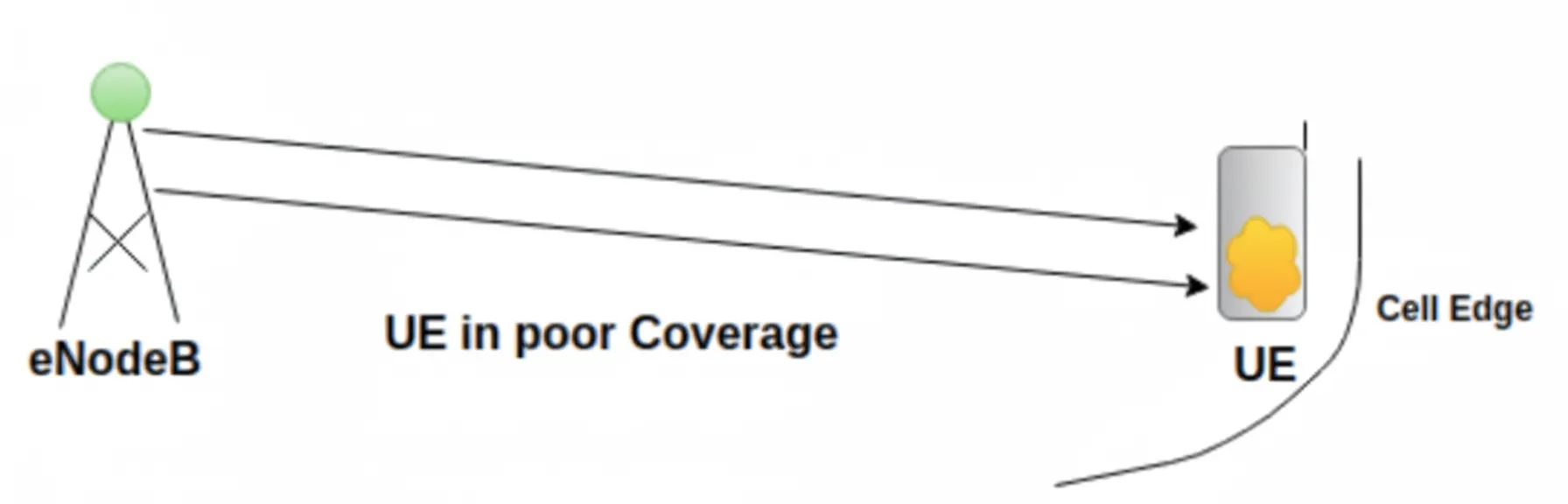
Diversity gain depends on the number of receive antennas and the correlation between propagation paths. The gain is largest when there are many receive antennas and the propagation paths are uncorrelated.
Because this depends on channel conditions, MIMO is used to transmit multiple parallel data streams under good coverage to maximize throughput, while under poor coverage it is used to transmit a single data stream to maximize diversity gain.
Q6. What are the drawbacks of MIMO?
MIMO increases implementation complexity and hardware requirements. It requires additional processing at both the transmitter and the receiver.
MIMO also requires extra signaling, such as receiver feedback and transmitter resource allocation information.
Hardware overhead includes additional power amplifiers at the transmitter, additional receive paths at the receiver, and more antenna elements at both transmitter and receiver.
Q7. What is open-loop MIMO and why use it?
In open-loop MIMO, the transmitter requires feedback from the receiver in the form of a Rank Indicator (RI) and a Channel Quality Indicator (CQI).
It is called "open-loop" because the transmitter does not require feedback in the form of a Precoding Matrix Indicator (PMI) from the receiver.
Open-loop MIMO is advantageous in high-mobility scenarios because high mobility can make reported PMI stale within a short time.
Q8. What is closed-loop MIMO?
In closed-loop MIMO, the transmitter requires feedback from the receiver that includes RI, CQI and PMI.
The receiver selects a PMI to help improve the properties of the composite channel coefficient matrix.
Closed-loop MIMO allows the transmitter to use more detailed channel information, but it also increases signaling overhead.
Q9. What is diversity gain in MIMO?
Diversity gain reduces the impact of fading when the attenuations on different propagation paths are uncorrelated. If one path experiences deep fading while another does not, the receiver can exploit the non-faded path.
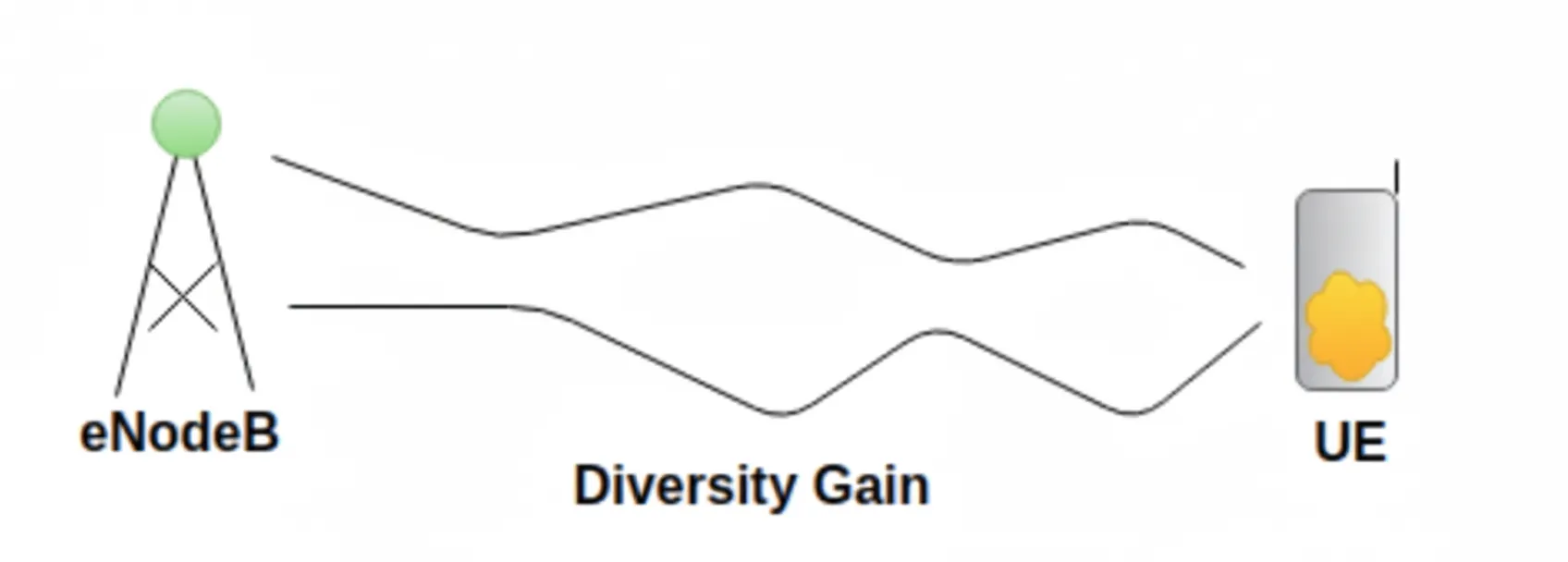
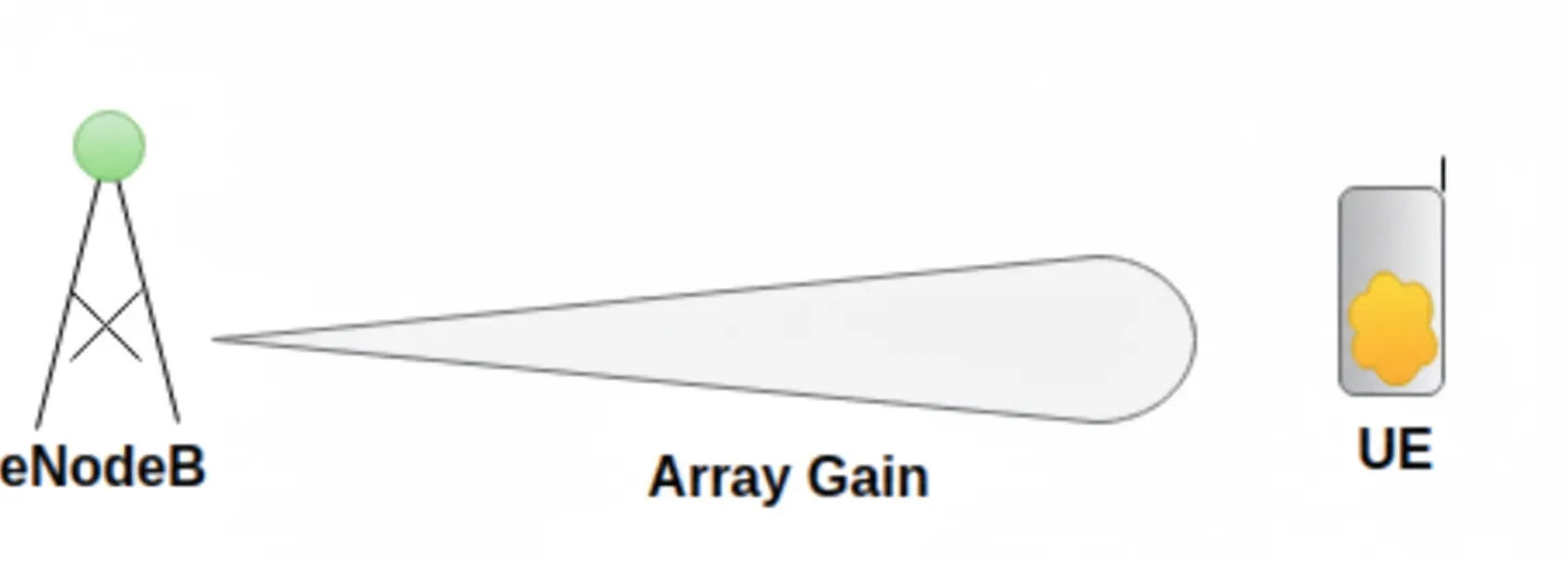
Q10. What is array gain in MIMO?
Array gain is achieved by beamforming when multiple antenna elements transmit the signal. Beamforming directs the transmitted signal toward the UE and improves the received SNR.
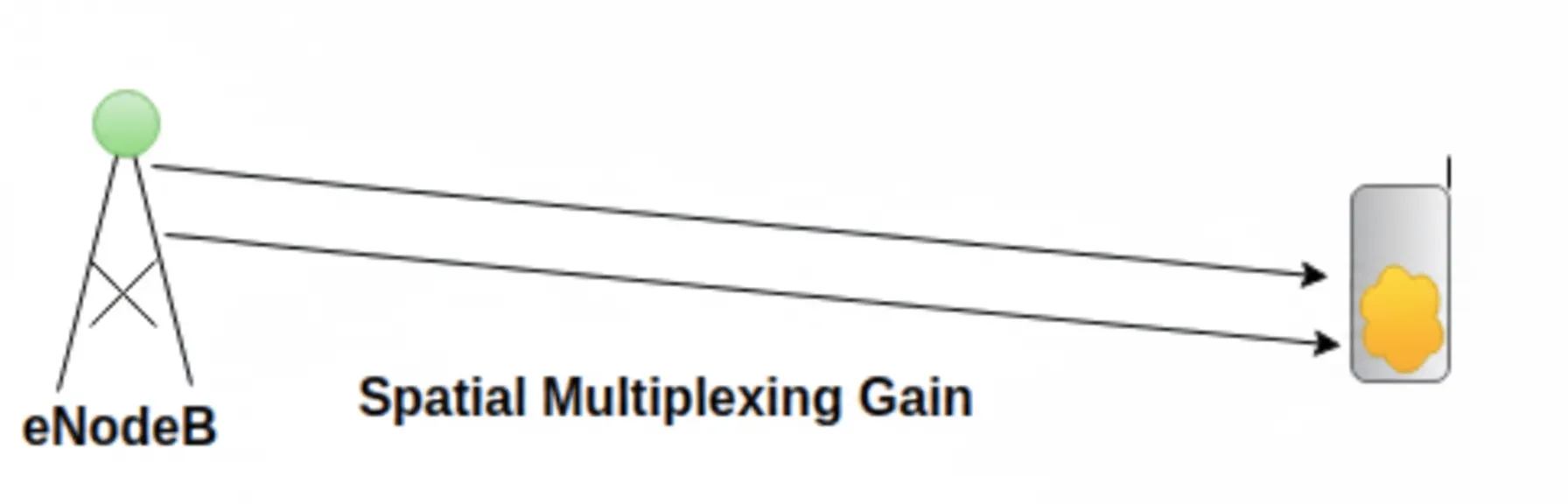
Q11. What is spatial multiplexing gain in MIMO?
Spatial multiplexing gain increases throughput by transmitting multiple data streams in parallel using the same time and frequency resources. Uncorrelated transmission paths allow the receiver to separate the data streams.
Q12. Does 3GPP R15 support MIMO in the uplink?
3GPP R15 New Radio (NR) specifies MIMO for both uplink and downlink directions.
The uplink supports 2x2 MIMO and 4x4 MIMO. The downlink supports 2x2 MIMO, 4x4 MIMO and 8x8 MIMO.
R15 also supports multi-user MIMO (MU-MIMO) in both uplink and downlink directions.
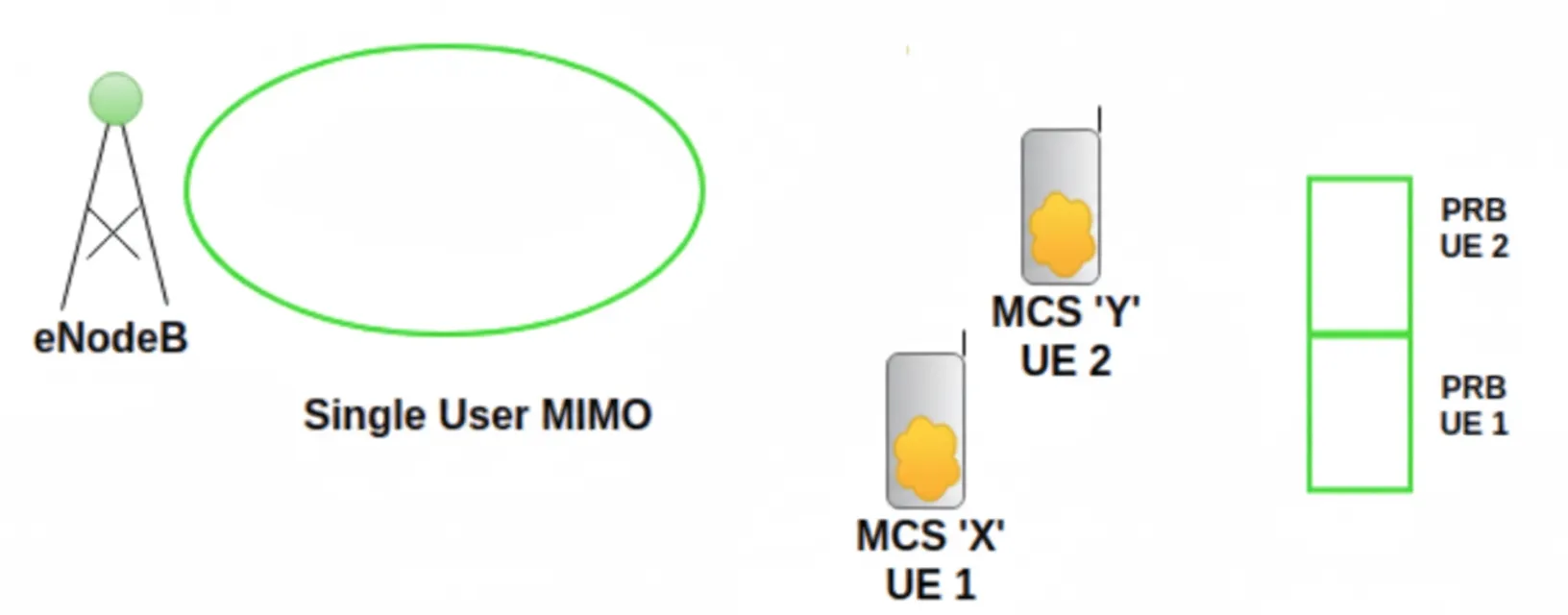
Q13. What is Single-User MIMO (SU-MIMO)?
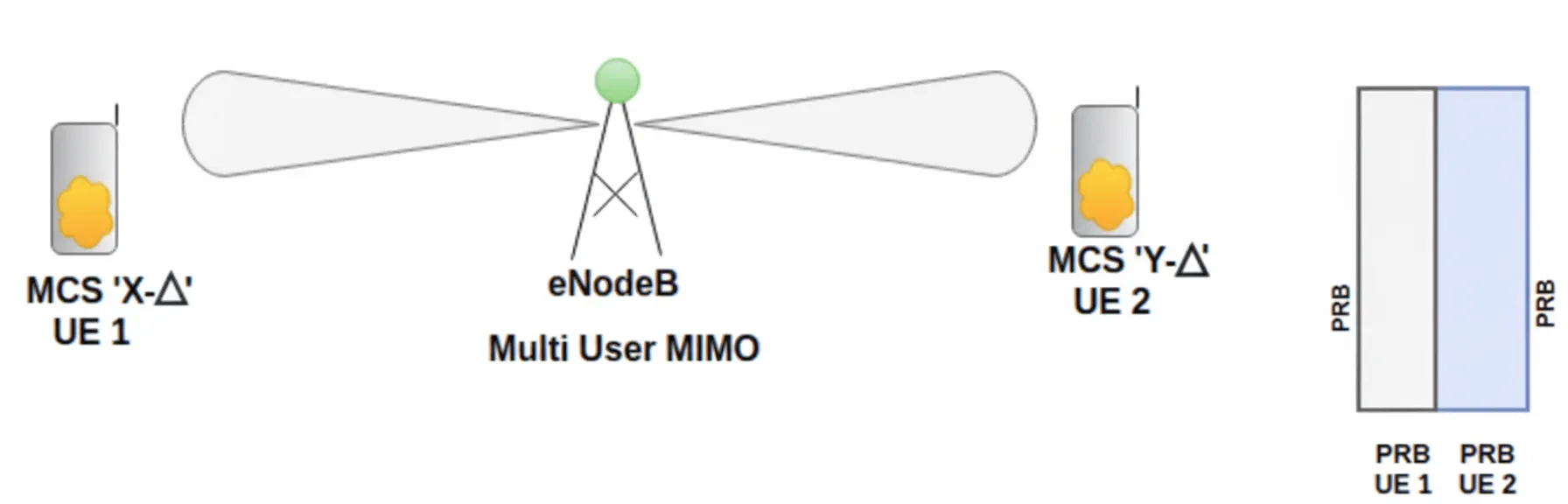
Single-user MIMO assigns different subsets of physical resource blocks (PRBs) to each UE, separating them in the frequency domain.
Because transmissions for different UEs do not interfere, the UEs scheduled within a given time slot do not need to be spatially separated, and a relatively high modulation and coding scheme (MCS) can be allocated.
Q14. What is Multi-User MIMO (MU-MIMO)?
Multi-user MIMO uses beamforming to allocate the same time and frequency resources to multiple UEs that are separated in the spatial domain.
These spatially separated UEs can reuse the same physical resource blocks without causing severe mutual interference.
Q15. What are the advantages of MU-MIMO?
Increased network capacity: network capacity refers to the total amount of data that can be delivered to users and the maximum number of users that can be served at an acceptable service level.
Improved coverage: with large-scale MIMO, users can experience more uniform performance across the network, including at the cell edge, allowing higher data rates nearly everywhere.
User experience: the above advantages combine to provide a better overall user experience, enabling large file transfers, movie downloads, and data-intensive applications at more locations.