ALLPCB


When it comes to designing printed circuit boards (PCBs) for railway signaling systems, selecting the right laminate material is critical. Railway signaling applications demand high reliability, durability, and performance under harsh conditions. So, what’s the best PCB material for railway signaling? The answer lies in balancing factors like thermal conductivity, flame resistance, and electrical properties. Popular choices include FR-4 for cost-effectiveness, high-Tg materials for enhanced thermal stability, and advanced laminates like Rogers for superior high-frequency performance.
In this comprehensive guide, we’ll dive deep into the key considerations for PCB material selection in railway signaling. We’ll explore the benefits and limitations of materials like FR-4 railway-grade laminates, high-Tg PCB materials, and Rogers PCB railway options, while addressing critical properties such as thermal conductivity in PCBs and UL 94V-0 flame resistance standards. Whether you’re an engineer or a procurement specialist, this blog will help you make informed decisions for your next project.
Why PCB Material Selection Matters for Railway Signaling
Railway signaling systems are the backbone of safe and efficient train operations. These systems rely on PCBs to manage critical functions like track switching, signal control, and communication. A failure in a PCB can lead to delays, safety risks, or even catastrophic accidents. Therefore, the laminate material used in these PCBs must withstand extreme environmental conditions, including temperature fluctuations, humidity, vibration, and potential fire hazards.
The right PCB material ensures:
- Reliable signal transmission with minimal loss, even at high frequencies.
- Durability under thermal stress and mechanical vibrations.
- Compliance with safety standards like UL 94V-0 for flame resistance.
- Cost-effectiveness without compromising performance.
Let’s break down the key factors to consider when choosing a PCB laminate for railway signaling and explore the most suitable materials for these demanding applications.
Key Factors in PCB Material Selection for Railway Signaling
Before diving into specific materials, it’s important to understand the critical properties that influence PCB performance in railway signaling. These factors guide the choice of laminate and ensure the board meets operational and safety requirements.
1. Thermal Conductivity and Temperature Resistance
Railway signaling equipment often operates in outdoor environments where temperatures can range from -40°C to 85°C or higher. A PCB material with good thermal conductivity helps dissipate heat generated by components, preventing overheating and ensuring stable performance. For instance, a thermal conductivity value of 0.3 to 0.5 W/m·K is often sufficient for standard applications, but high-power circuits may require materials with values exceeding 1.0 W/m·K.
Additionally, the glass transition temperature (Tg) of the material is crucial. Tg indicates the temperature at which the laminate transitions from a rigid to a rubbery state, potentially leading to mechanical and electrical failures. Materials with a high Tg (above 170°C) are preferred for environments with significant thermal stress.
2. Electrical Performance for Signal Integrity
Signal integrity is paramount in railway signaling, where high-frequency signals are used for communication and control. The dielectric constant (Dk) and dissipation factor (Df) of a PCB material determine how well it can maintain signal quality. A lower Dk (typically between 3.5 and 4.5 for standard materials) and a low Df (below 0.02) reduce signal loss and crosstalk, which is essential for high-speed data transmission.
3. Flame Resistance (UL 94V-0 Compliance)
Safety is non-negotiable in railway applications. PCB materials must meet stringent fire safety standards like UL 94V-0, which ensures the material is self-extinguishing and does not contribute to fire spread. A UL 94V-0 PCB rating means the material stops burning within 10 seconds after the flame source is removed, making it a critical specification for railway signaling systems.
4. Mechanical Strength and Vibration Resistance
Railway environments expose PCBs to constant vibrations and mechanical shocks. The laminate must have high tensile strength and flexibility to prevent cracking or delamination. A material with a tensile strength of at least 300 MPa is often recommended for such applications.
5. Cost and Availability
While performance is critical, budget constraints cannot be ignored. The material should offer a balance between cost and required properties. Standard materials are often more affordable and widely available, while specialized laminates may increase costs but provide unmatched performance for specific needs.
Popular PCB Materials for Railway Signaling
Now that we’ve covered the key factors, let’s explore the most commonly used PCB materials for railway signaling and how they align with the requirements discussed.
FR-4 Railway-Grade Laminates: The Cost-Effective Choice
FR-4 is one of the most widely used PCB materials across industries, including railway signaling. It is a glass-reinforced epoxy laminate known for its balance of cost, mechanical strength, and electrical insulation. FR-4 railway-grade laminates are specifically formulated to meet the demands of harsh environments.
Key Properties of FR-4:
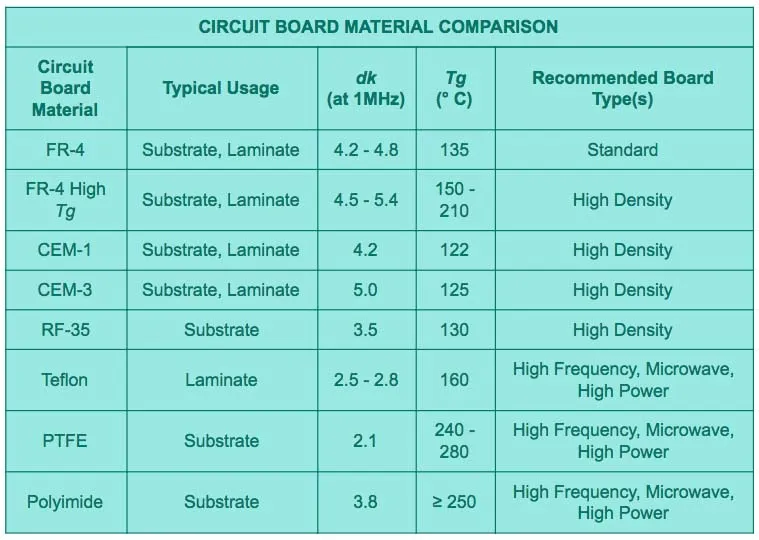
- Dielectric Constant (Dk): 4.2–4.5 at 1 MHz
- Thermal Conductivity: 0.3–0.4 W/m·K
- Tg: 130–140°C (standard); higher for specialized grades
- Flame Resistance: Typically UL 94V-0 compliant
Advantages:
- Affordable and widely available for mass production.
- Good mechanical strength and moisture resistance, ideal for humid railway environments.
- Suitable for low to medium frequency applications in signaling systems.
Limitations:
- Limited thermal conductivity, which may not suffice for high-power circuits.
- Standard Tg values may not withstand extreme temperature swings, requiring high-Tg variants.
FR-4 railway laminates are best suited for non-critical control circuits or applications where cost is a primary concern and operating conditions are within moderate ranges.
High-Tg PCB Material: Enhanced Thermal Stability
For railway signaling systems exposed to extreme temperatures, high-Tg PCB materials are a step up from standard FR-4. These materials have a glass transition temperature of 170°C or higher, making them more resistant to thermal stress and deformation.
Key Properties of High-Tg Materials:
- Dielectric Constant (Dk): 4.0–4.5 at 1 MHz
- Thermal Conductivity: 0.3–0.5 W/m·K
- Tg: 170–180°C or higher
- Flame Resistance: UL 94V-0 compliant
Advantages:
- Better performance in high-temperature environments, such as near railway tracks in hot climates.
- Improved reliability during thermal cycling, reducing the risk of cracks or failures.
- Compatible with lead-free soldering processes, which require higher temperatures.
Limitations:
- Slightly higher cost compared to standard FR-4.
- Still not ideal for very high-frequency applications due to dielectric limitations.
High-Tg PCB material is an excellent choice for railway signaling systems in regions with significant temperature variations or for designs requiring enhanced durability.
Rogers PCB Railway Applications: High-Frequency Excellence
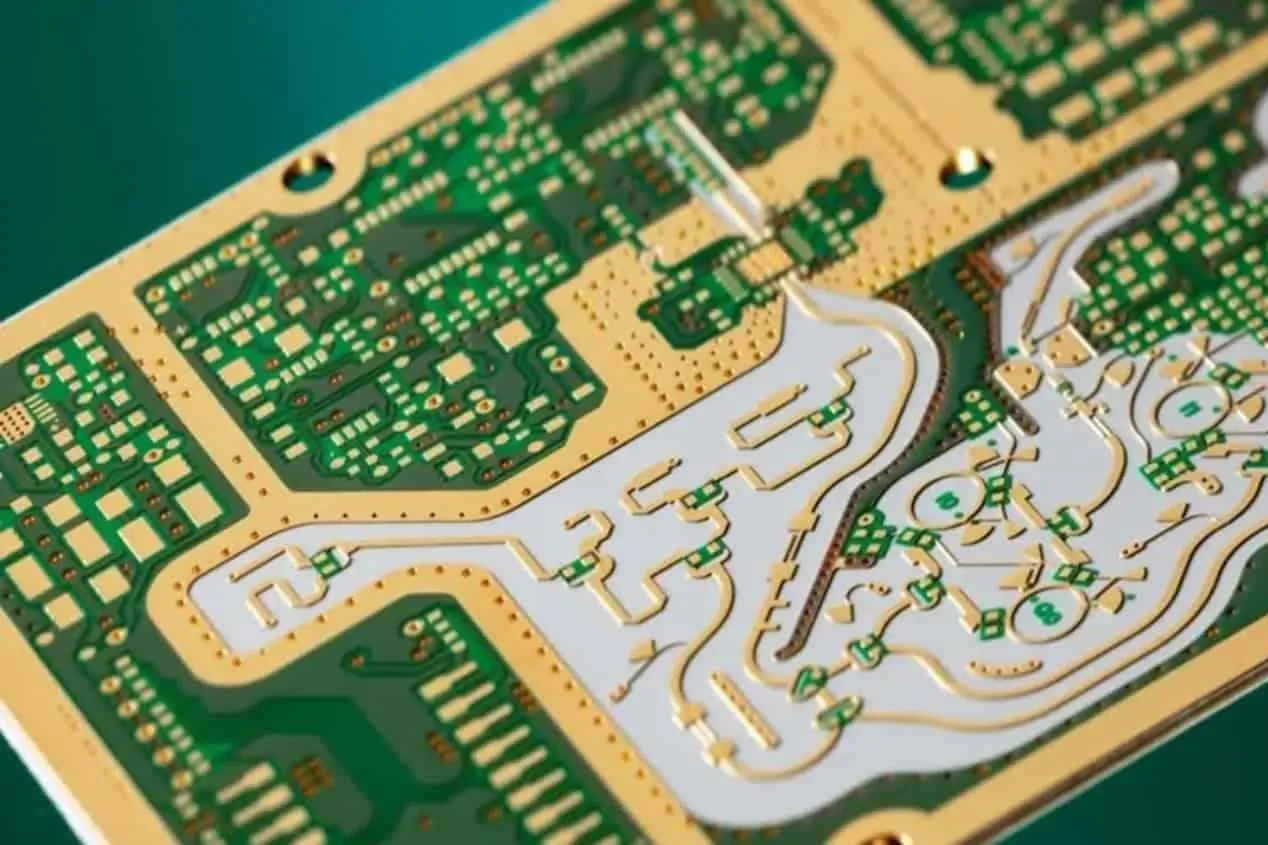
For railway signaling systems that rely on high-frequency signals, such as wireless communication or radar-based detection, advanced laminates like Rogers materials stand out. These hydrocarbon ceramic laminates offer superior electrical performance, making them ideal for demanding applications.
Key Properties of Rogers Materials:
- Dielectric Constant (Dk): 2.2–3.5 (varies by specific grade)
- Thermal Conductivity: 0.6–1.0 W/m·K (higher in some grades)
- Tg: Typically above 200°C
- Flame Resistance: Often UL 94V-0 compliant
Advantages:
- Exceptional signal integrity at high frequencies, with low signal loss (Df as low as 0.001).
- Higher thermal conductivity compared to FR-4, aiding heat dissipation in compact designs.
- Stable performance across a wide temperature range, suitable for extreme railway conditions.
Limitations:
- Significantly higher cost, often reserved for specialized applications.
- More complex manufacturing process, which may increase lead times.
Rogers PCB railway materials are the go-to option for high-speed communication modules or RF circuits in modern railway signaling systems where signal accuracy is critical.
Comparing Thermal Conductivity in PCB Materials
Thermal conductivity in PCBs plays a vital role in managing heat dissipation, especially in railway signaling systems with densely packed components or high-power circuits. Let’s compare the thermal conductivity of the materials discussed:
- FR-4: 0.3–0.4 W/m·K – Suitable for low to medium power applications but may require additional heat sinks for high-power designs.
- High-Tg FR-4: 0.3–0.5 W/m·K – Slightly better than standard FR-4, though still limited for extreme heat dissipation needs.
- Rogers Laminates: 0.6–1.0 W/m·K – Offers superior heat management, reducing the need for external cooling solutions.
For applications where heat is a major concern, such as power supply units in signaling equipment, opting for a material with higher thermal conductivity can extend the lifespan of the PCB and prevent thermal failures.
Ensuring Safety with UL 94V-0 PCB Standards
Fire safety is a top priority in railway signaling, where equipment is often housed in enclosed spaces with limited ventilation. The UL 94V-0 standard is a benchmark for flame resistance, ensuring that the PCB material will not sustain combustion for more than 10 seconds after the flame source is removed. Most FR-4, high-Tg, and Rogers materials used in railway applications are designed to meet this standard, but it’s essential to verify compliance during material selection.
Choosing a UL 94V-0 PCB not only enhances safety but also ensures compliance with international regulations for railway equipment, reducing liability risks for manufacturers and operators.
How to Choose the Right Laminate for Your Railway Signaling Project
Selecting the ideal PCB material for railway signaling involves aligning the material properties with your project’s specific requirements. Here’s a step-by-step approach to guide your decision:
- Assess Environmental Conditions: Determine the temperature range, humidity levels, and vibration exposure your PCB will face. For extreme conditions, prioritize high-Tg or advanced laminates.
- Evaluate Electrical Needs: Identify the frequency and signal integrity requirements. High-frequency applications benefit from low-Dk materials like Rogers laminates.
- Consider Power and Heat Dissipation: For high-power circuits, focus on thermal conductivity in PCBs to prevent overheating.
- Ensure Safety Compliance: Confirm that the material meets UL 94V-0 standards for flame resistance.
- Balance Cost and Performance: Opt for cost-effective materials like FR-4 railway laminates for non-critical applications, reserving premium materials for specialized needs.
By carefully analyzing these factors, you can narrow down your options and select a laminate that delivers reliability without exceeding your budget.
Conclusion: Building Reliable Railway Signaling Systems with the Right PCB Material
Choosing the right PCB material for railway signaling is a decision that impacts safety, performance, and cost. FR-4 railway laminates offer an affordable and reliable solution for standard applications, while high-Tg PCB materials provide enhanced thermal stability for challenging environments. For high-frequency and high-performance needs, Rogers PCB railway materials deliver unmatched signal integrity and heat management. Additionally, prioritizing properties like thermal conductivity in PCBs and ensuring UL 94V-0 compliance are essential for long-term reliability and safety.
At ALLPCB, we understand the unique demands of railway signaling applications and are committed to providing high-quality PCB solutions tailored to your needs. Whether you’re looking for cost-effective FR-4 or advanced laminates for cutting-edge systems, our team is ready to support your project from design to delivery.