ALLPCB


Overview
Some vendors represented by Apple use 3D face recognition with structured light to build a facial model, but that approach typically requires a display notch. Vendors such as vivo have adopted under-display fingerprint solutions, which keep the sensor hidden and avoid a notch.
Although all are called under-display fingerprint sensors, they can be divided by principle and implementation into three types: optical, ultrasonic, and capacitive. Each type has different characteristics and is at a different stage of development.
Optical under-display fingerprint
Optical fingerprint recognition is common in everyday devices; for example, workplace time clocks often use optical methods that rely on light reflection to detect fingerprint patterns. In smartphones, optical under-display fingerprint designs cannot use traditional optical modules due to space constraints, so they use the phone display as the light source. Because LCD panels do not emit light, current optical under-display implementations use OLED screens.
The working principle is that the inherent gaps between OLED pixels allow light to pass through. When a user presses a finger to the screen, the OLED area under the finger lights up. The reflected light carrying the fingerprint pattern passes back through the pixel gaps to a sensor placed under the display. The captured image is compared with stored templates for identification.
Optical under-display sensors are relatively robust against ambient light and can be stable under extreme conditions. However, they face issues such as lower recognition rates with dry fingers, potential screen aging or burn-in from repeatedly lighting specific areas, and higher power consumption compared with traditional optical fingerprint modules.
Ultrasonic under-display fingerprint
Ultrasonic under-display fingerprint solutions also face several challenges, including low image quality, immature technology, and low production yield. These issues have so far limited wide-scale commercial adoption.
Qualcomm has been a main promoter of ultrasonic solutions. In 2015 Qualcomm introduced the Sense ID 3D ultrasonic fingerprint solution, and in 2017 released a next-generation ultrasonic scheme reportedly capable of penetrating 1200 μm of OLED, or 800 μm of glass and 650 μm of aluminum alloy for fingerprint sensing.
Fingerprint Cards (FPC), a Swedish company, also has ultrasonic under-display technology that supports capturing and recognizing a fingerprint at any position on the display, reducing design constraints for device manufacturers. FPC's solution supports both OLED and LCD displays.
Despite these developments, ultrasonic approaches still face difficulties reaching mass production. Given the strong market position of optical under-display sensors, it is uncertain whether manufacturers would shift from an established optical solution to an ultrasonic one even if ultrasonic implementations overcome production hurdles.
Capacitive under-display fingerprint
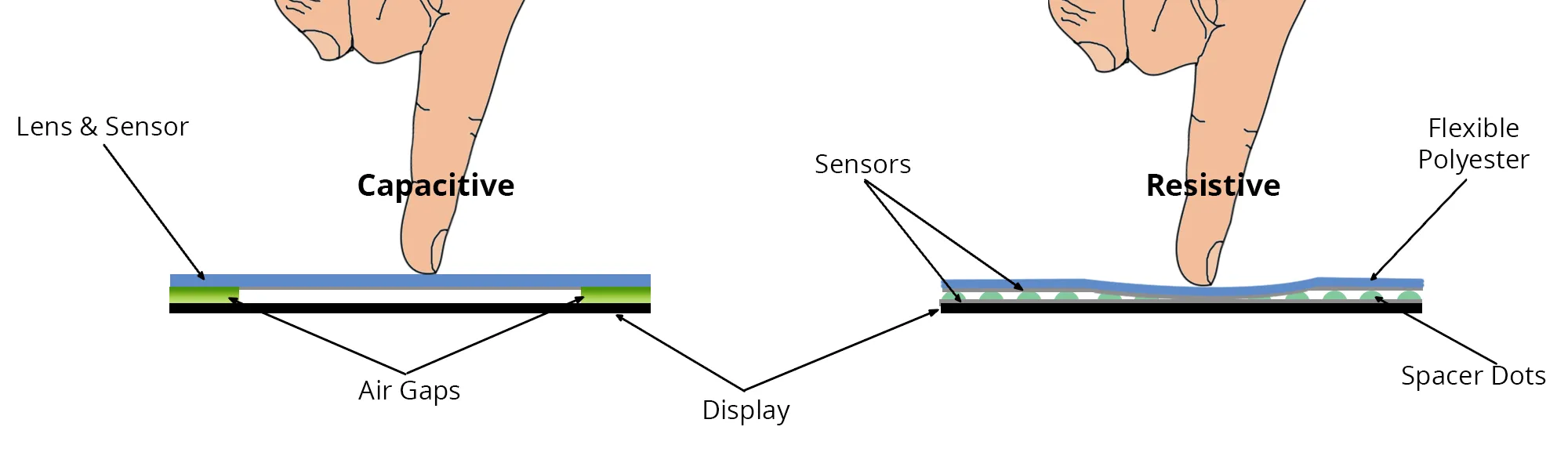
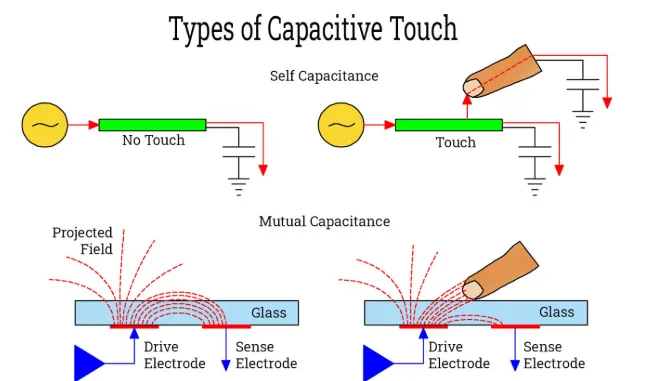
Capacitive fingerprint recognition is well known and is used in most commercial fingerprint sensors outside of under-display designs. It is relatively mature, but its limited penetration through display materials restricts its use under a screen.
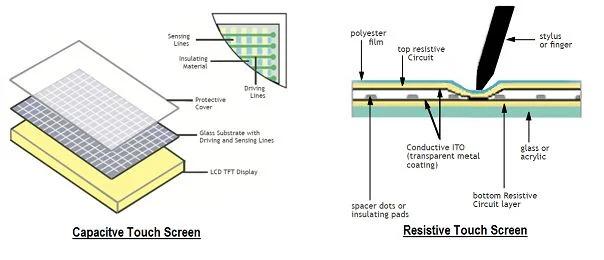
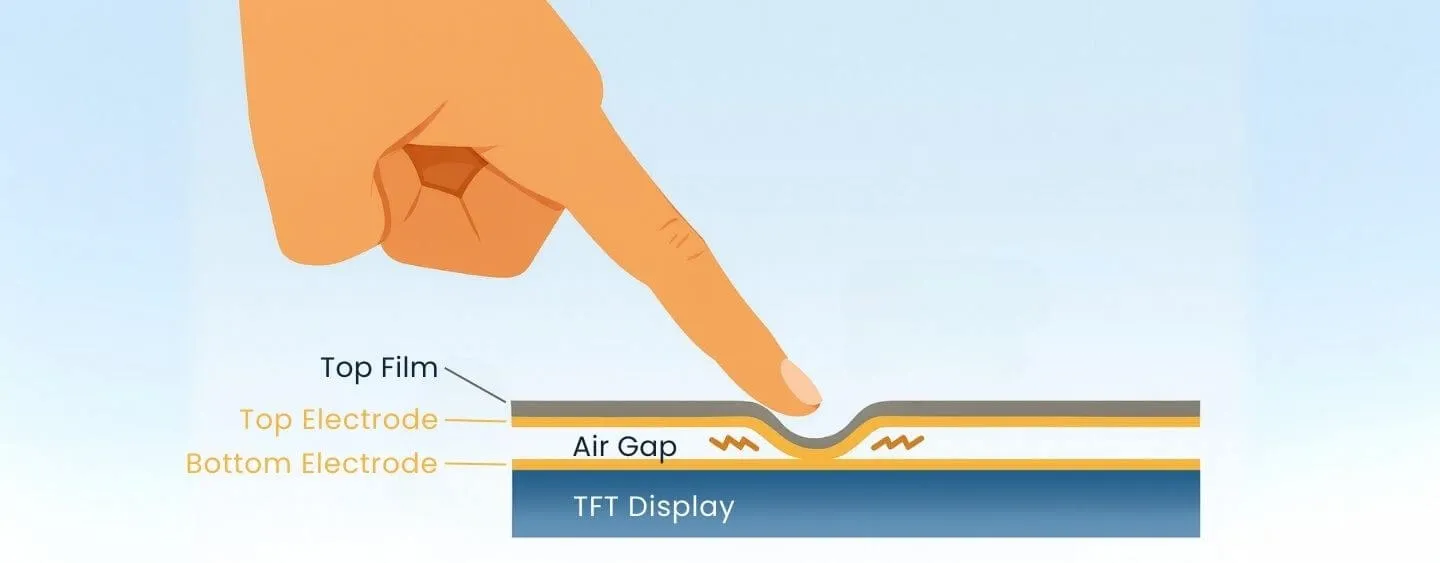
One approach replaces traditional silicon-based capacitive sensors with transparent glass-based sensors embedded directly into an LCD panel to reduce the thickness that signals must penetrate. When the finger touches the screen, the embedded sensor detects the signal and performs recognition.
Because capacitive under-display sensors do not require active illumination, they can support LCD screens and thus reduce device cost. However, the touch layer present on modern displays can cause interference between touch signals and fingerprint signals, which remains a technical challenge.
To date, Japan Display Inc. (JDI) is one of the few companies that has announced a capacitive under-display product. Using a technology called Pixel Eyes, JDI integrates the capacitive fingerprint sensor with the glass substrate of a TFT display, allowing the glass to detect capacitance changes without adding a separate fingerprint module. While this approach could lower costs and accelerate adoption, JDI still faces a long path to volume production.
Current market status
At present, optical under-display fingerprint technology is the most mature and has multiple suppliers across the supply chain. Vendors such as Goodix and Synaptics have achieved mass production of optical under-display sensors. Most phones that currently ship with under-display fingerprint sensors, including the vivo NEX and the Huawei Mate RS Porsche Design, use optical under-display fingerprint technology. It is likely that optical solutions will remain the mainstream choice in the market for the foreseeable future.