ALLPCB


What Is Solder Mask Finish and Why It Matters
Solder mask serves as a protective coating over the copper traces and circuitry on printed circuit boards. It prevents oxidation, provides electrical insulation, and defines the areas where solder will adhere during assembly. Manufacturers offer this coating in two primary surface finishes: glossy and matte. The selection between these finishes influences visual inspection processes, automated optical inspection performance, and overall board aesthetics in PCB design and manufacturing. Engineers evaluate both options based on the specific requirements of the end application and production environment.
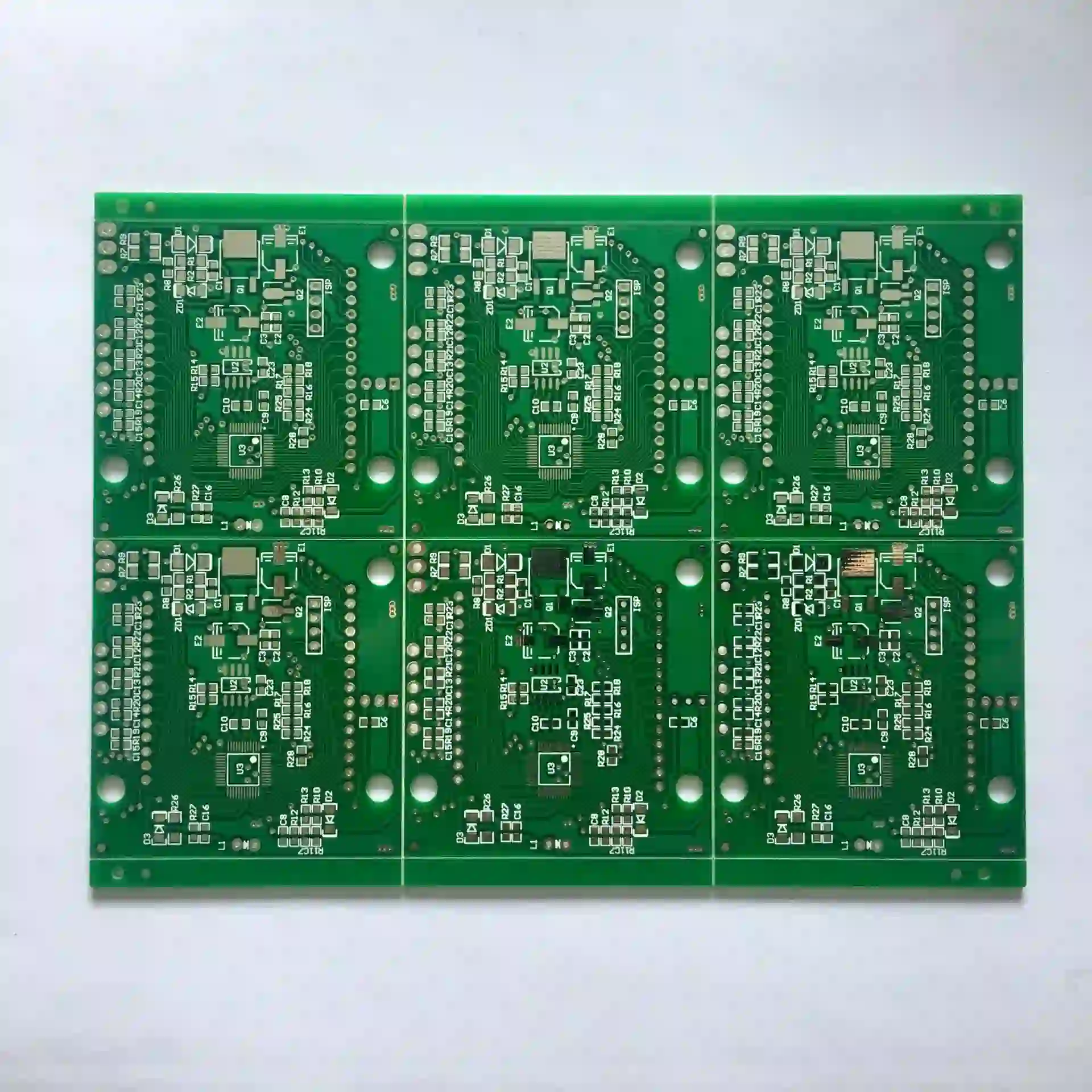
Solder mask finish refers to the surface texture and reflectivity achieved after the mask material cures. Glossy finishes produce a smooth, reflective surface that highlights contrast under direct lighting. Matte finishes create a diffused, low-glare appearance through controlled surface roughness introduced during formulation or curing. In PCB design, the finish choice affects how easily defects such as exposed copper or mask misalignment become visible. In manufacturing environments that rely heavily on automated inspection systems, the finish directly impacts detection accuracy and throughput rates. Procurement teams and design engineers therefore consider finish type early in the layout phase to align with downstream quality control needs.
Technical Principles of Glossy and Matte Solder Mask Finishes
The gloss level results from the resin system, filler particles, and curing conditions used in the solder mask formulation. Glossy masks typically contain fewer light scattering additives, allowing specular reflection that produces a mirror like appearance. Matte masks incorporate matting agents or controlled surface texturing that scatters incident light, reducing glare. Surface energy and wettability can differ slightly between the two finishes, influencing solder paste release and component placement accuracy during assembly. Thermal expansion behavior remains governed primarily by the base resin chemistry rather than surface gloss, yet the finish can indirectly affect heat dissipation visibility during thermal profiling. Industry standards such as IPC SM 840 establish performance requirements for adhesion, insulation resistance, and thermal shock resistance that both finishes must satisfy when properly applied.

Comparison in PCB Design and Manufacturing Contexts
Designers often select glossy finishes when boards undergo manual visual inspection or when aesthetic appearance is prioritized for consumer facing products. The reflective surface makes fine trace details and mask registration stand out under bench lighting. Matte finishes provide advantages in high speed production lines equipped with automated optical inspection equipment because reduced glare minimizes false calls and improves defect contrast. Both finishes support the same minimum insulation distances and copper coverage requirements outlined in IPC A 600. Warpage and dimensional stability depend more on laminate selection and stack up symmetry than on mask gloss level. Engineers document the chosen finish on fabrication drawings to ensure consistent processing from prototype through volume production.

Best Practices for Selecting the Appropriate Finish
Review the inspection strategy first when deciding between finishes. Boards intended for automated optical inspection lines benefit from matte finishes that reduce specular reflections and improve image uniformity. Applications requiring frequent manual rework or field service may favor glossy finishes for easier visual verification of mask coverage. Confirm compatibility with subsequent processes such as legend printing and surface finish application, because some combinations can alter final appearance. Specify the finish explicitly in the fabrication notes and request confirmation samples when moving from prototype to production quantities. Maintain consistency across panelized arrays to avoid mixed gloss levels that could complicate downstream handling.
Conclusion
The choice between glossy and matte solder mask finishes centers on balancing inspection requirements, manufacturing processes, and end use conditions. Glossy finishes support clear visual contrast under manual review, while matte finishes optimize performance with automated systems. Both options meet established performance criteria when applied according to material specifications. Early collaboration between design, manufacturing, and quality teams ensures the selected finish supports reliable production and long term board performance.
FAQs
Q1: What distinguishes glossy from matte solder mask in PCB manufacturing?
A1: Glossy solder mask produces a reflective surface that enhances manual visual inspection, whereas matte solder mask reduces glare to support automated optical inspection equipment. Both finishes provide equivalent electrical insulation and environmental protection when they comply with applicable material specifications. Selection depends on the dominant inspection method used in the production flow.
Q2: How does solder mask finish affect PCB design decisions?
A2: The finish influences layout notes for inspection criteria and may guide component placement relative to reflective areas. Designers incorporate the chosen finish into fabrication drawings to maintain consistency from prototype through volume builds. The decision aligns with overall quality control strategy rather than altering trace geometry or spacing rules.
Q3: When should engineers specify matte solder mask for a project?
A3: Matte solder mask is typically specified when the manufacturing process relies on automated optical inspection to achieve high throughput and low false call rates. It also suits applications where reduced surface glare improves operator visibility during assembly or test. The choice remains compatible with standard surface finishes and legend inks.
Q4: Does solder mask finish influence long term PCB reliability?
A4: Reliability depends primarily on proper adhesion, cure, and material selection rather than surface gloss. Both glossy and matte finishes can satisfy the same thermal cycling, humidity, and insulation requirements when processed correctly. Consistent application across the board remains the key factor in maintaining performance over the product lifecycle.