ALLPCB


Introduction
Manual assembly remains a vital process in electronics manufacturing, particularly for printed circuit boards where precision and adaptability are paramount. As production demands grow more complex with miniaturization and diverse component types, the future of manual assembly lies in blending human expertise with emerging technologies. This hybrid approach addresses limitations of full automation, such as handling irregular geometries or custom prototypes. Engineers must evolve skills for hand assembly to incorporate tools like augmented reality assembly and collaborative robots. These advancements ensure higher yields while maintaining compliance with standards like IPC-A-610. By examining these developments, this article explores practical pathways for electric engineers to thrive in evolving workflows.
Why Manual Assembly Persists and Its Future Relevance
Manual assembly excels in scenarios where flexibility trumps speed, such as low-volume runs or repairs requiring tactile feedback. Machines often falter with delicate components or non-standard boards, leaving humans indispensable for quality control. The future of manual assembly shifts toward augmentation, where technology enhances rather than replaces operators. This evolution matters for electric engineers facing tighter tolerances and faster iteration cycles in product development. Collaborative robots and advanced training programs bridge skill gaps, reducing defects from human error. Ultimately, these integrations sustain manual processes as a competitive edge in high-mix manufacturing environments.
Industry pressures like supply chain variability further underscore manual assembly's role. Engineers troubleshoot unique defects on-site, applying hands-on diagnostics that automated systems overlook. Projections indicate sustained demand for skilled hand assemblers augmented by tech, ensuring reliability in critical applications. Standards such as J-STD-001 guide these practices, emphasizing soldering integrity and workmanship.
Augmented Reality in Assembly: Guiding Precision Tasks
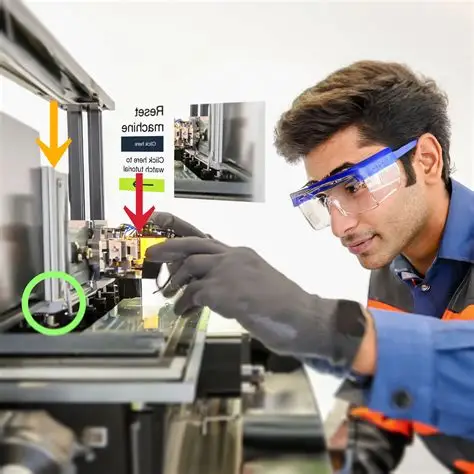
Augmented reality assembly overlays digital instructions onto physical workpieces, transforming how operators approach tasks like component placement and soldering. Wearable devices project holograms showing exact positions, wire routes, and torque values, minimizing misalignments. This technology proves invaluable for complex PCBs with dense via-in-pad designs or mixed-technology assemblies. Operators gain real-time feedback on joint quality, speeding up inspections without halting workflows. Troubleshooting becomes intuitive as AR highlights potential issues like insufficient solder volume before they propagate.
In practice, augmented reality assembly reduces training time for new hires by simulating sequences virtually first. Engineers report fewer rework cycles, as visual cues enforce consistency across shifts. Integration with pick-and-place verification ensures no misplaced fine-pitch parts. For electric engineers, this means scalable precision without extensive fixturing. Challenges like device ergonomics persist, but iterative designs improve adoption rates.
Collaborative Robots: Partners in Hand Assembly
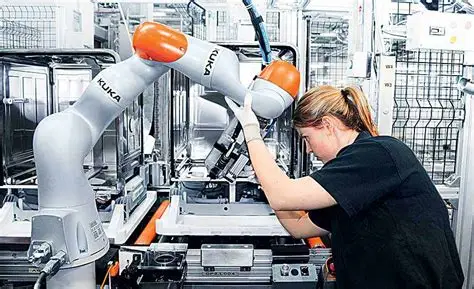
Collaborative robots, or cobots, work safely alongside humans, handling repetitive subtasks while operators focus on intricate skills for hand assembly. These machines grasp tools for glue dispensing or part feeding, freeing technicians for soldering and inspection. Force-limiting sensors prevent collisions, enabling shared workspaces without safety cages. In PCB lines, cobots assist with heavy board handling or alignment, reducing fatigue-related errors. This synergy boosts throughput in manual-dominant setups, particularly for through-hole conversions.
Engineers configure cobots via teach pendants, programming paths for specific assemblies with minimal coding. Feedback loops adjust for board warpage or component tolerances, maintaining accuracy. Troubleshooting joint issues becomes collaborative, as cobots log data for root-cause analysis. Over time, these systems learn from human corrections, refining autonomy. For future workflows, cobots represent technology in manual assembly that scales with production variability.
Advanced Training Methods for Enduring Hand Assembly Skills
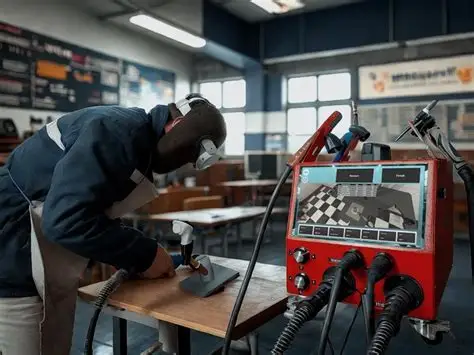
Advanced training equips assemblers with skills for hand assembly through immersive simulations and data-driven feedback. Virtual reality modules replicate soldering under magnification, practicing IPC criteria without material waste. Haptic devices simulate tool weights and resistances, building muscle memory for fine-pitch work. Engineers benefit from analytics tracking progress, identifying weaknesses like inconsistent heat application. These programs shorten ramp-up for cross-trained teams handling mixed SMT and through-hole tasks.
Certification paths align with J-STD-001, incorporating hands-on modules with AR-guided critiques. Peer reviews and error simulations foster troubleshooting mindsets essential for field repairs. As technology in manual assembly advances, training emphasizes adaptability, such as interfacing with cobots. Electric engineers designing training curricula prioritize metrics like first-pass yield to quantify gains. Continuous upskilling ensures compliance amid evolving component ecosystems.
Best Practices for Integrating Technology in Manual Assembly
Successful integration starts with workflow mapping, identifying manual bottlenecks like inspection delays for conversion to AR-assisted steps. Standardized stations with adjustable ergonomics accommodate cobots and wearables, promoting consistent skills for hand assembly. Calibration routines verify AR overlays against physical fiducials, preventing drift-induced errors. Operators log deviations via tablets, feeding data into process controls for predictive maintenance. This closed-loop approach aligns with quality systems like ISO 9001, embedding technology without disrupting tactile expertise.
Troubleshooting protocols evolve to include tech diagnostics, such as cobot error codes cross-referenced with visual defects. Cross-training rotates personnel across hybrid stations, building versatility. Pilot programs test integrations on low-risk assemblies, scaling based on yield data. Electric engineers validate setups through DOE, optimizing parameters like AR refresh rates. Regular audits ensure standards adherence, sustaining long-term viability.
Challenges and Troubleshooting in Hybrid Manual Environments
Hybrid setups introduce hurdles like latency in AR rendering, which engineers mitigate by prioritizing low-latency edge computing. Cobot-human handoffs require precise zoning to avoid interferences during dynamic tasks. Skill mismatches arise if training lags tech rollout, addressed via modular refreshers. Troubleshooting often involves isolating variables, such as verifying power stability for wearables affecting guidance accuracy. Data from integrated sensors aids in pinpointing issues like thermal inconsistencies in soldering.
Proactive measures include redundancy in critical paths, ensuring manual fallback without yield loss. Feedback from operators refines interfaces, enhancing usability. For electric engineers, simulations predict integration risks pre-deployment. These strategies fortify the future of manual assembly against disruptions.
Conclusion
The future of manual assembly hinges on symbiotic technologies like augmented reality assembly, collaborative robots, and advanced training, elevating skills for hand assembly to new efficiencies. Electric engineers play a pivotal role in orchestrating these hybrids, balancing precision with practicality. Standards provide the foundation, while innovations drive adaptability in demanding PCB workflows. By embracing technology in manual assembly, manufacturers achieve resilient, high-quality outputs. Forward-thinking teams will lead this transition, securing competitiveness in an automated era.
FAQs
Q1: What defines the future of manual assembly in electronics manufacturing?
A1: The future of manual assembly integrates human dexterity with tools like augmented reality assembly and collaborative robots, focusing on high-mix, precision tasks. This hybrid model sustains relevance for prototypes and repairs where automation falls short. Engineers prioritize skills for hand assembly enhanced by real-time guidance, reducing errors while complying with standards like IPC-A-610. Practical outcomes include faster onboarding and higher yields in variable production.
Q2: How does augmented reality assembly improve skills for hand assembly?
A2: Augmented reality assembly provides overlaid visuals for component placement and joint inspection, training operators on exact techniques without physical prototypes. It accelerates troubleshooting by highlighting defects in context, building intuitive proficiency. For electric engineers, this means verifiable consistency across teams. Integration fosters advanced training, aligning hand skills with modern tolerances effectively.
Q3: What role do collaborative robots play in technology in manual assembly?
A3: Collaborative robots handle repetitive tasks like part orientation, allowing focus on delicate hand assembly skills such as soldering fine-pitch devices. Safety features enable seamless teamwork, with sensors adapting to human pace. Engineers program them for specific workflows, enhancing throughput. This technology in manual assembly minimizes fatigue, supporting sustained precision in PCB lines.
Q4: Why is advanced training essential for the future of manual assembly?
A4: Advanced training via VR and AR simulations hones skills for hand assembly, simulating real defects and standards like J-STD-001 criteria. It addresses skill erosion from automation, preparing teams for hybrid roles. Electric engineers use metrics to customize programs, ensuring adaptability. Results include lower rework and confident troubleshooting in dynamic environments.