ALLPCB


Introduction
Silkscreen color on printed circuit boards serves primarily as a labeling and identification layer, yet its influence on thermal behavior warrants careful consideration during design. Electric engineers evaluate multiple heat transfer paths when optimizing board performance, including conduction through copper traces, convection via airflow, and radiation from surface finishes. The color of the silk screen layer can subtly modify surface emissivity, which governs how efficiently a board radiates thermal energy. While the effect remains secondary to copper weight and substrate choice, understanding this relationship supports informed decisions in thermally demanding applications. Industry standards such as IPC-A-600 provide guidance on silk screen application quality without prescribing thermal performance metrics.
What Is Silk Screen Color in PCBs and Why It Matters
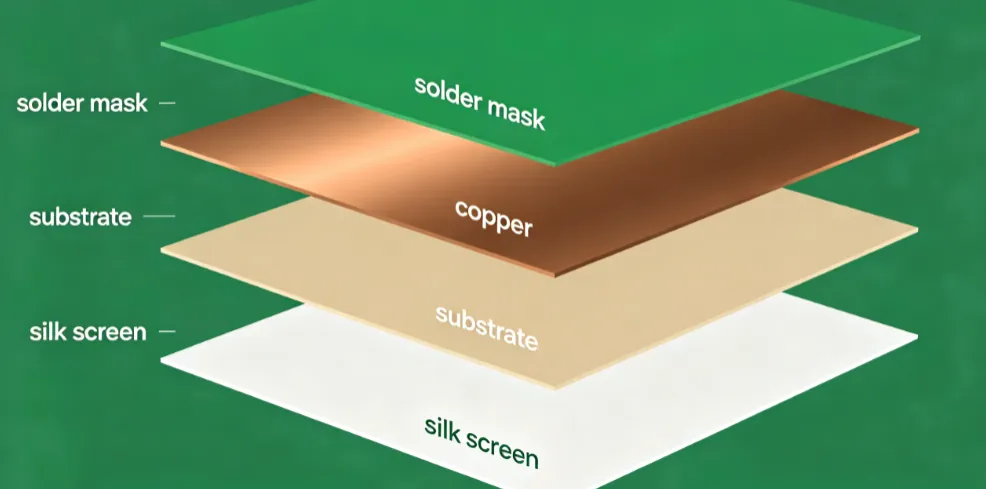
Silk screen, also called legend or nomenclature, consists of a thin ink layer applied to the outer surfaces of a PCB to mark component locations, polarity indicators, and reference designators. Common colors include white for high contrast on green solder mask and black for specialized visibility requirements. The color choice affects optical properties such as reflectivity and absorptivity, which in turn influence radiative heat exchange with the surrounding environment. For electric engineers working on high-power or enclosed assemblies, even minor variations in surface characteristics can contribute to overall temperature distribution. Thermal performance considerations arise particularly when boards operate near maximum allowable temperatures or in vacuum conditions where radiation dominates heat transfer.
Technical Principles and Mechanisms
Heat dissipation in PCBs occurs through three primary mechanisms, with radiation becoming relevant once surface temperatures rise above ambient. Emissivity, a surface property ranging from 0 to 1, determines the fraction of blackbody radiation emitted at a given temperature. Darker silk screen colors generally exhibit higher emissivity than lighter shades because they absorb and re-emit infrared energy more readily. The silk screen layer thickness typically measures only 0.01 to 0.03 mm, limiting its thermal mass and overall contribution compared with thicker copper planes or the dielectric substrate. Surface coverage also plays a role; densely marked areas may alter local radiative behavior more than sparsely printed regions. Engineers reference IPC-6012 when qualifying board constructions to ensure consistent material application that supports predictable thermal characteristics.
Convection and conduction usually overshadow radiation in standard operating environments, yet the color-dependent emissivity difference can become measurable in sealed enclosures or high-temperature industrial settings. The Stefan-Boltzmann relationship governs radiative heat flux, where net power depends on the fourth power of absolute temperature and the emissivity value. Because silk screen covers only portions of the board surface, its aggregate impact remains localized rather than board-wide. Material compatibility between the ink and underlying solder mask must also be verified to prevent delamination under thermal cycling, which could indirectly affect heat paths.
Practical Solutions and Best Practices
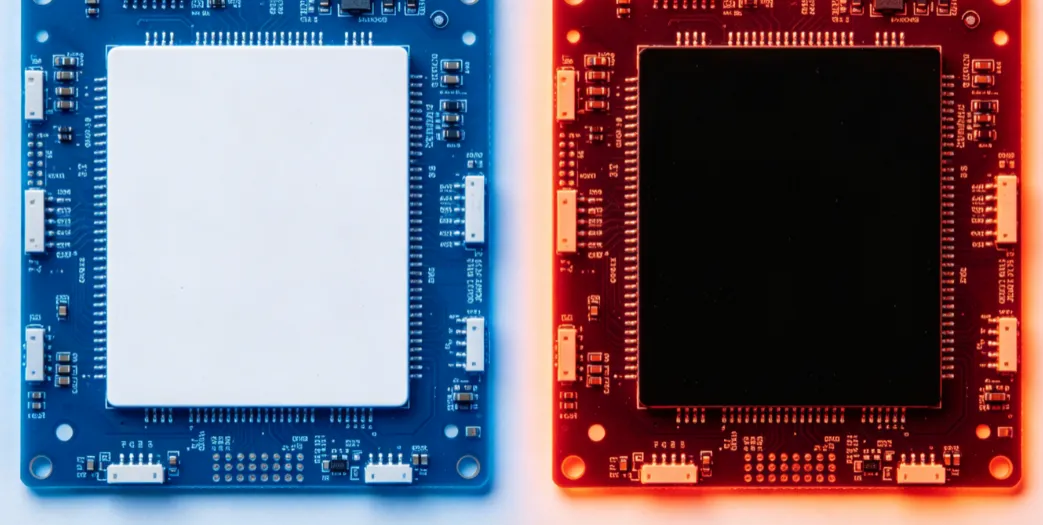
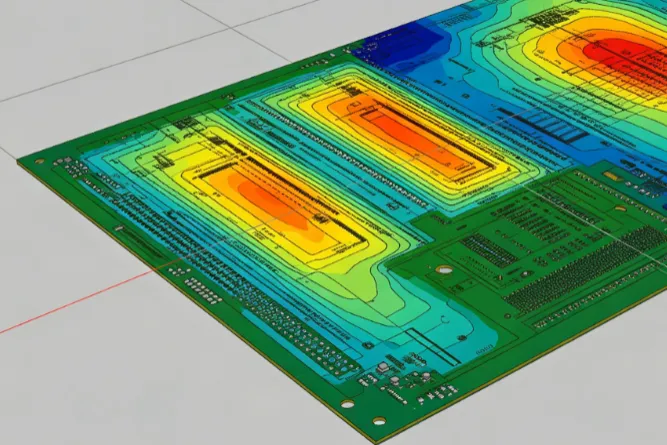
Design teams should evaluate silk screen color during the initial layout phase rather than as an afterthought. Selecting a darker color can enhance radiative cooling in applications where boards face limited airflow, provided the emissivity gain outweighs any potential increase in solar absorption for outdoor equipment. Conversely, lighter colors reduce heat absorption in environments exposed to intense lighting or direct sunlight. Collaboration between design and manufacturing teams ensures that chosen colors meet IPC-A-600 acceptability criteria for legibility and adhesion while aligning with thermal goals. Simulation tools allow modeling of emissivity variations across the board surface to quantify expected temperature differences before fabrication.
Testing under representative conditions validates the selected color choice. Thermal chambers or infrared cameras reveal whether color-induced differences remain within acceptable margins for the target application. When radiation constitutes a significant heat transfer path, engineers may specify silk screen color alongside other surface finishes such as matte versus glossy solder mask textures. Documentation of color specifications in fabrication drawings promotes consistency across production batches.
Conclusion
Silk screen color exerts a secondary yet measurable influence on PCB thermal performance through its effect on surface emissivity and radiative heat transfer. Electric engineers achieve optimal results by integrating color selection into the broader thermal management strategy that prioritizes copper distribution, component placement, and enclosure design. Adherence to established qualification standards ensures that aesthetic and functional requirements coexist without compromising reliability. Systematic evaluation during prototyping confirms that any thermal benefit or trade-off aligns with application demands.
FAQs
Q1: How does silk screen color influence PCB temperature in high-power designs?
A1: Silk screen color affects emissivity, which governs radiative heat dissipation. Darker colors typically increase radiation efficiency compared with lighter shades, potentially lowering operating temperatures in environments where convection is restricted. The overall impact depends on coverage area and operating conditions, remaining secondary to primary conduction paths.
Q2: What role does silk screen color play in heat dissipation considerations for enclosed assemblies?
A2: In enclosed assemblies, radiation becomes a larger fraction of total heat transfer. Higher-emissivity silk screen colors can enhance heat rejection from board surfaces to enclosure walls, supporting more stable component temperatures when airflow is minimal.
Q3: Can changing silk screen color improve thermal performance without redesigning the copper layout?
A3: Color modification offers a low-cost adjustment that can yield incremental thermal benefits through altered emissivity. Engineers should verify the change through simulation or measurement to confirm measurable improvement before implementation.
Q4: Does the silk screen color and PCB temperature relationship require specific industry standards for validation?
A4: Qualification follows IPC-6012 and acceptability criteria in IPC-A-600 to ensure consistent application. These standards address material and process quality rather than prescribing thermal performance targets, leaving verification to application-specific testing.
References
IPC-A-600K — Acceptability of Printed Boards. IPC, 2020
IPC-6012E — Qualification and Performance Specification for Rigid Printed Boards. IPC, 2017