PCBs Design
Published on 1/4/2019 3:30:56 PM
Description
<span style="font-family:"font-size:16px;">The Electronic products are used widely in our our daily work and life, and the design of </span><strong><span style="font-family:"font-size:16px;">printed circuit board</span></strong><span style="font-family:"font-size:16px;"> (PCB) is directly related to the use of electronic products. if it can meet the requirements of production and applying in grounding design, electromagnetic compatibility, circuit board size, </span><a href="https://www.allpcb.com/pcb_design/thermal_dissipation.html" target="_blank"><span style="font-family:"font-size:16px;">heat dissipation</span></a><span style="font-family:"font-size:16px;">, etc., is the focus of PCB board design. Based on years of work experience and combined with the state of PCB design in China, this paper does some discussion on PCB design, hope to play a positive role. </span><br /> <br /> <span style="font-family:"font-size:16px;"> Whether the design of the PCB board with good manufacturability or not is an important criterion for measuring the </span><a href="https://www.allpcb.com/drilling_pcb_design.html" target="_blank"><span style="font-family:"font-size:16px;">design of the PCB board</span></a><span style="font-family:"font-size:16px;">. If you want to realize this, the following points are very important. </span><br /> <br /> <strong><span style="font-family:"font-size:16px;">Key Points in Grounding Design</span></strong><br /> <br /> <span style="font-family:"font-size:16px;"> The </span><strong><span style="font-family:"font-size:16px;">grounding system</span></strong><span style="font-family:"font-size:16px;"> is composed of four parts: analog ground, digital ground, chassis ground and system ground. The digital ground is also called logical ground, and the casing ground is also called shield ground. A reasonable grounding design can shield most of the interference, which is very important in electrical equipment.</span><br /> <br /> <strong><span style="font-family:"font-size:16px;">1. Choose a Reasonable Grounding Method</span></strong><br /> <br /> <span style="font-family:"font-size:16px;"> Multi-point grounding and single-point grounding are two different grounding methods. We have to choose according to the actual situation. When the operating frequency of the device exceeds 10 MHz, it is affected by electromagnetic radiation, and the ground resistance is relatively large, which directly affects the normal operation of the equipment. At this time, multi-point grounding should be selected to eliminate adverse effects, when the equipment operates at a low frequency smaller than 1 MHz, a single point grounding method should be selected to avoid new interference from the electromagnetic circulating current. When the operating frequency of the device is between 1-10 MHz, the relationship between the reference circuit wavelength and the ground length is required to determine the grounding mode. When the wavelength is within 20 times of the ground length, multiple points will be chosen to connect with ground, otherwise single point grounding used.</span><br /> <br /> <strong><span style="font-family:"font-size:16px;">2. Separate Circuits of Different Nature</span></strong><br /> <br /> <span style="font-family:"font-size:16px;"> The circuit distribution on the board is very complicated, there are analog circuits, and digital circuits. The correct way is to separate them and avoid mutual interference. Designing separate grounding methods can effectively avoid mutual electromagnetic interference.</span><br /> <br /> <strong><span style="font-family:"font-size:16px;">3. The Cross Section of Grounding Wire Should be Wide and Thick </span></strong><br /> <br /> <span style="font-family:"font-size:16px;"> Selecting a connecting wire with a cross-sectional width of 3 mm or more can avoid the occurrence of unstable ground potential due to changes in current, and can effectively improve the anti-noise performance of the device. </span><br /> <span style="font-family:"font-size:16px;"> Therefore, only if conditions permit, choose a wider and thicker grounding conductor as much as possible.</span><br /> <br /> <strong><span style="font-family:"font-size:16px;">Design Points of Electromagnetic Compatibility </span></strong><br /> <br /> <span style="font-family:"font-size:16px;"> The most common problem with electronic equipment is</span><strong><span style="font-family:"font-size:16px;"> electromagnetic interference</span></strong><span style="font-family:"font-size:16px;">. It is necessary to ensure a good electromagnetic environment and to reduce electromagnetic interference between each other. This requires careful consideration of the corresponding design of electromagnetic compatibility.</span><br /> <br /> <strong><span style="font-family:"font-size:16px;">1. Choose Correct Wiring Method</span></strong><br /> <br /> <span style="font-family:"font-size:16px;"> The flat travel line can effectively reduce the inductance of the wire itself, but it will increase due to the mutual inductance between the wires. The use of well-shaped wiring can effectively solve this problem, the specific method is: on two layers of the printed board, one side is selected in the longitudinal direction, the other side selected to be laterally routed, and the two layers of wires are connected through the metalized holes.</span><br /> <br /> <strong><span style="font-family:"font-size:16px;">2. Select Wire of Correct Width </span></strong><br /> <br /> <span style="font-family:"font-size:16px;"> In order to improve the anti-interference ability, it is necessary to effectively control the transient current, that is, to control the inductance. According to the principle that the inductance is inversely proportional to the width of the wire and proportional to the length of the wire, selecting a short and thick wire is a good way to suppress interference and improve the anti-interference ability. </span><br /> <br /> <strong><span style="font-family:"font-size:16px;">3. Design Points for PCB Board Size </span></strong><br /> <br /> <span style="font-family:"font-size:16px;"> PCB board size should be scientific and reasonable, and if the size too large, the length of the wire will be increased, and the impedance increased, the anti-interference ability is reduced, and the production cost is increased; the size is too small, the lines easily interfere with each other, and the heat dissipation effect be affected at the same time. Therefore, the size of the PCB board must be carefully considered. The noise-prone devices are placed close to each other to facilitate uniform processing of interference; the logic circuits are kept away from these devices, thereby mitigating line interference.</span><br /> <br /> <strong><span style="font-family:"font-size:16px;">4. PCB Board Heat Dissipation Design Points</span></strong><br /> <br /> <span style="font-family:"font-size:16px;"> Electronic equipment generates a lot of heat during work, if it cannot be dissipated in time, it will not only affect the performance, but also shorten its service life. From the perspective of heat dissipation, it is more effective and economical to install the PCB board upright and keep the spacing above 2cm.</span><br /> <p> <br /> </p> <p style="text-align:center;"> <img src="https://file.allpcb.com/bbs/19/01/04/151759811.jpg" alt="heat dissipation design points " /> </p> <br /> <span style="font-family:"font-size:16px;"> According to the heat generation and heat dissipation of the device, the specific positions are arranged reasonably. At a well-ventilated entrance, arrange for heat-resistant devices (small-scale integrated circuits, electrolytic capacitors, etc.); at other locations, arrange devices with high heat resistance (large-scale integrated circuits, high-power devices, etc.). For devices with higher thermal sensitivity, you should avoid developing the thermal device directly above. For high power devices, it should be placed in a short position in the heat transfer path to avoid affecting other devices.</span><br /> <br /> <span style="font-family:"font-size:16px;"> When considering the overall layout of the PCB board, it is necessary to carefully consider the air flow problem, so as to rationally arrange the distribution of devices and space. Should take care to maintain overall good ventilation and heat dissipation.</span><br /> <span style="font-family:"font-size:16px;"> The purpose of the design is to manufacture, any design is for manufacturing, and and if not, it is an ineffective design. PCB boards are also designed to better achieve the speed, cost and quality of manufacturing.</span><br /> <br /> <strong><span style="font-family:"font-size:16px;">Design of Edge Rail and Positioning Hole</span></strong><br /> <br /> <p> <span style="font-family:"font-size:16px;">In order to achieve production, it is necessary to do the layout of the PCB board. On both sides of the PCB board, an edge of not less than 5 mm must be reserved. As a process side, the positioning holes are arranged on the side of the process to serve as a fixing function during assembly. If there is insufficient reserve in the process, the new process side must be temporarily added, and it can be considered to be removed after the production is completed.</span> </p> <p> <br /> </p> <p style="text-align:center;"> <img src="https://file.allpcb.com/bbs/19/01/04/151843966.jpg" alt="edge rail and positioning hole" /> </p> <br /> <strong><span style="font-family:"font-size:16px;">Design of Fiducial Points</span></strong><br /> <br /> <span style="font-family:"font-size:16px;"> The purpose of the fiducial points is to design a set of graphics on the PCB for optical positioning to ensure the accuracy of the mounted components. As far as PCB imposition concerned, to overcome the problem of uneven spacing between the impositions, there should be a</span><strong><span style="font-family:"font-size:16px;"> fiducial mark</span></strong><span style="font-family:"font-size:16px;"> on the entire board and on each imposition for a single device with a small pin pitch, a local fiducial mark should be placed so that accurate positioning, for ordinary PCB boards, the reference fiducial is generally placed in the diagonal or on its extension direction.</span><br /> <br /> <strong><span style="font-family:"font-size:16px;">Design of Pad</span></strong><br /> <br /> <span style="font-family:"font-size:16px;"> Different pad designs should be considered for different devices and connections. Otherwise, various problems are easy to occur. For example, if the pad is too long, the solder inventory is too much, and the phenomenon of “stamping” occurs; the pad is too short, which directly affects the soldering strength; when the pad is wide, the half-side soldering phenomenon occurs; the center pitch of the pad is not suitable. There will be a weld shift or a solder ball. Therefore, the PCB board designer must have professional skills and specific work experience in the welding process, and according to the uniform design specifications, the pad design can be done well to avoid production quality problems.</span><br /> <br /> <strong><span style="font-family:"font-size:16px;">Conclusion</span></strong><br /> <br /> <span style="font-family:"font-size:16px;"> In the era of electronic information, the speed of electronic product replacement is very fast, which means that the market competition of electronic products is very intense. In order to adapt to the market competition, the design content of the PCB board is more and more abundant, and the design standards and difficulties are increasing. Only by grasping the unity of design and production can we promote each other and achieve the goal of enhancing market competitiveness.</span><br /> <br /> <span style="display:none;"></span>
43
comment
All comments
 Unknown
1153
0
43
Rules about cashback: 1. Valid time: ALLPCB cashback activity will end on April 1st. 2. Capped amount: The capped amount of cashback for each account is $5,000. Each order can get a maximum of $2,000 cashback. That means every author can get $5,000 max. 3. Cashback range: The cashback activity only covers the corresponding PCB order. The order amount for other combined payment products will be invalid. 4. Clicking your own promotional link will be invalid. The same email address, shipping address, contact information, and phone number are all recognized as the same account. 5. ALLPCB has the final interpretation right of the cashback activity.
ALLPCB will donate 2% to the author for this promotion link.
Other Projects
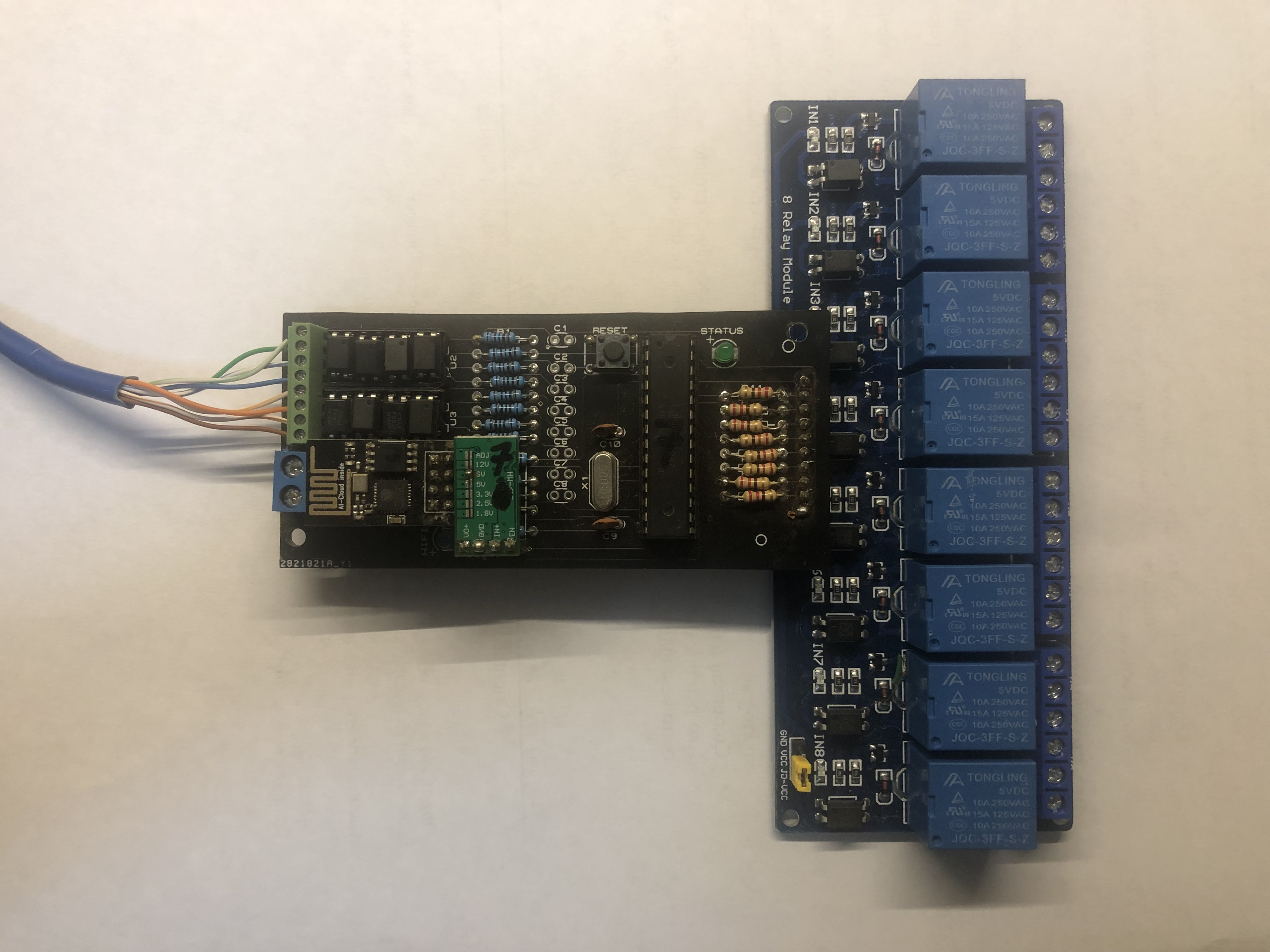
Home / Industrial Automation low Cost with Arduino an ESP01
3422
0
314
 josemarjr


