ALLPCB


Overview
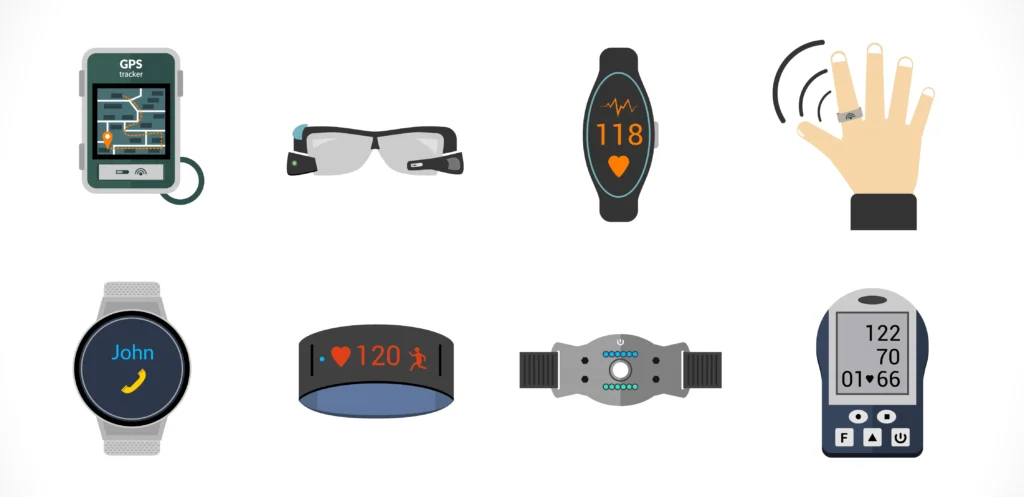
In recent years many wearable products have emerged that integrate smart functions, such as smartwatches, clothing with embedded technologies, and even subdermal chips. These wearables can connect to computer networks to exchange data among devices for analysis and processing. Wearables, including smartphones and smartwatches, combine computers, wireless networks, communication devices, and various miniature sensors, and support mobile communications, activity monitoring (for example fitness and sleep), biometric measurements (for example heart rate, body temperature, and oxygen consumption), navigation, and geolocation.
Hearing technologies are a subset of wearables and have developed rapidly. A typical example is configurable hearing aids, which are placed in the ear. Some hearing products are customized to fit different ear shapes and can provide effective sound isolation, such as earplugs, to block unwanted noise. Hearing devices use one or more microphones to capture external sound and miniature processors to process that sound. The processed audio is sent to an amplifier that drives a speaker, and some hearing-assistive products can connect to smartphones where mobile apps provide the user interface.
Advantages of Ear-Worn Devices
Compared with many other wearables, ear-worn hearing technologies offer several advantages:
- They are discrete and lightweight, with low risk of damage from drops.
- They fit the ear contour and are often inconspicuous.
- They sit very close to the ear, enabling more precise biometric monitoring.
- Their sound sensing and modulation capabilities have enabled useful innovations in audio enhancement, wireless connectivity, biometric monitoring, and communication.
Hearing Fundamentals
The human ear is a complex transducer that converts air pressure waves into nerve impulses or electrical signals for the brain. The ear can tolerate sound levels up to about 120 dB. It also detects sounds across a wide frequency range from roughly 20 Hz to 20 kHz. Another important capability is sound localization: determining the origin and direction of a sound. The brain detects very small differences in amplitude and phase between the two ears when a sound arrives at one ear before the other.
The ear processes information much faster than the eye. Auditory data can be processed in about 0.001 seconds, while visual data processing can take about 0.2 seconds. Once sound waves reach the ear, the brain can recognize them in about 0.05 seconds, which is faster than a blink. This rapid auditory processing likely had survival value for early humans when hearing and detecting threats at night mattered.
Audio and Hearing Applications
Hearing technologies exploit these auditory capabilities to provide audio enhancement solutions in many areas, including:
- Sound amplification
- Frequency equalization and filtering
- Audio masking
- Audio effects
- Active noise cancellation
- Directional listening assistance
- Audio analysis
Sound Amplification
One basic function of in-ear devices is amplifying external sounds to enhance a user's hearing so devices like televisions can be used at lower volumes. Hearing aids have traditionally provided this function and are regulated as medical devices by the FDA (U.S. Food and Drug Administration); users typically require evaluation by an audiologist to determine which frequency bands need amplification.
Hearing-related consumer products also include personal sound amplification products (PSAPs), which amplify sound like hearing aids but do not require a medical prescription. These devices are typically sold over the counter at lower prices than hearing aids and often apply relatively uniform amplification across the audible spectrum when used in that way.
Frequency Equalization and Filtering
A more advanced feature in hearing technology is selective filtering of incoming sound so users hear only desired frequency ranges. This is known as equalization, which allows attenuation or amplification within specific frequency bands. There are two common types of equalizers:
- Graphic equalizers, which affect fixed frequency bands
- Parametric equalizers, which affect sound at selectable center frequencies with adjustable bandwidth
For example, cabin noise may include low-frequency engine hum and high-frequency airflow noise; effective equalization might attenuate low and high bands while boosting mid frequencies to improve clarity.
Audio Masking
Hearing systems can also integrate white or pink noise generators to mask distracting background sounds, improving focus, relaxation, or sleep. Natural broad-spectrum sounds such as rain, wind, birdsong, or waves are often used instead of white noise. Clinical research has also found audio masking effective as a sound therapy or symptom relief for tinnitus by covering and reducing perceived tinnitus.