ALLPCB


Overview
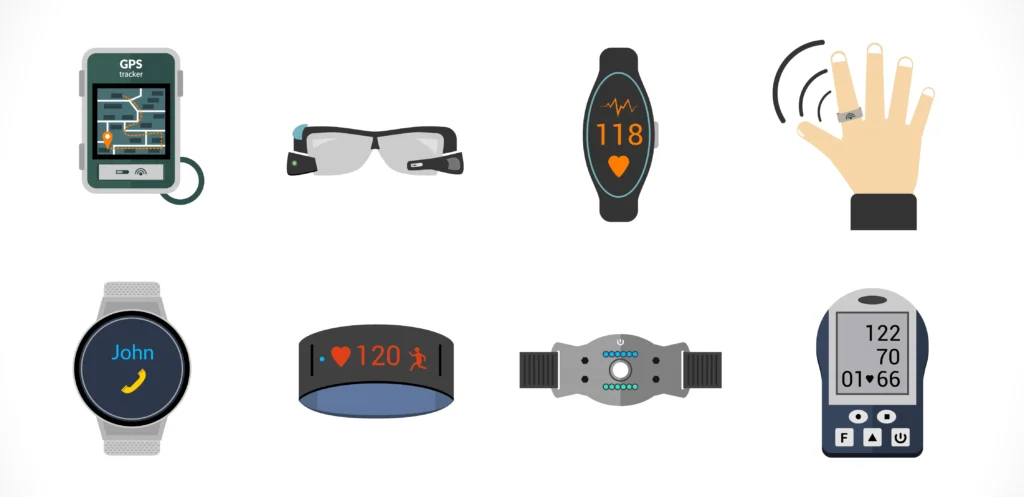
Thin, small, and light are basic requirements for wearable devices, which helps explain why battery life is a common limitation. Traditional coin cell lithium batteries are sufficient for sensors and other low-power wearables, but they struggle to support the growing range of wearables such as health bands and smartwatches. Most smartwatches today have batteries that last only about one day.
Extending battery life is critical for gaining market share in the large wearable market, which was forecast to reach 380 million units in 2018. Energy harvesting, wireless charging, battery management, power management, and low-power design techniques are all viable approaches for extending operating time. This article reviews relevant technologies in these areas to help wearable designers develop effective power solutions and better manage power distribution.
Energy Harvesting Power Management
Energy can be harvested from the body, such as body heat and limb movement, or from the environment, such as ambient light. These sources typically provide only microwatts to milliwatts of power, which is insufficient to run a smartwatch continuously. Texas Instruments (TI) offers a device, the bq25570, that can boost harvested energy in the 300 to 400 mW range up to 3 to 5 V suitable for charging a battery. Although this does not yet provide enough power for full smartwatch operation, it can at least extend runtime. Ultra-low-power energy-harvesting management ICs such as the bq25570 also include an efficient nano-power buck converter to supply a secondary power rail.
Traditional Battery Charging (USB or Adapter)
Wearables can of course be charged by conventional means via USB or an adapter. TI's bq25100 single-cell Li-ion charger provides a miniature solution about half the size of many existing power schemes, while supporting low-cost adapters useful in cost-sensitive wearable markets. The charger accepts input voltages up to 30 V and includes 6.5 V input protection among other protection features.
Maxim's MAX14676/76A provides another option for wearable power and charging management. The highly integrated MAX14676/76A can be described as a wearable power-management IC, combining charging circuitry with many low-power energy-management peripherals to extend runtime and save main-board space. These include a 1.8 V low-quiescent-current (Iq) 200 mA buck regulator; a 3.2 V low-quiescent-current 100 mA low-dropout linear regulator (LDO); a 2.0 V "always-on" 50 uA LDO; a +5 V safety-output LDO; a 6.6 V low-Iq 120 uA charge pump; and a 5 V to 17 V boost converter to support a wide range of display options.
Both the bq25100 and the MAX14676/76A can be paired with wireless power receivers or transmitters to enable wireless charging in wearable designs.
Qi-Compatible Wireless Charging Solutions
Wireless charging has become popular for wearables due to its convenience. Consumers prefer placing a smartwatch on a wireless charging cradle rather than searching for cables and outlets. Many wireless charging solutions are suitable for a variety of products. The following highlights TI's offerings.
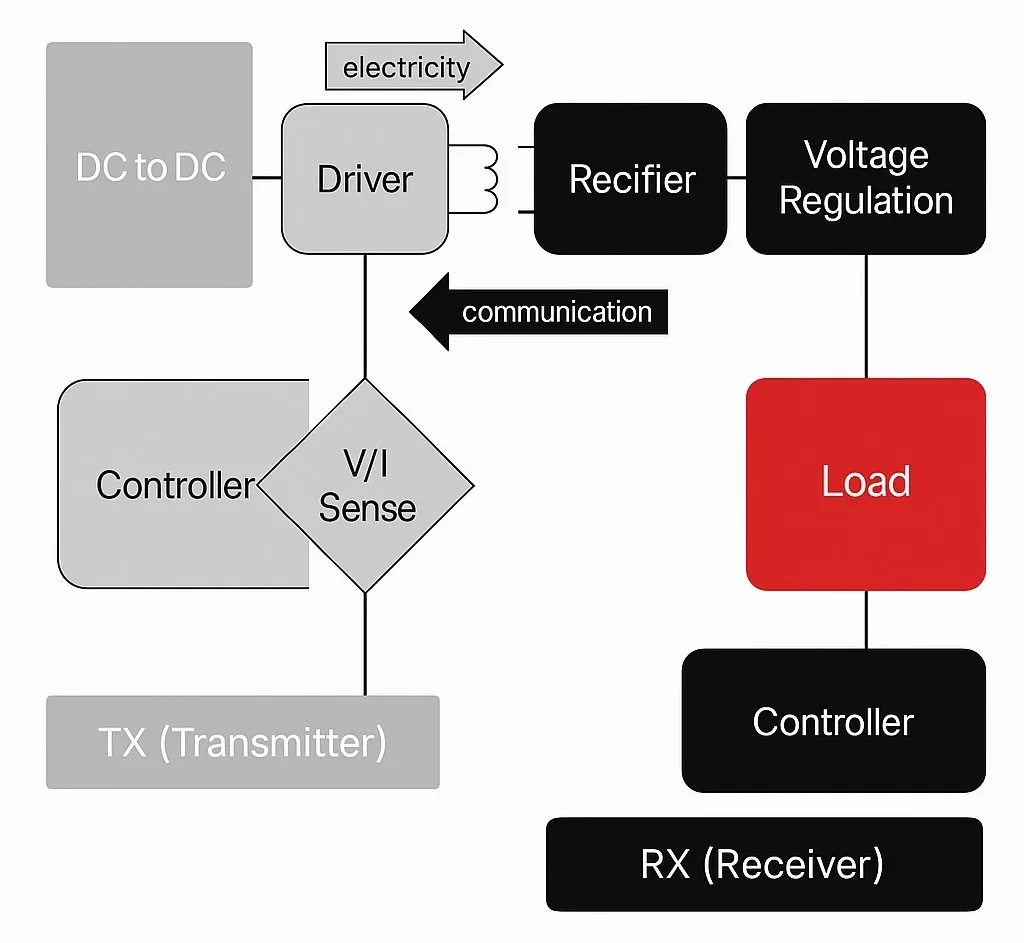
TI provides a reference design, TIDA-00318, targeted at low-power wearables. This design can be paired with the bq25100 single-cell Li-ion charger and a Qi-compliant wireless power receiver to form a complete Qi-compliant wireless charging solution. Qi is an international interoperability standard for wireless charging devices. Any Qi-certified wireless power receiver, such as the Moto 360 smartwatch, can be charged on any Qi-certified charging cradle. Wearables based on TIDA-00318 are intended to achieve Qi certification to operate on Qi charging bases. TIDA-00318 is designed for a 135 mA charging profile and measures just 5 x 15 mm2.
For an even smaller wireless charging receiver, TI offers the TIDA-00329 reference design. It measures 5.23 mm x 5.48 mm and integrates either the bq51003 or the bq51050B/51B Qi-compliant wireless power receiver. This miniature design can provide up to 2 W of power.
On the transmitter side, for the charging cradle that supplies power to wearable devices, TI provides the TIDA-00334 reference design. The small wearable transmitter design uses the bq500212A IC. The transmitter is powered by a micro USB connector at 5 V. The low-power design supports receiver output power up to 2.5 W.
TIDA-00334's wireless transmitter reference design fits within a 30 mm area and matches the circular diameter of the Wurth coil 760308101103, measuring only slightly larger than a 15-cent US coin or a 2-euro coin.