ALLPCB


Incident summary
While repairing an industrial touch screen, the customer reported that the display stayed dark on power-up. Bench testing showed the DC power supply current exceeded 3 A, indicating an internal short. After opening the enclosure, the fuse was intact, suggesting the short was not yet a hard short that would blow the fuse. Measuring the circuit downstream of the fuse revealed a diode with a measured forward voltage drop of 0 V. The component was identified as a TVS diode (transient voltage suppression diode). When the component was temporarily bypassed the unit powered on with a click and the display and internal software were intact. Replacing the defective TVS diode resolved the issue and the unit was returned to service.
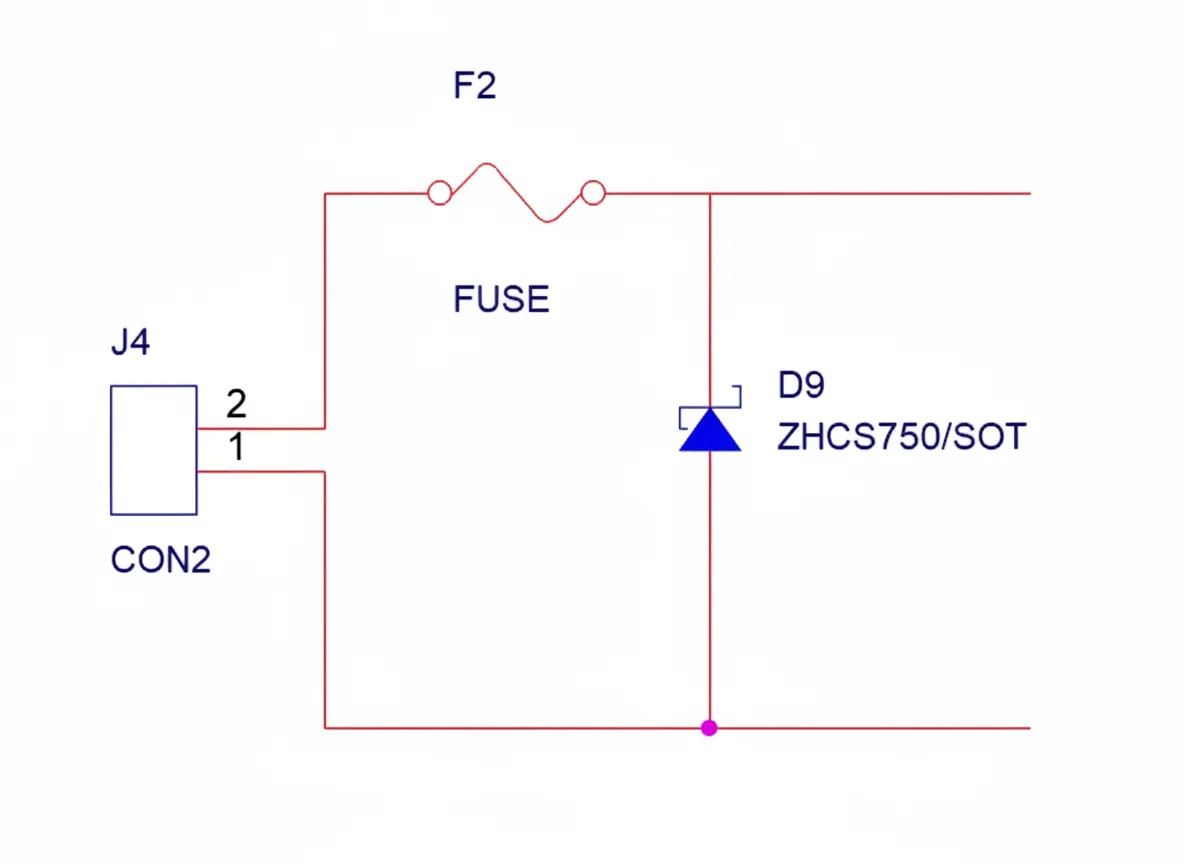
Why the TVS diode failed and its role
TVS diodes absorb transient surge voltages by entering avalanche conduction, similar to a Zener diode but with much faster response. They clamp surge voltages to a controlled level and can carry very high currents for short durations, often hundreds of amperes in milliseconds. As a protection device placed across the power input or on signal lines, a TVS diode prevents high-voltage transients from reaching downstream circuitry. If the TVS cannot absorb the surge energy it may fail short, which in turn will blow the upstream fuse and protect the rest of the circuit.
TVS diodes are commonly used across power inputs and on interface lines such as RS-485, RS-232, and USB to suppress injected static or surge voltages. Their junction capacitance is typically low, so they have minimal impact on communication data rates while providing effective protection against external interference.
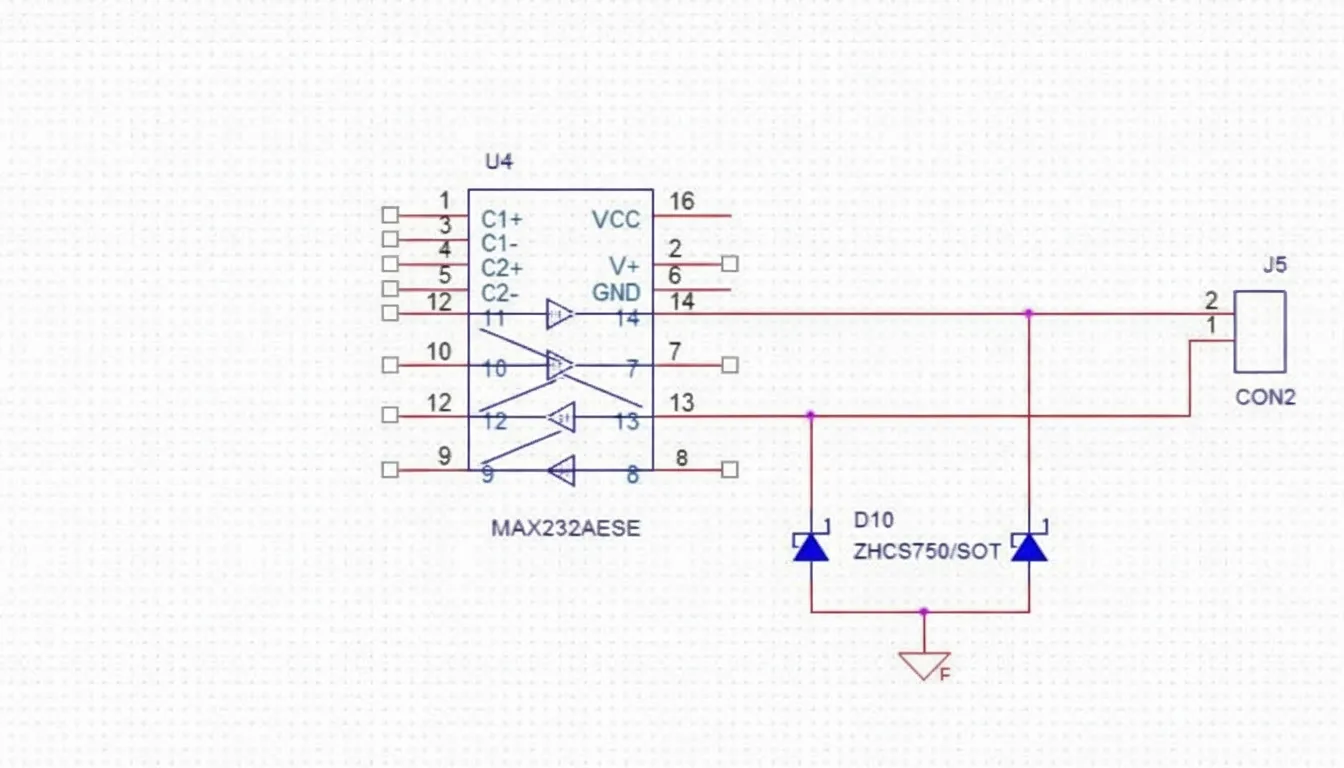
Practical examples and selection guidelines
There have been cases where RS-485 interfaces lacked TVS protection and dozens of temperature-control modules suffered simultaneous communication-chip damage after a surge was introduced on the bus. Without a path to dissipate the transient energy, the communication devices discharge to ground and fail.
TVS diodes can clamp transient voltages from several kilovolts to tens of kilovolts, depending on the device, and are specified to withstand different energy levels. When selecting a TVS:
- For power inputs, a rule of thumb is to choose a TVS standoff voltage around 1.5 times the nominal supply voltage.
- For communication interfaces, choose a TVS with a standoff voltage approximately 2 times the interface chip's supply voltage.
Key takeaway
Although a circuit may function without a TVS diode under normal conditions, omitting the device risks widespread component damage and potential loss of system firmware when transients occur. Including appropriately rated TVS protection is an important part of robust circuit design.