 ALLPCB


Introduction
Material selection plays a central role in determining the electrical, thermal, and mechanical performance of 12-layer printed circuit boards. Engineers designing complex multilayer boards must evaluate how different laminates interact with signal integrity requirements, heat dissipation needs, and manufacturing constraints. FR-4 remains a common baseline material for many applications, while high-speed laminates address demands in high-frequency environments. The choice between these options influences impedance control, signal loss, and long-term reliability. Proper evaluation of dielectric properties and thermal characteristics helps ensure the final assembly meets functional expectations across operating conditions.
Why Material Selection Matters in 12-Layer PCBs
A 12-layer PCB stackup introduces significant complexity because multiple signal, power, and ground planes must coexist within a compact thickness. Material properties directly affect how electromagnetic fields propagate through the board and how heat moves away from active components. Inconsistent material behavior can lead to issues such as excessive crosstalk or localized overheating during operation. Procurement and design teams therefore review laminate specifications early to align electrical performance with mechanical stability. This upfront consideration reduces the likelihood of costly redesigns later in the development cycle.
Technical Principles of Laminate Behavior
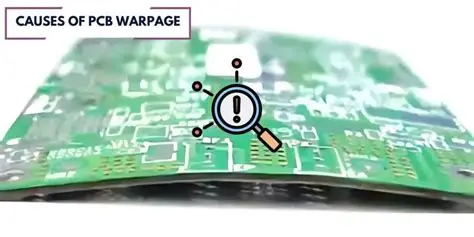
FR-4 consists of woven glass fabric impregnated with epoxy resin, providing a balance of cost and adequate performance for many digital and mixed-signal designs. Its dielectric constant and loss tangent determine how signals travel between layers and how much energy dissipates as heat. High-speed laminates typically incorporate modified resin systems or different reinforcement materials that lower these values, supporting faster edge rates and reduced attenuation over longer traces. Thermal properties, including glass transition temperature and coefficient of thermal expansion, influence dimensional stability when the board experiences temperature cycling. In multilayer constructions, mismatches in these properties between core and prepreg layers can contribute to warpage or delamination if not properly managed during lamination.
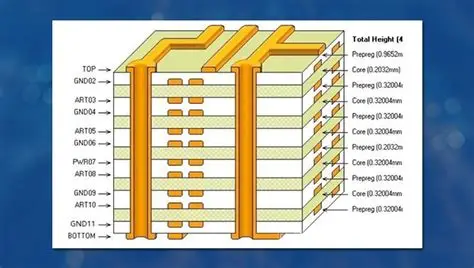
Engineers often compare materials by examining how dielectric constant varies with frequency and temperature. Lower values generally improve signal propagation speed and reduce the risk of impedance mismatches in controlled-impedance traces. Loss tangent affects insertion loss, which becomes more pronounced as layer count increases and trace lengths extend. Thermal conductivity and decomposition temperature further guide selection when boards must withstand soldering processes or continuous high-power operation. These interrelated characteristics require systematic evaluation rather than isolated property checks.
Practical Guidance for Selecting Materials
Design teams begin by defining the target operating frequency range and power dissipation levels for the 12-layer board. FR-4 often suffices when signal speeds remain moderate and thermal loads stay within standard limits. High-speed laminates become preferable when tighter control over dielectric constant and loss tangent is required to maintain signal integrity across multiple layers. IPC-4101 provides a framework for specifying base material properties that support consistent performance in rigid multilayer constructions.
Stackup planning includes selecting core thicknesses and prepreg types that achieve the desired overall board thickness while maintaining symmetry. Thermal expansion compatibility between layers helps minimize stress during reflow and subsequent thermal cycling. IPC-6012 outlines qualification requirements that help verify the completed board meets performance criteria after fabrication.
Procurement specifications should request material data sheets that detail electrical and thermal parameters under relevant conditions. Collaboration between design and manufacturing engineers ensures the chosen laminate supports both the intended electrical performance and the fabrication process capabilities. Documentation of material choices also supports traceability and future revisions.
Best Practices and Quality Considerations
Early involvement of manufacturing partners allows review of laminate availability and any special handling requirements. Moisture sensitivity of the selected materials should align with assembly processes to avoid defects during soldering. JEDEC J-STD-020 addresses classification procedures that help establish appropriate storage and handling protocols for moisture-sensitive devices and related board materials.
Regular verification of material properties through incoming inspection supports consistent quality across production lots. Design reviews that incorporate simulation of signal integrity and thermal performance provide additional confidence before committing to fabrication. These steps collectively reduce variability and support reliable operation of the finished 12-layer assembly.
Conclusion
Material selection for 12-layer PCBs requires careful balancing of electrical, thermal, and mechanical properties to achieve desired performance. FR-4 offers a proven baseline for many applications, while high-speed laminates provide enhanced characteristics when signal integrity or thermal demands increase. Systematic evaluation using established industry specifications helps engineers make informed decisions that support both functionality and manufacturability. Attention to these factors throughout the design and procurement process contributes to reliable, high-performing multilayer boards.
FAQs
Q1: How do 12-layer PCB FR-4 material properties influence overall board performance?
A1: FR-4 provides stable dielectric behavior suitable for many digital designs in 12-layer constructions. Its properties support adequate signal integrity when operating frequencies remain moderate. Engineers evaluate these characteristics alongside thermal expansion to ensure compatibility across the stackup.
Q2: What advantages do 12-layer PCB high-speed laminate options offer compared with standard materials?
A2: High-speed laminates typically deliver lower dielectric constant and loss tangent values that help maintain signal quality at elevated frequencies. They also provide improved thermal stability in demanding environments. Selection depends on specific electrical and thermal requirements of the application.
Q3: Why is 12-layer PCB dielectric constant an important consideration during stackup design?
A3: The dielectric constant affects propagation velocity and impedance of traces routed between layers. Consistent values across the stackup support predictable electrical behavior. Variations can lead to mismatches that degrade signal integrity in complex multilayer boards.
Q4: How do 12-layer PCB loss tangent and thermal properties interact in high-performance designs?
A4: Loss tangent contributes to signal attenuation, while thermal properties determine heat dissipation and dimensional stability. Materials with favorable combinations of these characteristics help maintain performance under varying temperature and frequency conditions. Proper selection supports both electrical reliability and mechanical integrity.
References
IPC-6012E — Qualification and Performance Specification for Rigid Printed Boards. IPC, 2017
IPC-4101E — Specification for Base Materials for Rigid and Multilayer Printed Boards. IPC, 2023
IPC/JEDEC J-STD-020E — Moisture/Reflow Sensitivity Classification for Nonhermetic Surface Mount Devices. JEDEC, 2014





