ALLPCB


Introduction
Reflow soldering stands as a cornerstone process in surface mount technology assembly, where solder paste transitions through melting to form reliable electrical and mechanical joints on printed circuit boards. The atmosphere within the reflow oven plays a pivotal role in determining the quality of these joints, with air often leading to challenges like oxidation that compromise performance. Nitrogen reflow soldering emerges as a proven method to enhance outcomes by creating an inert environment that minimizes reactive oxygen exposure. This approach addresses common defects such as poor solder wetting and excessive voids, which can undermine assembly reliability in high-density designs. Engineers focused on PCB assembly must understand how switching to a nitrogen reflow atmosphere impacts process control and long-term product durability. By examining these effects, this analysis provides practical insights for optimizing reflow soldering atmosphere in production environments.
Understanding Reflow Soldering Atmosphere and the Role of Nitrogen
Reflow soldering atmosphere refers to the gaseous environment surrounding the PCB as it travels through the oven's preheat, soak, reflow, and cooling zones. In conventional air-based systems, ambient oxygen at around 21 percent concentration reacts with heated surfaces, leading to oxide formation on copper pads, component leads, and molten solder. Nitrogen reflow soldering replaces this with high-purity nitrogen gas, drastically reducing oxygen levels to create conditions favorable for clean metallurgical bonding. This shift matters because oxidation prevention directly correlates with superior joint integrity, especially for lead-free solders that require higher reflow temperatures. Industry practices increasingly adopt nitrogen for assemblies demanding fine-pitch components or high-reliability applications, where even minor defects can propagate failures. The decision to implement nitrogen reflow ovens often stems from troubleshooting persistent issues like de-wetting or tombstoning in air atmospheres.
The relevance of nitrogen extends to compliance with soldering standards that emphasize consistent process control. For instance, guidelines in IPC-7530 outline temperature profiling for mass soldering processes, which become more predictable under inert conditions. Without nitrogen, flux residues struggle to maintain oxide-free surfaces during extended exposure to heat, resulting in inconsistent results across production runs. Engineers benefit from nitrogen by gaining tighter control over variables that affect yield and rework rates. Ultimately, evaluating reflow soldering atmosphere choices involves balancing cost with quality gains, particularly when scaling to complex boards.
Technical Mechanisms: How Nitrogen Enhances Soldering Quality
Oxidation represents the primary challenge in air reflow, where elevated temperatures accelerate the formation of copper oxide on exposed pads and tin oxides in the solder alloy. These oxides act as barriers, hindering flux activation and solder flow onto the base metal. Nitrogen reflow soldering prevents this by displacing oxygen, allowing flux to effectively clean surfaces without competing re-oxidation. The result is pristine interfaces that promote uniform intermetallic compound formation between solder and pad, essential for joint strength. This mechanism proves critical in lead-free processes, where higher peak temperatures exacerbate oxidation risks in air. Practical observation during cross-sections reveals smoother IMC layers under nitrogen, indicating reduced brittleness over time.
Solder wetting, defined as the solder's ability to spread and adhere to surfaces, improves markedly in nitrogen atmospheres due to sustained flux efficacy. In air, partial oxide reformation leads to higher contact angles, causing beading or incomplete coverage on pads. Under nitrogen, lower contact angles facilitate capillary action, ensuring solder fully wets terminations and vias. This enhancement becomes evident in wetting balance tests, where nitrogen samples show faster spreading times compared to air. For electric engineers troubleshooting fine-pitch QFNs or BGAs, this translates to fewer bridging defects and better first-pass yields. The interplay between atmosphere and flux chemistry underscores why nitrogen reflow soldering consistently outperforms air in high-volume lines.
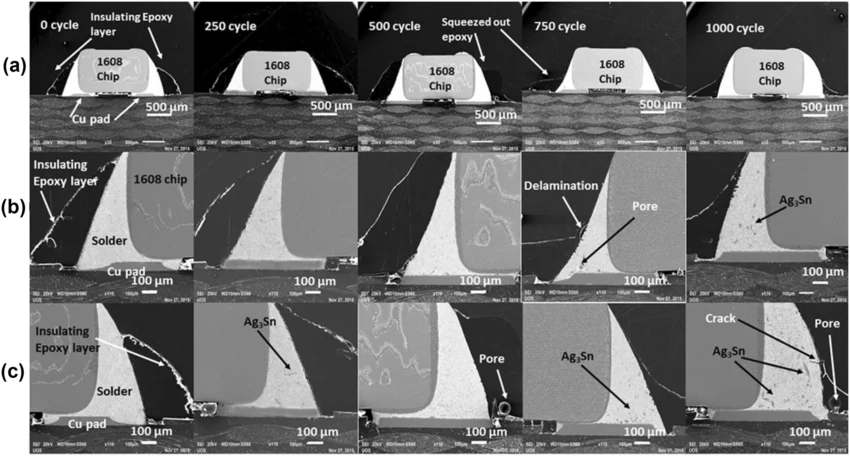
Void reduction follows from the combined effects of better wetting and minimized gas entrapment. Voids arise from volatile flux gases or outgassing trapped during solidification, but oxidation in air exacerbates this by creating surface tension irregularities. Nitrogen atmospheres allow flux vapors to escape more freely while maintaining molten solder fluidity, leading to denser joints. X-ray inspections often highlight fewer and smaller voids in nitrogen-processed assemblies, correlating with improved thermal and electrical performance. This benefit aligns with standards like J-STD-020, which classify moisture sensitivity but indirectly support atmosphere control for reliable reflow profiles. Engineers can leverage these principles to predict and mitigate void-related failures in power or RF applications.
Additional mechanisms involve dross minimization and profile stability. Solder dross, oxidized skimmings from the alloy, accumulates more in air ovens, contaminating subsequent boards. Nitrogen curbs dross by limiting oxidation kinetics, preserving alloy purity across runs. Temperature profiles also stabilize better, as nitrogen's thermal conductivity aids uniform heating without convective oxygen interference. These factors compound to elevate overall reflow soldering quality, particularly for multilayer boards sensitive to thermal gradients.
Practical Solutions and Best Practices for Nitrogen Reflow
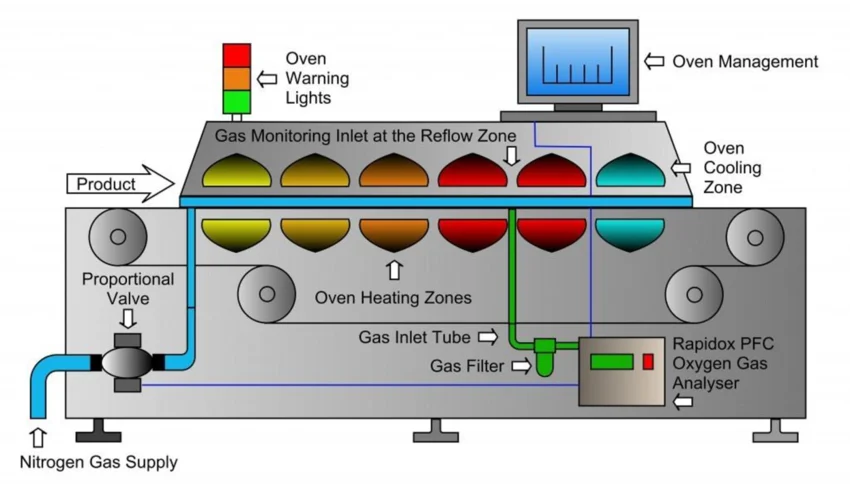
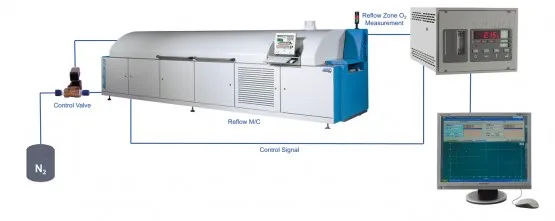
Implementing nitrogen reflow ovens requires attention to system design, gas management, and process validation. These ovens feature sealed chambers with nitrogen inlets at entry and exhaust points to maintain low oxygen throughout zones. Purging cycles before production ensure atmosphere stability, preventing ingress from door openings or conveyor gaps. Electric engineers should prioritize ovens with integrated oxygen analyzers for real-time monitoring, enabling adjustments to flow rates during operation. Flux selection remains key, favoring no-clean types optimized for inert environments to avoid residue issues post-reflow. Validation through thermal profiling, per IPC-7801 guidelines for reflow oven process control, confirms zone uniformity under nitrogen.
Best practices include establishing baseline profiles tailored to nitrogen, often with slightly extended soak times to activate flux fully without oxidation. Component preheat prior to entry aids moisture management, aligning with reflow sensitivity classifications. Regular maintenance of seals and filters sustains atmosphere purity, while conveyor speed optimization balances throughput with dwell times. Troubleshooting deviations involves correlating oxygen spikes with defect logs, such as sudden wetting failures. For high-mix lines, zoning strategies segment nitrogen use for critical assemblies only, optimizing costs. These steps ensure nitrogen reflow soldering delivers repeatable quality without excessive overhead.
Troubleshooting Common Issues in Nitrogen vs. Air Reflow
Engineers often encounter bridging or head-in-pillow defects when transitioning atmospheres, typically from unadjusted paste volumes or profiles. In nitrogen, superior wetting can promote excess flow, necessitating stencil aperture tweaks. Voids persisting under nitrogen signal flux incompatibility or insufficient preheat, prompting gas chromatography analysis of outgassing. Tombstoning reduces due to even heating, but passive components still require symmetric pad designs. Cross-referencing defects against atmosphere logs pinpoints issues like leaks causing localized oxidation. Proactive SPC on joint appearance per visual standards resolves most anomalies swiftly.
Conclusion
Nitrogen reflow soldering profoundly elevates assembly quality through oxidation prevention, enhanced solder wetting, and void reduction. By fostering cleaner metallurgical bonds, it addresses air atmosphere limitations in demanding applications. Practical adoption via controlled ovens and profiling yields reliable results aligned with industry benchmarks. Engineers gain troubleshooting leverage and production efficiencies from this inert approach. Prioritizing reflow soldering atmosphere proves a strategic investment for enduring PCB performance.
FAQs
Q1: What are the main benefits of nitrogen reflow soldering over air?
A1: Nitrogen reflow soldering excels in oxidation prevention, leading to better solder wetting and fewer voids in joints. It maintains flux effectiveness at high temperatures, reducing defects like de-wetting on fine-pitch components. This results in higher yields and reliability for electric engineers handling complex assemblies. Overall, it supports consistent quality in high-volume production.
Q2: How does reflow soldering atmosphere affect solder wetting?
A2: The reflow soldering atmosphere influences wetting by controlling oxide formation on pads and solder. Nitrogen minimizes oxygen exposure, allowing flux to clean surfaces for optimal spreading. Air atmospheres often cause re-oxidation, increasing contact angles and incomplete coverage. Engineers observe this in wetting tests, guiding atmosphere choices for specific alloys.
Q3: Can nitrogen reflow ovens reduce voids in BGA soldering?
A3: Yes, nitrogen reflow ovens aid void reduction by improving solder flow and gas escape during reflow. Enhanced wetting prevents entrapment, especially with bottom-terminated components. Troubleshooting involves profile tweaks and flux pairing. This aligns with practices for high-reliability power devices.
Q4: What role do standards play in nitrogen reflow processes?
A4: Standards like IPC-7530 guide temperature profiling in nitrogen reflow soldering, ensuring process control. They emphasize validation for consistent joint quality. J-STD-020 supports reflow conditions compatible with inert atmospheres. Compliance helps engineers standardize troubleshooting.
References
- IPC-7530B — Guidelines for Temperature Profiling for Mass Soldering Processes. IPC, 2025
- IPC-7801 — Reflow Oven Process Control Standard. IPC
- IPC/JEDEC J-STD-020 — Moisture/Reflow Sensitivity Classification for Nonhermetic Surface Mount Devices. JEDEC