ALLPCB


Over the past week, news around the new energy vehicles leader Tesla has been frequent. On April 12, Tesla CEO Elon Musk announced on X that the Full Self-Driving (FSD) subscription for the US and Canadian markets had been sharply reduced from $199 per month to $99 per month. Tesla said the 50% price cut aimed to increase adoption of its advanced driver assistance features ahead of the first-quarter earnings report.
On April 19, Tesla's US website showed price reductions of about $2,000 for its main models Model Y, Model X, and Model S.
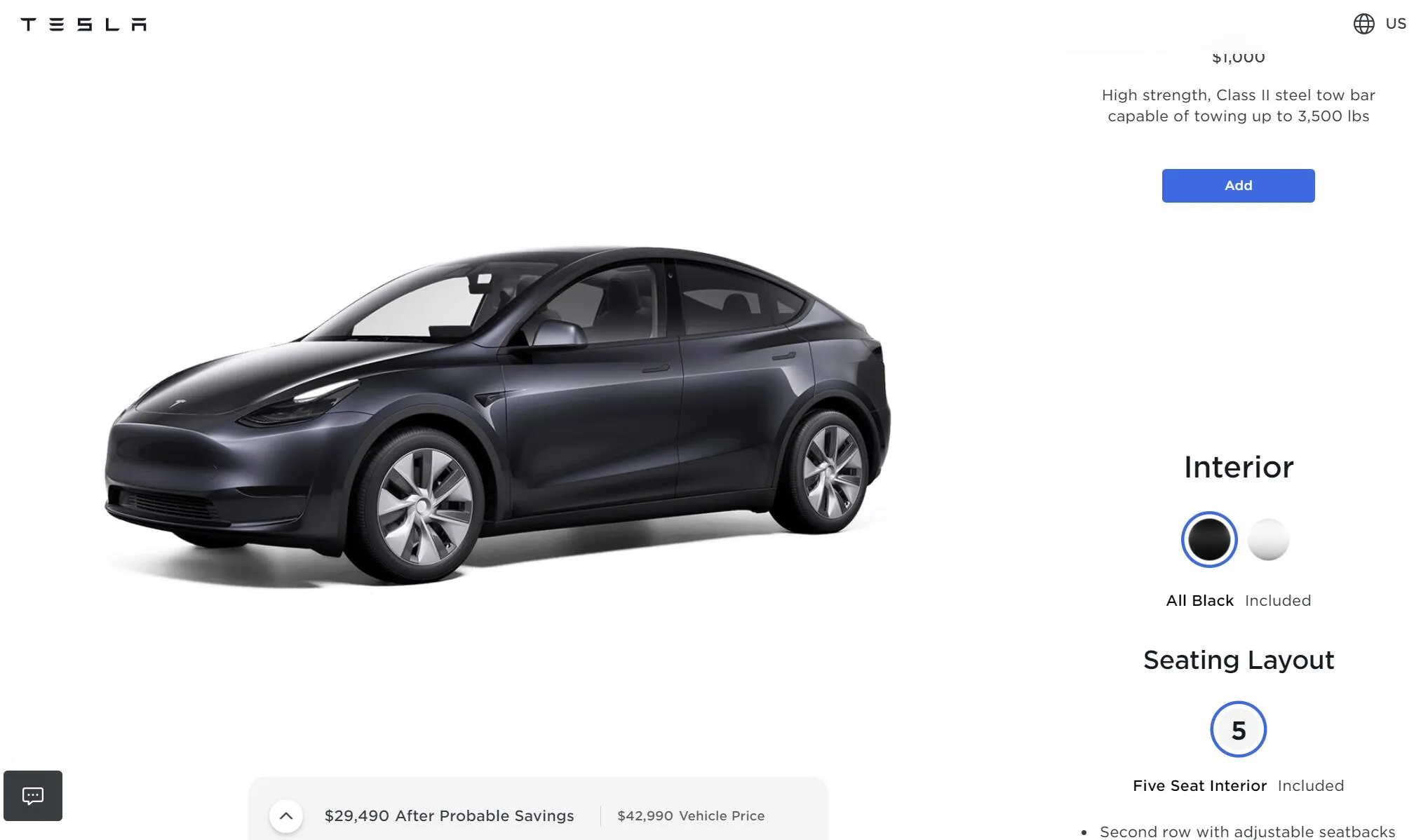
The site listed the Model Y base price reduced from $44,990 to $42,990, the Model Y Long Range to $47,990, and the Model Y Performance to $51,490.
Model S was listed at $72,990, Model S Plaid at $87,990, Model X base at $77,990, and Model X Plaid at $92,990. Tesla North America also posted on X that it will end its referral program benefits in all markets after April 30.
On April 14, Tesla announced global layoffs affecting 14,000 employees, more than 10% of its workforce. What challenges are driving these moves?
Price cuts to attract buyers as Tesla Q1 deliveries fall
According to Cox Automotive data, US EV sales in the last quarter of 2023 rose 40% year over year. In fact, US EV sales reached a record high last year, surpassing one million units for the first time.
BloombergNEF had previously projected 1.7 million plug-in vehicle sales for 2023, but final sales reached only 1.46 million. The transition from internal combustion vehicles to new energy vehicles has not progressed as quickly as expected, and the industry is lowering its future outlook. US experts point to three main reasons: vehicle prices, inadequate charging infrastructure, and confusing tax credit rules.
Most new energy vehicles sold in the US remain relatively expensive. Besides being costly for average buyers, model variety is limited: most offerings are pricier SUVs, with few sedans or compact cars for buyers seeking different body styles.
Tesla's price cuts clearly aim to attract more buyers. Earlier, Tesla canceled a long-promised lower-cost vehicle that had been expected to start at $25,000; investors had hoped such a model would drive mass-market growth.
In the first quarter of 2024, Tesla's global deliveries surprised the industry. Tesla delivered 386,800 vehicles globally in Q1 2024, down 8.5% year over year and 20.2% sequentially from Q4 2023, marking the lowest level in five quarters and the first time Tesla's quarterly deliveries fell below 400,000 since Q3 2022.
Following the delivery report, Tesla's stock dropped as much as 7% at one point. Year to date, Tesla has lost more than $200 billion in market value. The stock fell 29% in Q1, the largest quarterly decline since the company's 2010 IPO.
Competition from Chinese automakers poses clear threat to Tesla
On the global new energy vehicle track, Chinese automaker BYD has already surpassed Tesla in sales. BYD reported cumulative sales of 302,459 units in March 2024, up 46% year over year; passenger car sales were 301,631 units, up 147.8% month over month; and first-quarter cumulative sales exceeded 620,000 units.
Tesla's Q1 sales decline had two notable external causes: first, disruptions in shipping routes during the Red Sea crisis affected Tesla's parts supply, causing Tesla to temporarily halt production at its Berlin plant from January 29 until shipping resumed on February 11; second, in March protesters set fire to infrastructure near Tesla's Berlin factory, forcing evacuation of plant workers and local residents and causing another production stoppage.
On April 8, Elon Musk publicly stated that China poses a threat not only in the electric vehicle sector but to the entire automotive industry. He said competition from Chinese automakers affects the whole auto sector, not only EVs.
China has become a leading global auto exporter. Customs data show that in 2023 China exported 5.221 million vehicles, up 57.4% year over year. By country, China became the world's largest vehicle exporter in 2023. Exports of new energy vehicles from China reached 1.773 million units in 2023, up 67.1% year over year.
According to the China Association of Automobile Manufacturers, in Q1 2024 China exported 1.324 million vehicles, up 33.2% year over year, exceeding one quarter of 2023's total auto exports. In Q1, China's new energy vehicle production and sales were 2.115 million and 2.09 million respectively, up 28.2% and 31.8% year over year; market share for new energy vehicles reached 31.1%, up 5 percentage points year over year. However, the Chinese market grew only 6.2% year over year in Q1, indicating that domestic demand weakness is increasingly apparent.
This year, BYD, SAIC, Changan, and Chery have expanded their new energy vehicle export efforts, reflecting the expectation that international markets still represent growing demand. From an industry cycle perspective, the shift from rapid growth to slower growth has already started. Tesla's layoffs and price adjustments signal the beginning of a market adjustment for new energy vehicles, requiring all manufacturers to prepare accordingly.