ALLPCB


Overview
A thermistor is a semiconductor component whose resistance is highly sensitive to temperature. Thermistors are classified by temperature coefficient into positive temperature coefficient (PTC) and negative temperature coefficient (NTC) types.
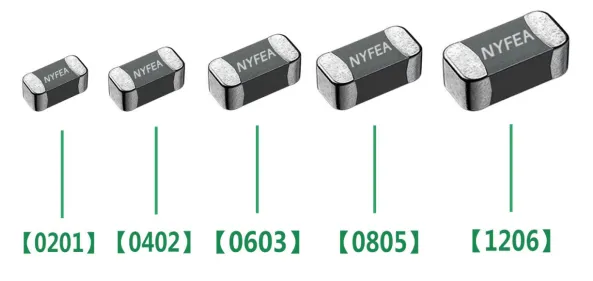
NTC thermistors are used for temperature measurement, temperature control, and temperature compensation, and are commonly referred to as temperature sensors.
PTC thermistors can be used for temperature measurement and control, and are also used as heating elements that act as a thermal "switch", combining sensing, heating, and switching functions.
An NTC thermistor exhibits a negative temperature coefficient: its resistance decreases noticeably with increasing temperature. This characteristic is used in small appliances for soft-start, automatic detection, and control circuits. PTC thermistors exhibit a positive temperature coefficient: their resistance increases noticeably with temperature, making them suitable for automatic control circuits.
Thermal Challenges in 5G Devices
As 5G technology is widely adopted across devices, it differs from earlier 2G, 3G, and 4G cellular generations in several key ways:
- Substantially higher communication speeds, data throughput, and connection capacity to support high-definition imaging, video, virtual reality, real-time applications such as autonomous driving, remote medicine, and Internet of Things communication.
- Maintained user experience rates of up to around 100 Mbit/s under continuous wide-area coverage and high mobility.
- Increased system coordination and intelligence, manifesting as multi-user, multi-point, multi-antenna, and multi-sensor cooperative networking, with flexible automatic adjustments between networks.
These characteristics increase the load on components in 5G devices and raise the number of heat sources. Multiple heat sources can interact thermally, so measures designed for a single heat source may not be adequate for managing multiple hotspots on 5G electronic devices.
Therefore, monitoring the temperatures of multiple functional hotspots on a PCB and controlling heat-generating components according to the device's complex functions becomes especially important. For example, when a CPU runs a heavy workload, it may start at full performance at a lower temperature. If the CPU temperature rises and approaches a threshold, its performance must be reduced. If the power-supply section delivering power to the CPU generates significant heat and transfers that heat to the CPU, the CPU temperature may rise rapidly. It is necessary to consider temperatures around both the CPU and the power IC and to control each device's operating point more finely.
Alongside temperature control for devices on the PCB, final overheat protection may be required, such as displaying a warning or switching the device off. Monitoring must consider each heat source and the internal temperatures of ICs and modules, mutual thermal exchange, and ambient temperature variations around the device. Only by monitoring temperatures around heat sources can this thermal management be implemented.
Why SMD NTC Thermistors Are Suitable for PCB Temperature Sensing
SMD NTC thermistors share EIA package size standards with chip resistors, capacitors, and inductors, making them suitable for surface mount. They offer high placement flexibility, small footprint, and can achieve expected accuracy with simple circuitry. For these reasons, SMD NTC thermistors are well suited as temperature sensors placed at locations on the PCB where temperature monitoring is required.

Temperature Detection Circuit Using an SMD NTC Thermistor
The following is an example of a temperature detection circuit using an SMD NTC thermistor.
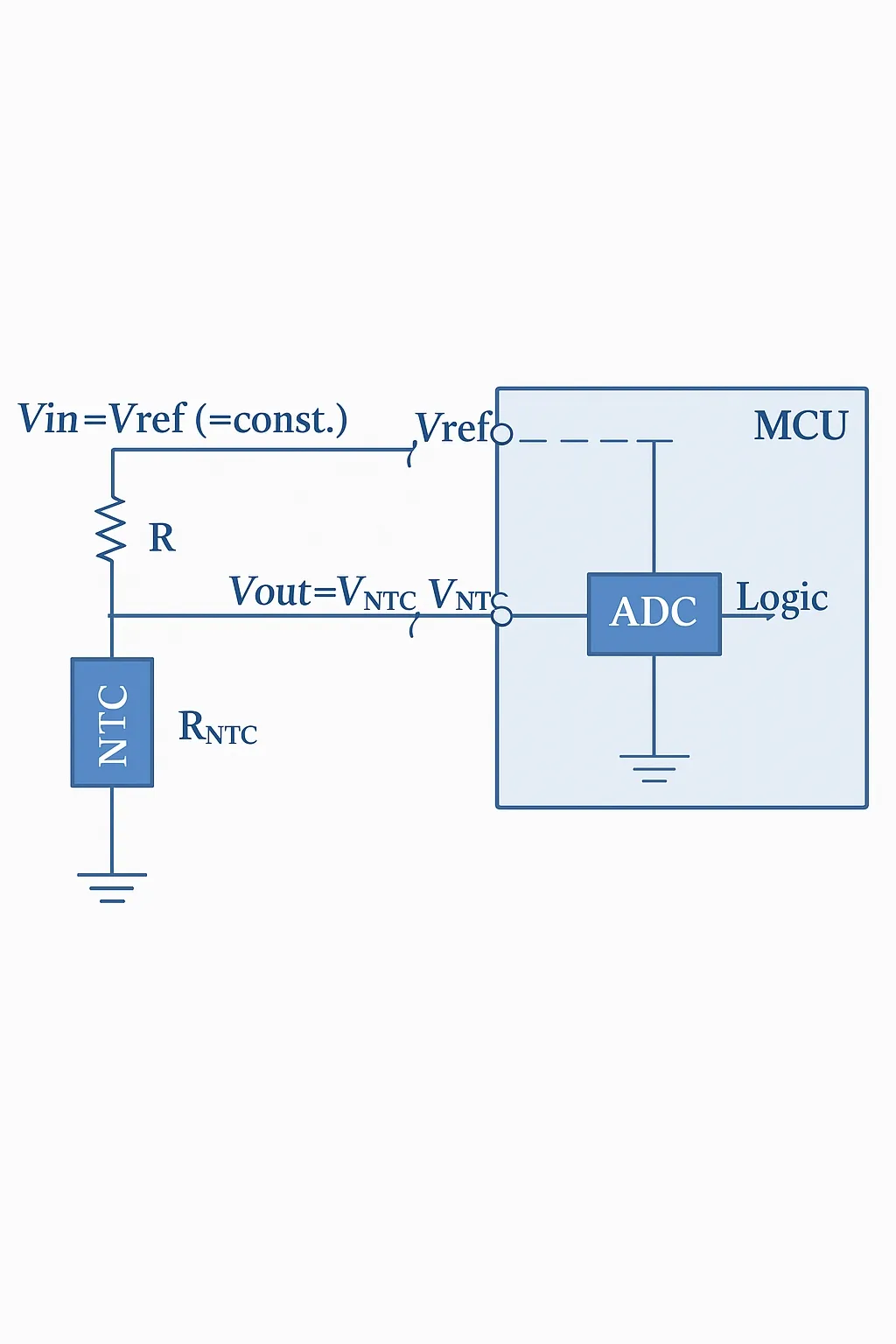
Connect the SMD NTC thermistor in series with a chip resistor and apply a constant voltage. The resulting voltage divider output relates to the thermistor temperature as shown in the graph below.
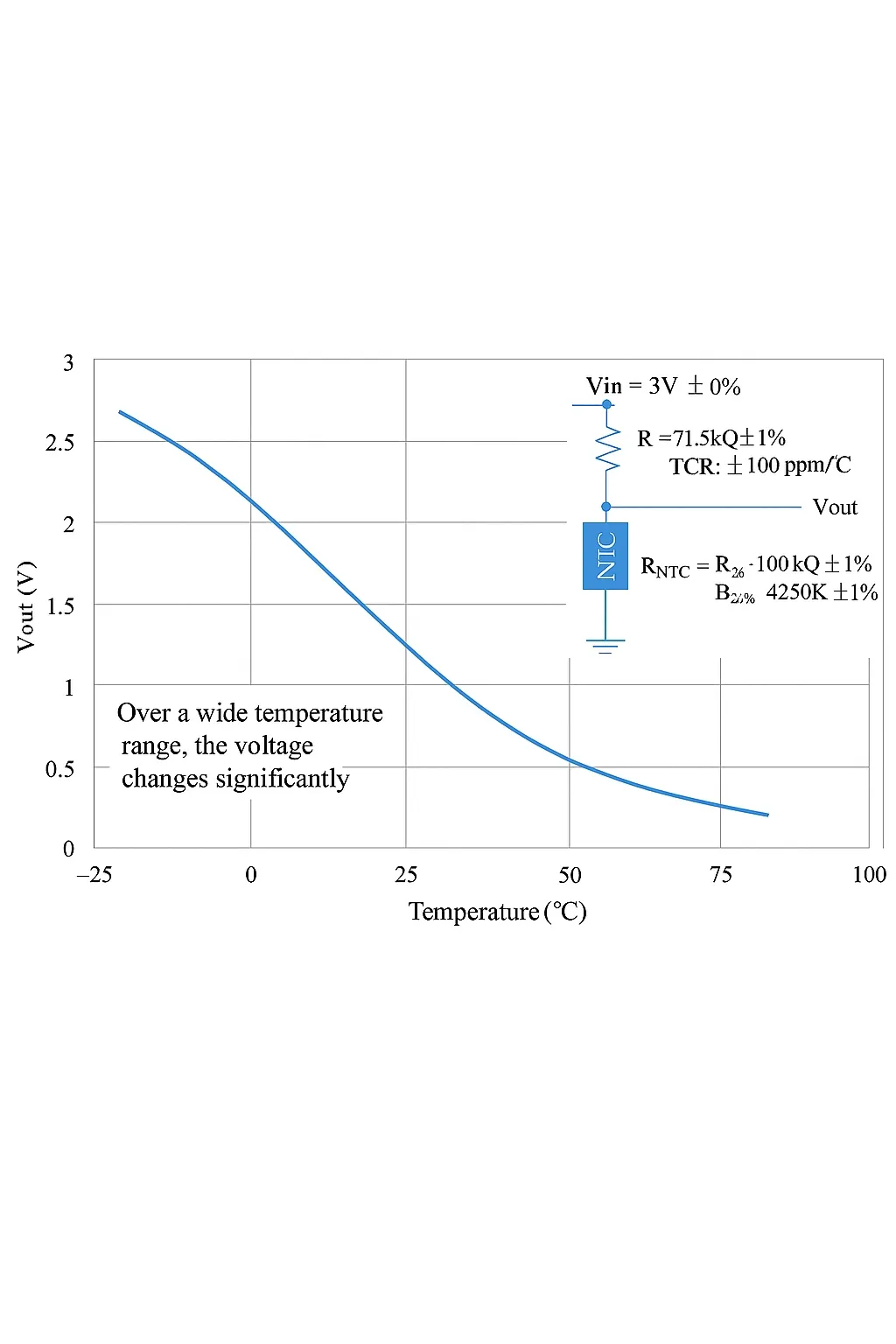
Over a wide temperature range, the output voltage exhibits significant change; this voltage change can be used to infer temperature and trigger alerts when thresholds are exceeded.
Notably, the output voltage in the example above has a large dynamic range, yet no amplifier is used before the ADC. Unlike many sensors in electronic devices that produce very weak signals requiring amplification, the SMD NTC thermistor is one of the few sensors that often do not need an amplifier.
ADC Resolution and Temperature Gain
Consider ADC resolution. If the same supply voltage used for the thermistor is also the ADC reference and the ADC input range is 0 V to 3 V, a 10-bit ADC has an LSB of about 3 mV.
Over the same temperature range of -20°C to +85°C, the voltage change per degree (gain) is shown below. Even at the smallest gain across the temperature range, the gain can be about 10 mV/°C. In that case, 1 LSB corresponds to about 0.3°C. Thus, a 10-bit ADC in a microcontroller can be expected to achieve roughly 0.3°C temperature resolution. Around room temperature, the gain exceeds 30 mV/°C, yielding an LSB below 0.1°C.
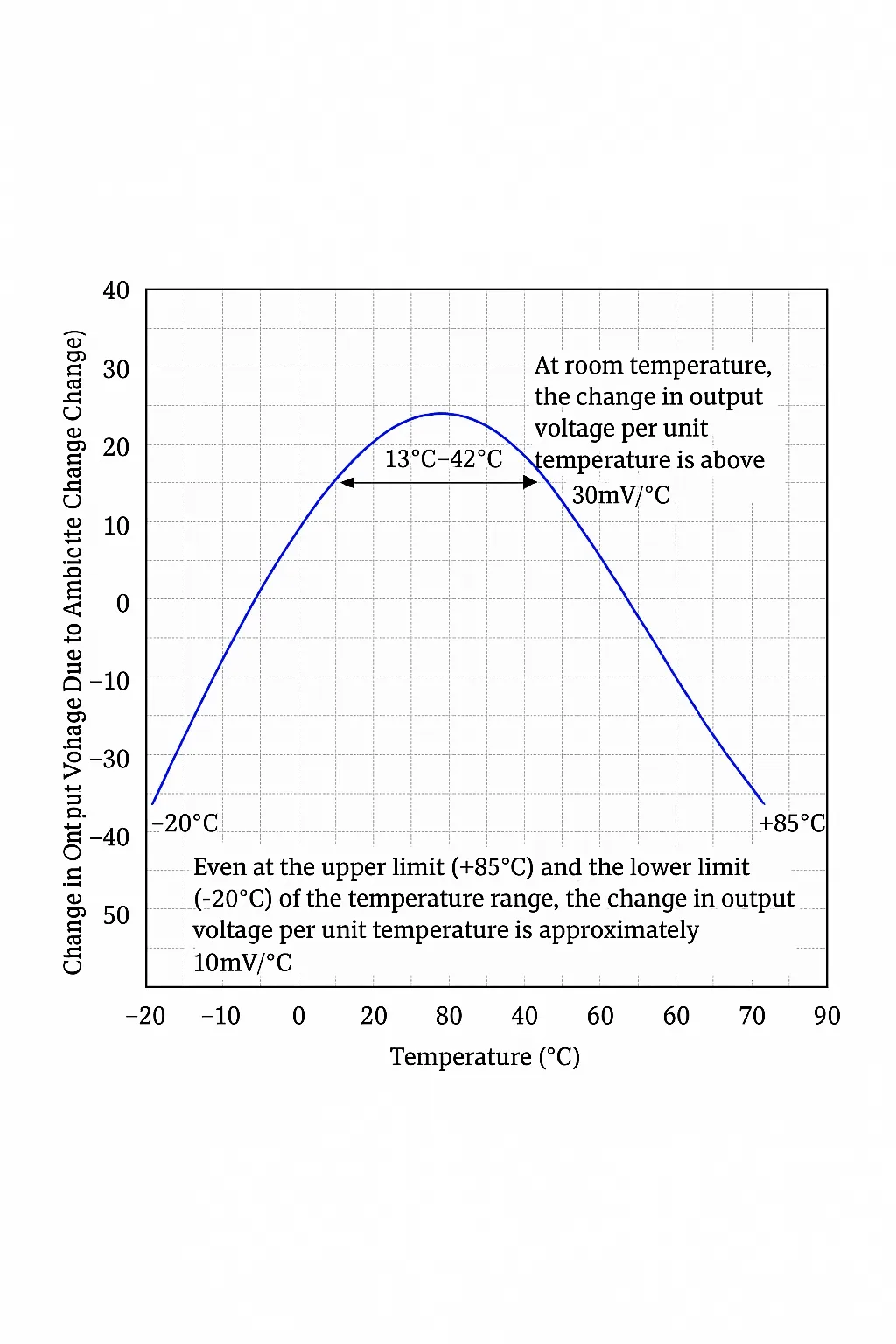
Using a standard ADC integrated with a microcontroller, a temperature detection circuit can be implemented with a simple circuit. This is a primary reason SMD NTC thermistors are widely used for temperature detection in electronic devices.
Simple Circuit and High-accuracy Measurement
What temperature measurement accuracy can be achieved with common SMD NTC thermistors and resistors?
The voltage-temperature characteristic shown earlier was simulated using components with a tolerance of ±1%. The center value and the upper and lower limits calculated from component tolerances are almost indistinguishable in the voltage plot. Converting the voltage limits into temperature error yields the following.
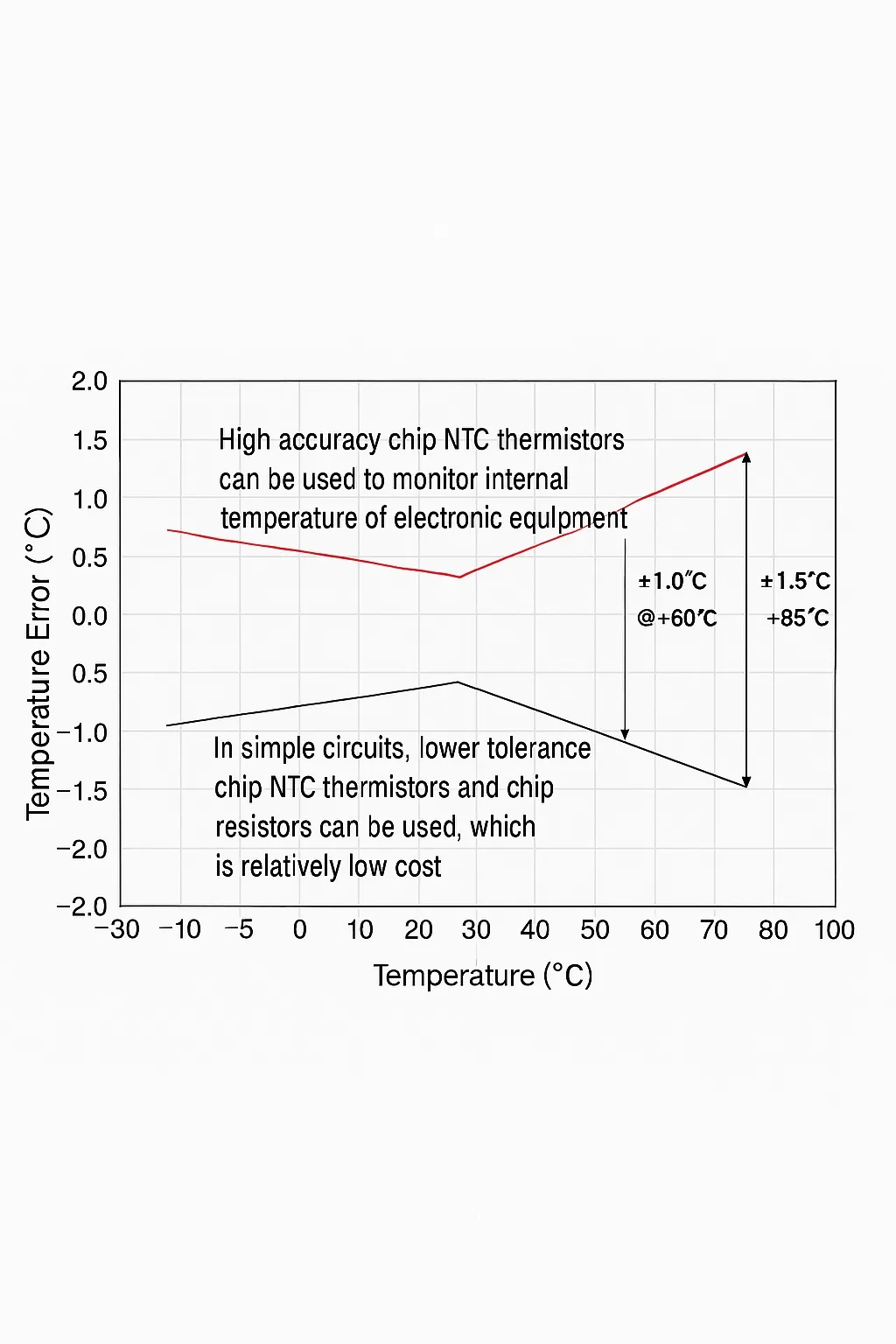
The results show approximately ±1°C error at +60°C and about ±1.5°C error at +85°C. For monitoring internal device temperatures such as PCB temperature, this level of accuracy is generally sufficient.
High-accuracy temperature measurement can be achieved with simple components and circuits, which explains the cost-effectiveness of SMD NTC thermistors for thermal monitoring.