ALLPCB


Overview
Phased-array technology is not new and has been used in various military applications for decades. Its application in 5G systems is attracting attention because it can improve signal strength, gain, directivity, and bandwidth. A phased array uses multiple antenna elements and controls the radiation pattern or beam by adjusting the relative phase of each element. Antenna elements are connected via microwave transmission lines and power dividers. Beamforming controls the transmit beam by exploiting interference between two or more radiated signals.
The beam is formed by adjusting the phase differences between the drive signals fed to each transmitter in the array. A phased-array can contain anywhere from a few transmitters to several thousand.
How it works
When signals from each transmitter are fully in phase, they interfere constructively to produce strong radiation in a specific direction. The radiation direction is controlled by setting phase shifts on the signals sent to different transmitters. These phase shifts are realized by small time delays between signals fed to successive transmitters. Phase shifters can be used to synthesize hundreds of beams in a phased array.
Common phased-array types
- Linear array: Array elements are arranged along a single line. Only one phase shifter bank is needed in this case, but the beam is confined to a single plane. To form a planar aperture, multiple linear arrays are stacked in the orthogonal direction.
- Planar array: Each antenna element is paired with a phase shifter. A two-dimensional matrix of individual antennas forms a planar aperture, and the beam can be steered in two planes. This architecture requires many phase shifters, increasing complexity and cost.
- Frequency-scanned array: No phase shifters are required; beam steering is controlled by the transmitter frequency.
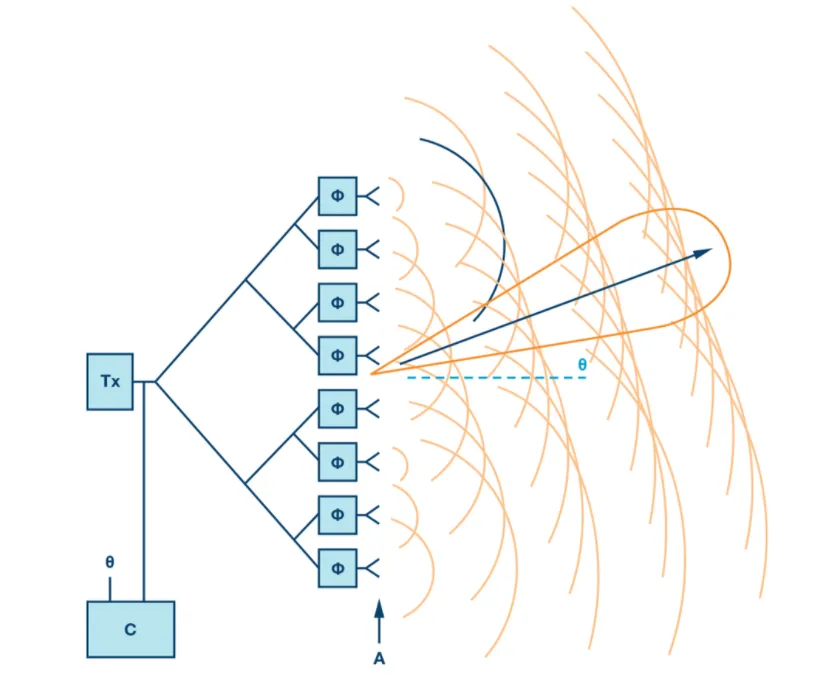
Figure 1: Working principle of a phased array antenna. Source: ADI
Recent progress in digital beamforming enables multiple simultaneous beams and replaces many analog circuits with a reconfigurable digital network. A digital network can reconfigure and add array elements, adapt operation, and update system performance via software. Digital beamforming removes narrowband limitations and supports wideband operation, enabling a single antenna architecture to serve radar, communication, and electronic-warfare functions.
Applications
In military and aerospace radar applications, phased arrays offer improved performance and flexibility, low profile, fast retargeting, and easy multi-target tracking. For military communications, they can support simultaneous connectivity to multiple drones, platforms, and low-Earth-orbit satellites, enabling faster and more efficient signal switching. Electronic warfare use cases include electronic attack and platform protection, with directional control of jamming and precise geolocation of hostile signals even in noisy electromagnetic environments. In space, phased arrays can meet wideband requirements for satellite payloads.
Phased arrays are also important in 5G, particularly at millimeter-wave frequencies, where the goal is wider bandwidth, longer coverage, and higher capacity. Millimeter-wave systems are relatively easy to deploy for short-range indoor use but face propagation loss, rain attenuation, atmospheric absorption, and severe shadowing outdoors.
Recent semiconductor advances have produced more cost-effective phased-array solutions used in satellite, radar, and 5G systems. For example, Starlink uses a phased-array antenna system that integrates hundreds of small antennas synchronized to picosecond precision. By adjusting delays between elements, a single Starlink terminal can track multiple satellites without mechanical movement.
ADI and Keysight Technologies have announced a collaboration to advance phased-array technology. ADI's phased-array platform is being used to accelerate beamforming development, while Keysight provides phased-array test solutions. The collaboration aims to offer a comprehensive ecosystem for design, test, and calibration to reduce time to market.
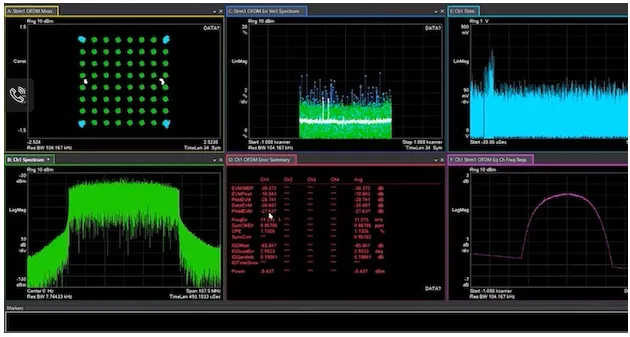
Figure 2: Testing and calibration are important components of the phased-array technology ecosystem. Source: Keysight Technologies
Keysight reports that it has reduced phased-array test time from minutes to seconds while maintaining high accuracy and achieving a 70-fold increase in measurement speed. ADI has released a software reference design for a 32-element hybrid beamforming phased-array development platform and provided design examples to shorten prototyping time for hybrid beam steering and system phase calibration.
Future challenges
Challenges remain. Although modern digital phased-array radios and differential RF front ends are improving linearity, noise, and dynamic range of transceiver chains, efficiency is still limited. 5G and future generations require antenna arrays that provide high wideband performance with low complexity in a single step. Millimeter-wave frequencies demand scalability and manufacturability, which are still developing. Simplifying array architectures, reducing cost, improving efficiency, and increasing wide-scan capability are key goals. Renewed interest and collaborative efforts are expected to accelerate progress in these areas.