ALLPCB


Overview
In a previous article investigating 3GPP, researchers examined the organization's internal structure and influence. This report provides a more complete account of 3GPP's development and the broader evolution of mobile communications.
Early Developments: Pre-Cellular and the Birth of Cellular
With the widespread use of wireless telegraphy, radio broadcasting, and civilian-band radio systems after World War II, an early mobile telephony system emerged in 1946 with support from Motorola. Often referred to as 0G or Pre-Cellular, these vehicle-mounted wireless telephone systems essentially combined two-way radios and fixed-line telephones. Due to large size, high power consumption, limited range, and constrained capacity, early deployments were mainly in police and taxi vehicles. Multiple regional technical specifications appeared, such as the U.S. MTS and IMTS, Finland's ARP, Japan's AMTS, Sweden's MTA, and Norway's OLT.
In 1947, engineers at Bell Labs proposed the cellular concept. Cell-based reuse of spectrum solved the size, power, interference, and capacity problems of pre-cellular systems. However, widespread adoption took time. In the 1970s, after solutions for handover and multiplexing matured, cellular communications gained momentum. In 1973 Motorola engineer Martin Cooper developed the first handheld mobile phone. In 1978 Bell Labs installed an experimental cellular network in Chicago, and in 1979 NTT launched the first commercial cellular network in Japan. This marked the arrival of first-generation (1G) mobile technology and the emergence of many regional analog systems such as AMPS in North America, NMT and CT1 in Europe, and NTT and Hicap in Japan.
2G: Regional Standards and the Rise of GSM
Following the initial cellular era, the industry moved toward regional standardization and digital systems. In 1983, the Conference of European Postal and Telecommunications Administrations (CEPT) established the GSM committee to develop a digital cellular voice standard for Europe. The first GSM specifications were completed by CEPT in 1987. In 1988 the European Telecommunications Standards Institute (ETSI) was created to promote GSM across Europe and later took over its continued development.
GSM proved to be a highly successful second-generation (2G) standard. From its first commercial deployment in Finland in December 1991 through 2011, GSM became the most widely adopted 2G technology, serving billions of users in over 200 countries.
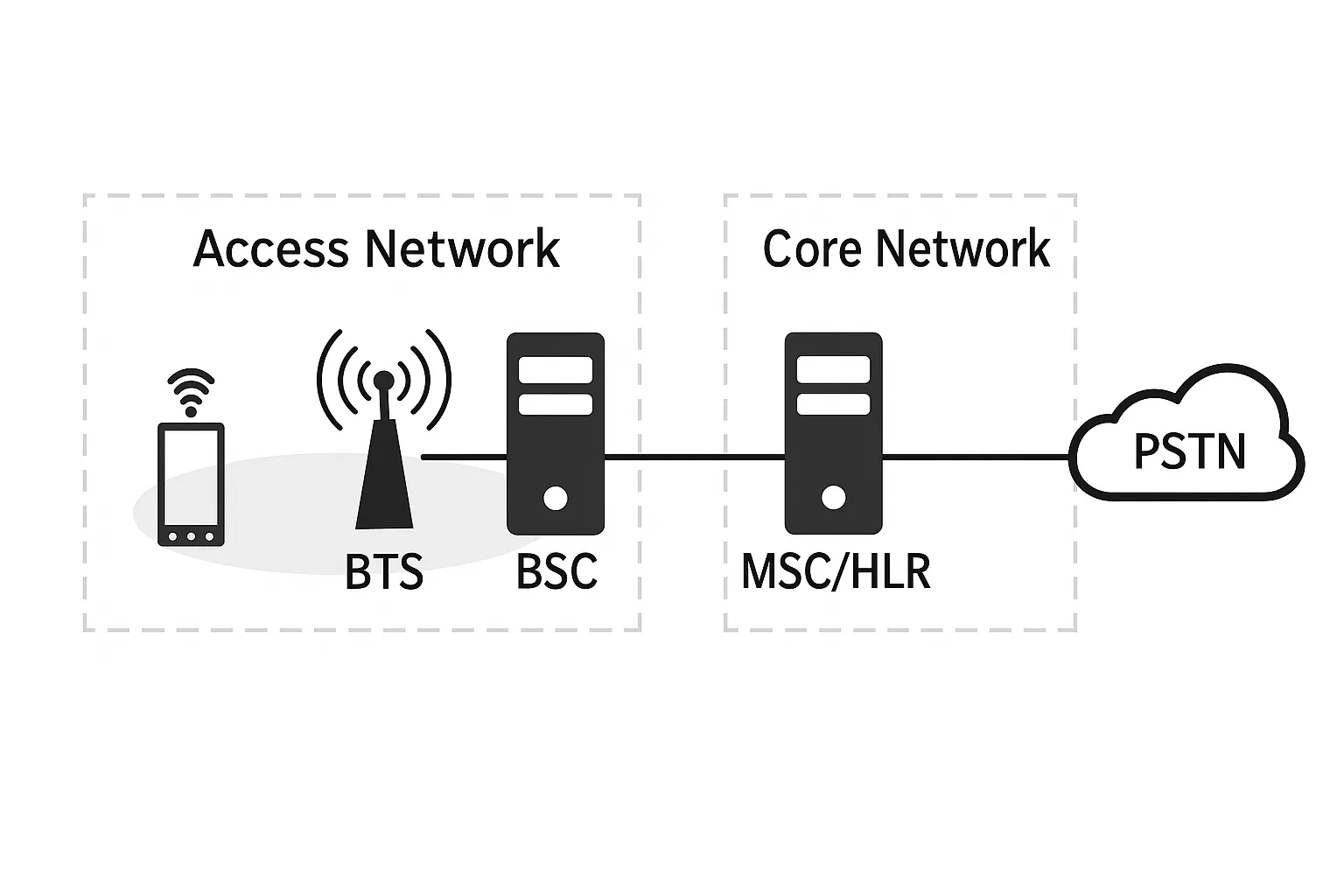
Figure: Early GSM network architecture
North America and CDMA
In North America, Qualcomm was founded in 1985 to pursue advanced wireless technologies. Qualcomm developed CDMA-based cellular technology and filed the first CDMA patent in 1986 (US4901307A). CDMA offered substantially greater capacity than AMPS and became a leading candidate for digital cellular in North America. In 1993 the Cellular Telecommunications and Internet Association (CTIA) selected CDMA for North American digital cellular, and the first commercial CDMA network launched in Hong Kong in 1995. By 1997 CDMA had substantial market share in the U.S., and by 2007 CDMA-based technologies had been deployed in many countries worldwide.
Formation of 3GPP and 3GPP2
To coordinate the emerging global 3G standards, the International Telecommunication Union (ITU) issued recommendations and industry organizations formed to define unified 3G approaches. In 1998 the 3GPP and 3GPP2 partnerships were established to develop specifications for next-generation mobile systems. ETSI later transferred GSM maintenance and evolution work to 3GPP, accelerating 3GPP's growth by consolidating GSM-era expertise and resources.
3G Era: WCDMA, CDMA2000, and TD-SCDMA
3GPP released Release 99, which included WCDMA, an evolution path from GSM that also incorporated design ideas from CDMA-based systems. WCDMA was supported primarily by European and some Japanese vendors and offered a smooth migration from GSM technologies.
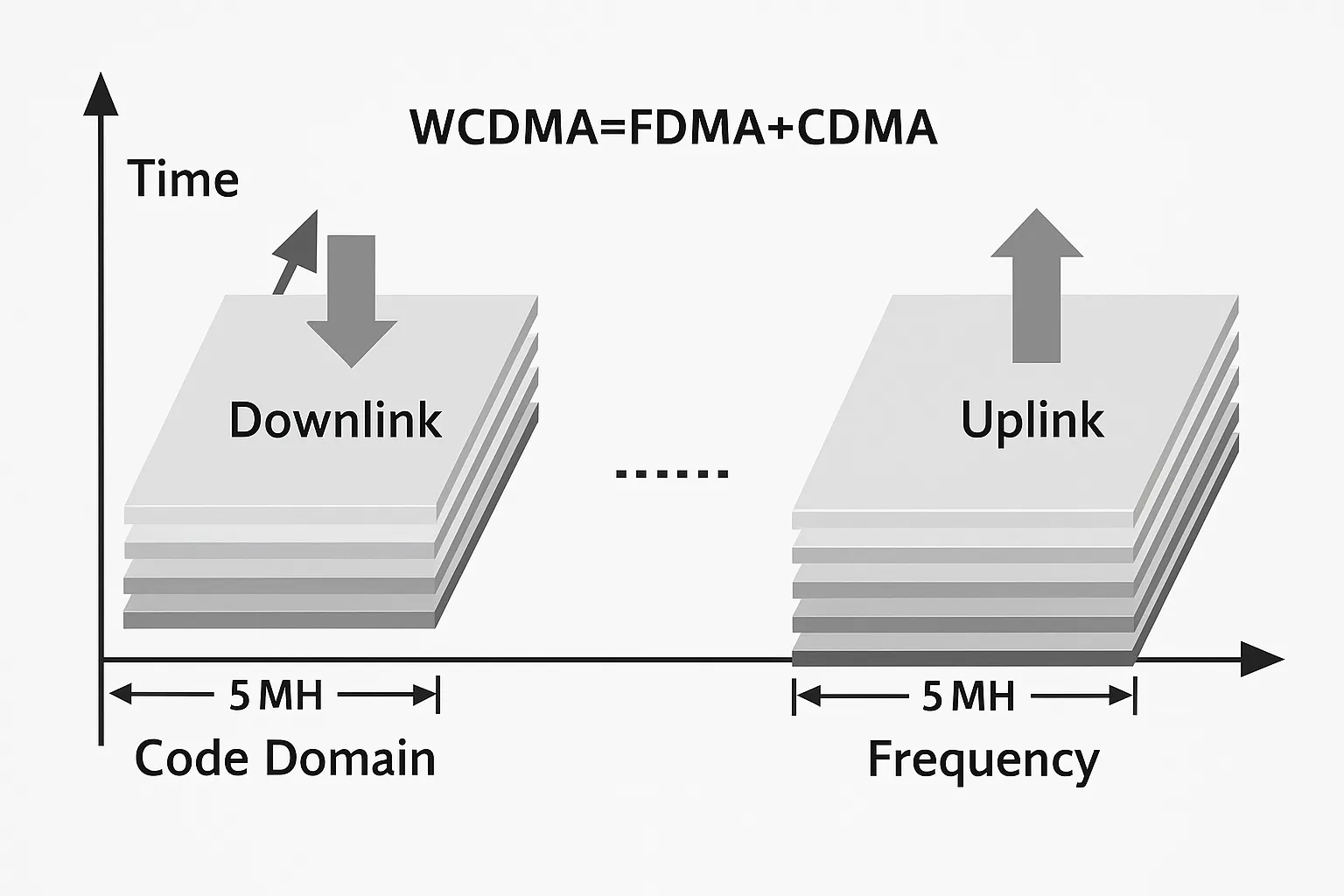
Figure: WCDMA multiple access
To obtain broader market acceptance and patent cross-licensing, agreements were reached allowing technologies from different groups to interoperate or permit market access. In 2001 3GPP adopted a TDD-based low-chip-rate variant advocated in China, known as TD-SCDMA, which combined elements of FDMA, TDMA, and CDMA and became one of the ITU-recognized 3G standards alongside WCDMA and CDMA2000.
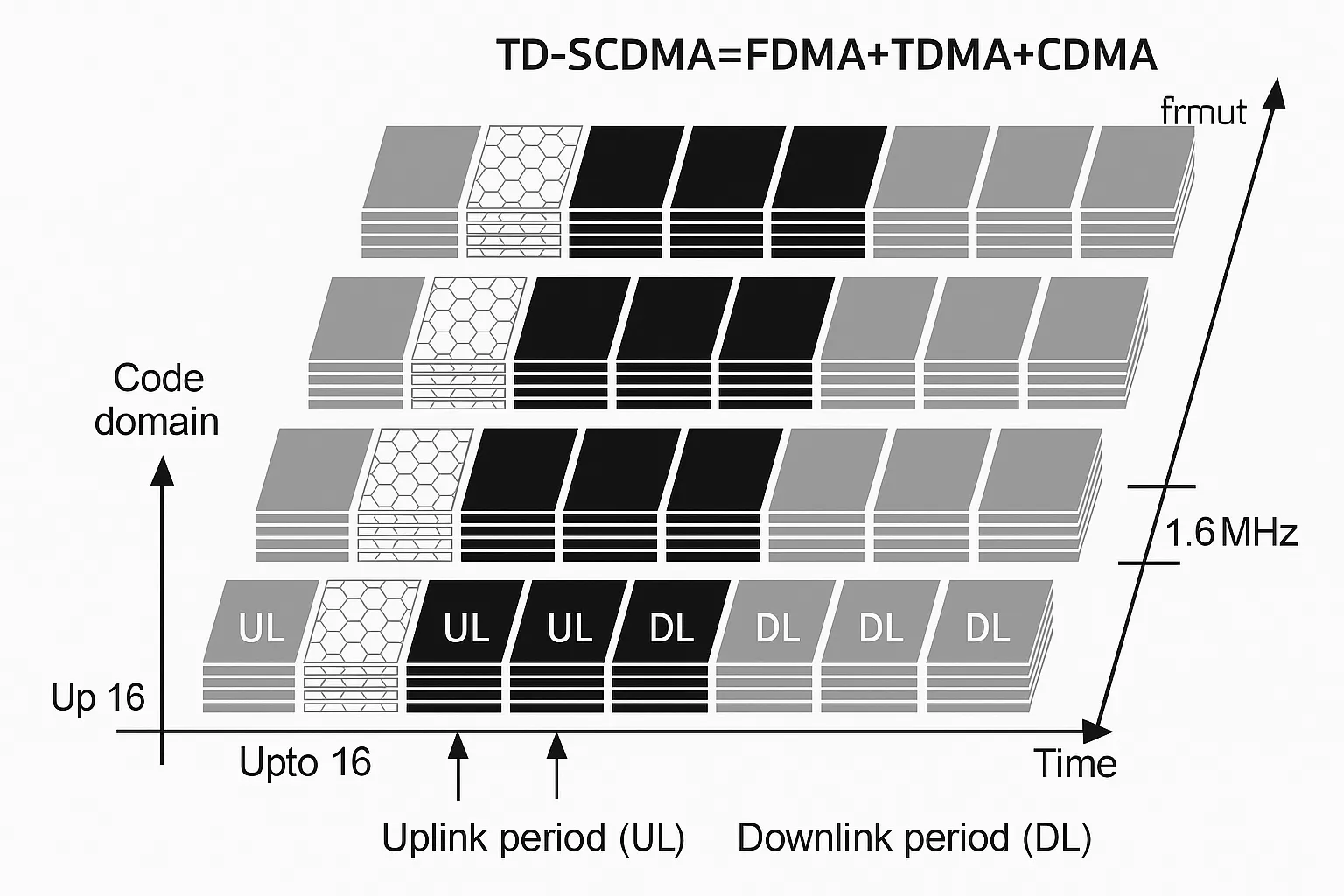
Figure: TD-SCDMA multiple access
On the 3GPP2 side, CDMA2000 and its EV-DO enhancements provided an alternative 3G path. CDMA2000-based networks launched commercially in the early 2000s and were adopted in several regions, including parts of Asia and North America.
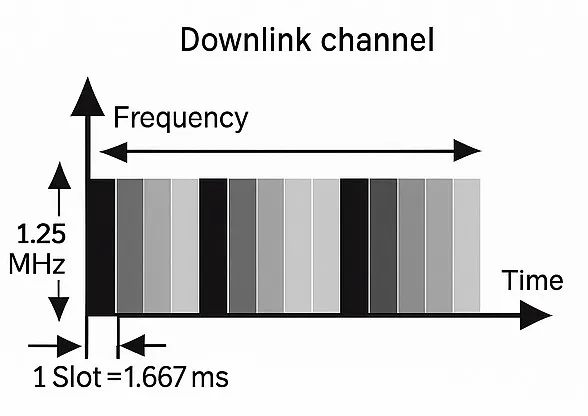
Figure: CDMA2000 1xEV-DO multiple access
Evolution and Competition During the 3G Period
All three major 3G approaches evolved rapidly. 3GPP introduced High-Speed Downlink Packet Access (HSDPA) and High-Speed Uplink Packet Access (HSUPA) in subsequent releases, collectively known as HSPA, which increased peak downlink rates from a few Mbps to dozens of Mbps. 3GPP2 enhanced EV-DO through revisions that improved peak rates and introduced advanced modulation and carrier aggregation. Over multiple technology cycles, 3GPP's evolutionary path delivered substantial performance improvements and broad market adoption.
4G Competition: LTE, UMB, and WiMax
As the industry moved toward 4G, three main contenders emerged: 3GPP's LTE, 3GPP2's UMB (Ultra Mobile Broadband), and IEEE's WiMax. UMB was designed as a CDMA2000 evolution using OFDMA, MIMO, and advanced techniques, with theoretical peak rates significantly higher than previous generations. However, deployment momentum shifted away from UMB for several reasons, including backward compatibility challenges and changing vendor support.
WiMax, standardized by IEEE as 802.16e and later profiles, targeted wireless broadband access rather than high-mobility cellular use. Corporate support, notably from Intel, pushed WiMax into consideration for broader IMT classification. WiMax faced practical challenges including limited spectrum availability, fragmented device ecosystems, and competition from cellular vendors with strong existing interests.
3GPP accelerated LTE development under the Long-Term Evolution initiative, releasing the first LTE specifications in Release 8 in late 2008. Over time LTE became the dominant 4G technology as UMB projects were shelved and WiMax deployments remained limited in many markets.
3GPP2 formally ceased development of UMB in 2008, and major vendors and operators gradually migrated toward LTE. WiMax received ITU recognition in IMT-Advanced, but market adoption did not match LTE's scale, and commercial momentum favored LTE.
Consolidation and 5G
The market consolidation that occurred across 3G and 4G generations left 3GPP as the primary standardization body for mainstream mobile communication technologies. In 2015 the ITU initiated IMT-2020 work to define 5G requirements. 3GPP released the first 5G New Radio (NR) specifications in 2018, enabling significantly higher peak data rates, lower latency, and improved performance at high mobility. 5G architectures also expanded the focus from consumer broadband to broader industry and enterprise applications.
Summary
Over roughly eight decades, mobile communication technologies progressed from pre-cellular systems to highly standardized global mobile systems. The evolution involved intense technical competition, regional standardization efforts, and market consolidation. While 3GPP emerged as the leading standards organization for mainstream mobile technologies, the rapid advances seen across generations were driven by competing approaches and the need to meet diverse market requirements.