ALLPCB


Market context
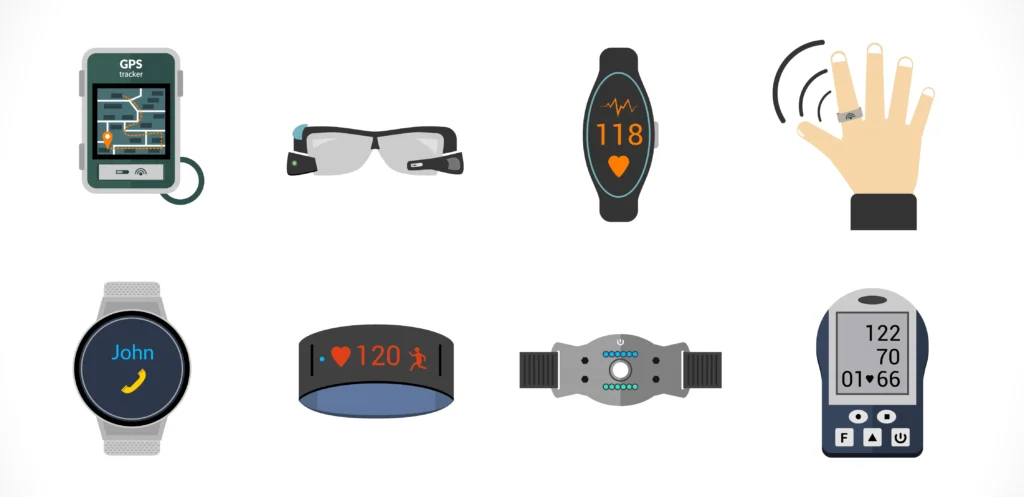
The wearable devices market is growing rapidly. Statista reports the global market value will exceed $7 billion this year and $12.6 billion in 2018. Although potential rewards are high, market entry is challenging. Designing smartwatches or fitness bands is difficult because consumers expect many features, smartphone connectivity, small form factor, light weight, and long battery life. Advances in highly integrated, ultra-low-power microprocessors and wireless chips have eased the design process, but extracting every last bit of energy from batteries remains critical to product success.
How silicon vendors support low-power designs
This article examines how silicon vendors help wearable designers extend battery life by supplying power-efficient displays, microcontrollers, silicon radios, and power-management chips specifically designed for ultra-low-power applications.
Convergence of technologies
Wearables have proliferated because three key technologies have converged. Ultra-low-power chips that can run from watch-size batteries enable compact products. Smartphone-compatible wireless technologies such as Bluetooth Smart, also known as Bluetooth Low Energy, allow seamless communication with phones and tablets. Low-cost software ecosystems support a wide range of applications that present collected data to users in friendly ways, for example how long a user needs to exercise to lose weight. A recent example is the Adidas miCoach smartband, which uses Bluetooth Smart from Nordic Semiconductor.
Products like Fitbit combine multiple engineering disciplines, including advanced electronics such as 32-bit microcontrollers, 2.4 GHz silicon radios, analog-to-digital converters, and display drivers. Wearables also integrate multiple sensors to measure barometric pressure, humidity, temperature, and acceleration. The microcontroller significantly affects device performance and market appeal; MCUs often integrate other functions used in wearables, such as Bluetooth radios and ADCs. However, system integration alone does not solve the power challenge.
Size, weight, and battery trade-offs
Wearables must be unobtrusive, and size and weight constraints limit battery capacity. Some devices, such as smartwatches with substantial compute and GPS capabilities, commonly use rechargeable lithium-ion batteries and accept more frequent charging. Reducing how often users must recharge can still provide a competitive advantage.
Other wearables, such as fitness bands, are expected to run for months on a non-rechargeable cell. ARM-based low-power embedded processors and optimized microcontrollers, such as TI MSP430-class devices, together with ultra-low-power radios like Bluetooth Smart, RF4CE, or ZigBee, help engineers design products that can run from small coin cells such as the CR2032. For a coin cell to last months, average current consumption must be limited to a few milliamps or less. Typical designs therefore see tens of milliamps during active operation and tens of microamps, or even hundreds of nanoamps, in sleep modes.
Designing for low power
Displays (if present), the microcontroller, and the silicon radio account for the majority of a wearable device's power consumption. Designers limit display power by using technologies such as organic LED (OLED) screens. OLEDs consume less energy than traditional LED-based displays because they do not require a backlight, and they support thinner, lighter displays. To save further power, displays show minimal information and switch rapidly to power-save modes, since users can obtain extensive statistics from companion smartphone applications.