ALLPCB


Introduction
In the competitive landscape of PCB manufacturing, maintaining high quality while controlling costs remains a core challenge for electrical engineers and production teams. Automated X-ray inspection (AXI) emerges as a vital tool for detecting hidden defects in assembled boards, particularly in high-density interconnects and bottom-terminated components. The x-ray inspection cost often raises concerns during procurement decisions, yet a thorough cost-benefit analysis reveals its potential to enhance the overall cost of quality. This article delves into the ROI of x-ray inspection, exploring how it justifies the investment through reduced rework, scrap minimization, and improved reliability. Factory-driven insights highlight the alignment with industry standards, ensuring compliance and process optimization. By examining technical principles, cost factors, and practical frameworks, engineers can make data-informed choices for their SMT lines.
X-ray inspection addresses limitations of optical methods like AOI, which cannot penetrate components to reveal internal solder joint issues. Common defects such as voids, bridging, and misalignment in ball grid arrays (BGAs) and chip-scale packages demand non-destructive evaluation. As production volumes increase and miniaturization advances, the need for robust quality control intensifies. This analysis provides a structured approach to evaluating AXI, balancing upfront expenditures against long-term savings in failure costs.
What Is Automated X-Ray Inspection and Why It Matters
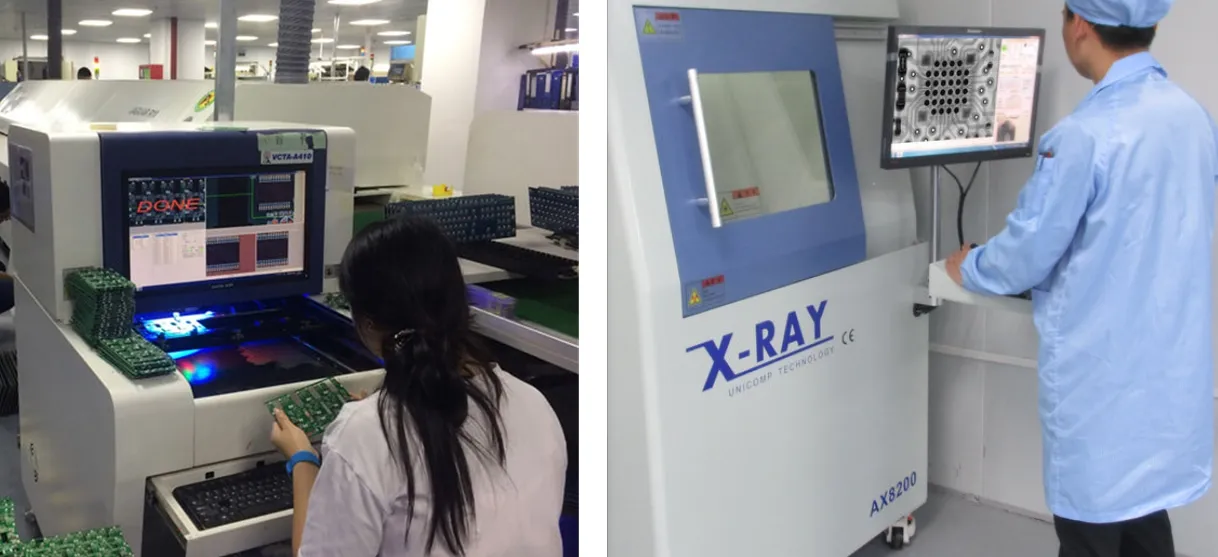
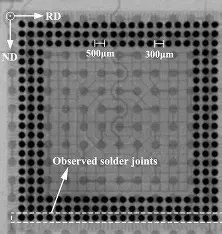
Automated X-ray inspection involves directing a beam of X-rays through the PCB assembly to produce radiographic images of internal structures. These images allow for the visualization of solder joints, vias, and component placements that are obscured from surface views. AXI systems automate the process using software algorithms to detect anomalies based on grayscale differences and predefined criteria. In PCB assembly, it excels at inspecting high-lead-count devices where manual or optical checks fall short.
The relevance of AXI stems from its ability to catch defects early in the production cycle, preventing escapes to downstream processes or field failures. For instance, insufficient solder volume or head-in-pillow defects in BGAs can lead to intermittent connectivity issues, compromising product reliability. In high-reliability sectors like automotive and aerospace, undetected voids violate acceptance criteria outlined in standards such as IPC-7095, which guides BGA implementation. Factories implementing AXI report fewer warranty returns, directly impacting the cost of quality by shifting focus from reactive repairs to preventive measures.
Production throughput and defect density play key roles in determining AXI's value. High-mix, low-volume runs may suffice with manual X-ray, but inline AXI suits high-volume lines for consistent quality. Ultimately, it supports compliance with J-STD-001 requirements for soldered assemblies, fostering trust in manufacturing processes.
Technical Principles of X-Ray Inspection
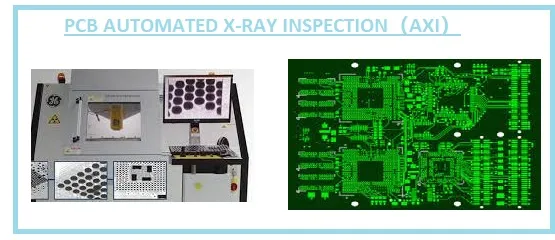
X-ray inspection operates on the principle of differential absorption, where denser materials like solder attenuate X-rays more than lighter substrates or air voids. The transmitted rays strike a detector, forming a 2D shadowgram or, in advanced 3D systems, tomographic slices for volumetric analysis. Tilt and oblique angle imaging enhances visibility of joint fillet formation and ball alignment. Software processes these images to quantify features like void percentage, joint bridging, and missing balls against programmed golden samples.
Resolution and magnification determine detection limits, with sub-micron capabilities needed for fine-pitch BGAs. Radiation safety protocols ensure operator protection, adhering to IEC standards for equipment design. Image enhancement techniques, such as edge detection and noise reduction, improve automated classification accuracy. These principles enable precise evaluation of hidden features, aligning with IPC-A-610 acceptability classes for electronic assemblies.
In practice, 2D AXI suits routine joint inspection, while 3D computed tomography (CT) provides depth profiling for complex stacks. Factors like tube voltage and flux influence penetration depth, optimized for board thickness and material density. This technical foundation underpins AXI's superiority over visual methods for volumetric defects.
Breaking Down the X-Ray Inspection Cost
The x-ray inspection cost encompasses several components, starting with capital expenditure for the equipment itself. Inline AXI systems command higher prices due to automation, conveyor integration, and high-speed imaging capabilities. Operational costs include electricity, maintenance contracts, and consumables like X-ray tubes with finite lifespans. Training for operators and programmers adds to initial outlays, ensuring effective recipe development for diverse assemblies.
Throughput impacts indirect costs, as slower scan times may bottleneck production lines. Software licenses for advanced defect classification and data analytics contribute ongoing expenses. Compared to AOI, AXI's x-ray inspection cost reflects its penetrating power, justified for hidden defect detection. Factories must factor in space requirements and shielding for regulatory compliance.
Over time, total cost of ownership decreases with preventive maintenance schedules. Energy-efficient models and modular upgrades mitigate long-term expenses. A comprehensive audit reveals how these costs fit within broader quality budgets.
Quantifying Benefits and ROI of X-Ray Inspection
The ROI of x-ray inspection materializes through reductions in the cost of quality framework, which categorizes expenses into prevention, appraisal, internal failure, and external failure. AXI represents an appraisal investment that lowers internal failure costs like rework and scrap by identifying defects post-reflow but pre-packaging. External failures, including field returns and customer dissatisfaction, see even greater savings due to enhanced outgoing quality levels.
Defect escape prevention translates to tangible gains in high-volume production, where even marginal yield improvements compound. Process feedback from AXI data enables root cause analysis, optimizing reflow profiles and stencil designs. Compliance with standards like IPC-A-610 reduces audit risks and certification efforts. Overall, the ROI x-ray inspection strengthens supply chain reliability.
Key metrics for ROI include payback period, calculated as initial investment divided by annual savings. Higher defect-prone processes yield faster returns. Integration with manufacturing execution systems amplifies benefits via real-time analytics.
Cost-Benefit Analysis Framework for AXI
A structured cost-benefit analysis of AXI begins with baseline data collection on current defect rates and failure costs. Map the production flow to identify inspection insertion points, such as post-SMT or pre-conformal coating. Quantify savings by estimating rework hours avoided and scrap value recovered. Include intangible benefits like faster time-to-market and improved supplier negotiations.
Sensitivity analysis tests variables like volume fluctuations and defect reductions. Net present value calculations discount future savings against upfront costs. Factory teams often use spreadsheets to model scenarios, prioritizing high-risk assemblies. This framework aids in justifying x-ray investment during capital reviews.
- Equipment Purchase: High initial cost; Benefit: Long-term yield gains.
- Operator Training: Moderate short-term cost; Benefit: Reduced false calls.
- Maintenance: Ongoing low cost; Benefit: High uptime.
- Defect Detection: Appraisal cost increase; Benefit: Failure cost decrease.
Best Practices for Justifying and Implementing X-Ray Investment
Start justification with a pilot study on critical products, correlating AXI findings with functional test escapes. Engage cross-functional teams to align on key performance indicators like defects per million opportunities. Select systems matching throughput needs, favoring inline for mass production. Recipe optimization per IPC-7095 criteria ensures consistent BGA evaluations.
Integration best practices include conveyor synchronization and data export to quality dashboards. Regular calibration maintains accuracy, with oblique imaging for fillet verification. Operator certification programs build proficiency. These steps maximize ROI x-ray inspection while minimizing disruptions.
Vendor-agnostic trials and lease options lower entry barriers. Continuous improvement loops from AXI feedback drive process maturity.
Real-World Insights from Factory Implementations
In one factory scenario, introducing AXI targeted BGA-heavy telecom boards prone to voiding. Post-implementation, process tweaks reduced average void sizes, aligning with J-STD-001 limits. Rework stations saw workload drops, freeing capacity for volume ramps. Analytics revealed stencil wear as a root cause, prompting preventive maintenance.
Another insight involves mixed-technology lines, where AXI complemented AOI for hybrid coverage. Yield mapping exposed reflow inconsistencies, leading to nitrogen atmosphere adoption. These examples underscore the cost-benefit analysis AXI provides in diverse contexts. Engineers leverage such insights for scalable quality gains.
Conclusion
Automated X-ray inspection stands as a strategic investment for PCB factories seeking to optimize the cost of quality. By addressing hidden defects invisible to other methods, AXI delivers measurable ROI through scrap reduction, rework minimization, and failure prevention. The cost-benefit analysis framework equips teams to justify the x-ray investment based on production specifics and standard compliance. Implementing best practices ensures sustained value, enhancing overall manufacturing excellence. Electrical engineers benefit from reliable assemblies that meet stringent performance demands.
FAQs
Q1: What factors contribute most to x-ray inspection cost?
A1: X-ray inspection cost includes capital for equipment, ongoing maintenance, training, and operational throughput impacts. Inline systems incur higher upfront expenses due to automation features but offer speed advantages. Energy use and tube replacements add recurring elements. Balancing these against quality gains is key in procurement. Factory audits help tailor costs to needs.
Q2: How do you calculate ROI for x-ray inspection?
A2: ROI x-ray inspection involves dividing net savings from reduced failures by initial investment, projecting payback periods. Track baseline defect costs pre- and post-AXI. Include yield improvements and warranty reductions in the numerator. Sensitivity to volume changes refines accuracy. This metric justifies expansion in high-stakes production.
Q3: Why is cost-benefit analysis AXI essential for PCB quality?
A3: Cost-benefit analysis AXI weighs appraisal costs against failure savings in the cost of quality model. It quantifies early detection value for BGAs and hidden joints. Alignment with IPC standards strengthens the case. Factories use it for CAPEX approval and process prioritization.
Q4: When does justifying x-ray investment make sense for a factory?
A4: Justifying x-ray investment suits high-volume SMT lines with BGA components or high-reliability needs. Pilot data on defect escapes provides evidence. If current rework exceeds appraisal budgets, ROI accelerates. Compliance demands further tip the scales.