ALLPCB


Overview
2024 has been described as the first year of 5G-A. As the next stage in 5G evolution, what capabilities does 5G-A bring? Three-carrier aggregation (3CC) is considered the first widely deployed 5G-A feature and will significantly increase mobile downlink speeds.
What is 3CC
3CC stands for 3 Component Carriers, also called three-carrier aggregation or three-carrier units. In wireless communications, radio spectrum is allocated in bands. 3CC means that an operator combines three of its spectrum bands into a larger effective bandwidth to achieve higher throughput. In simple terms, it is like merging three traffic lanes into one wider lane to increase vehicle capacity.
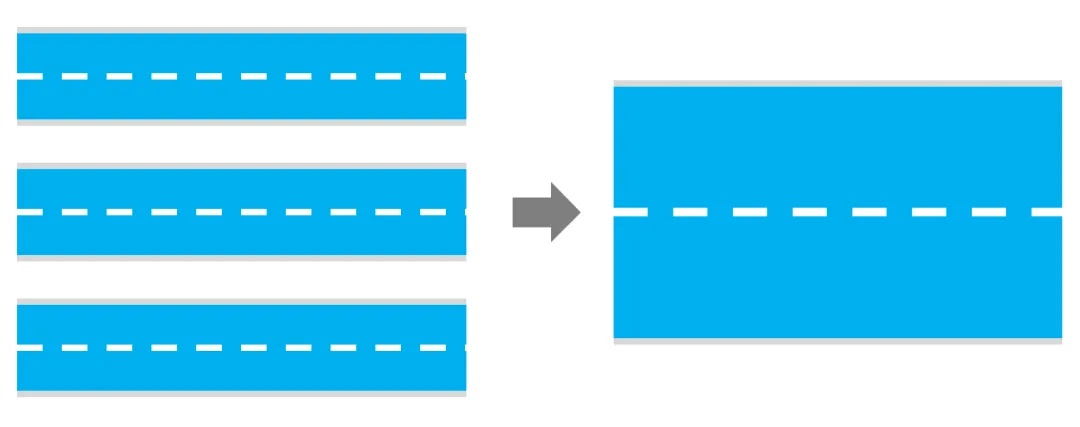
3CC is a form of carrier aggregation (CA). Carrier aggregation was already used in the 4G era. At that time, FDD LTE downlink peak rates were around 150 Mbps and TD-LTE around 100 Mbps, which did not meet the ITU-R IMT-Advanced 4G target (downlink rates above 1 Gbps for fixed or low mobility and above 100 Mbps for high mobility).
3GPP introduced LTE-Advanced (LTE-A) to support carrier aggregation (up to five carriers) and exceed 1 Gbps, enabling the 4G designation. Now in the 5G era, carrier aggregation is again used not for standards qualification but to further improve performance metrics.
Spectrum bandwidth is one of the primary factors that determines throughput. 5G separates Sub-6 GHz and millimeter-wave bands. Millimeter-wave bands are not yet widely opened in China. The 6 GHz band (5.925–7.125 GHz) could be used for mobile services in China but has not been mobilized yet. With modulation and coding approaching practical limits, further rate increases mainly come from better utilization of existing sub-6 GHz spectrum.
The frequency allocation map above shows spectrum distribution for operators in China. 3CC builds on that premise: operators bind different frequency bands, including shared bands, to achieve higher throughput.
Technical highlights of 3CC
When carrier aggregation was introduced, three types were defined:
- Intra-band contiguous CA: two carriers belong to the same 3GPP-defined band and are contiguous in frequency.
- Intra-band non-contiguous CA: two carriers belong to the same 3GPP-defined band but are non-contiguous in frequency.
- Inter-band non-contiguous CA: two carriers belong to different 3GPP-defined bands.
Each participating carrier is a Component Carrier. Component carriers are classified by role: the carrier that carries signaling and manages other component carriers is the primary carrier, or PCell (Primary Cell). Carriers used to expand bandwidth and increase throughput, and that the primary carrier can add or remove dynamically, are secondary carriers, or SCell (Secondary Cell).
Operators in the Chinese market have deployed different 3CC schemes. One scheme used by China Mobile is 700 MHz (30 MHz) + 2.6 GHz (100 MHz) + 4.9 GHz (100 MHz), totaling 230 MHz. China Mobile also holds an additional 60 MHz in the 2.6 GHz band, which could be used in the future to reach 260 MHz total.
China Telecom and China Unicom have mainly used 2.1 GHz (40 MHz) + 3.5 GHz (200 MHz, including shared bands). In some locations, 900 MHz bands such as 2×11 MHz are added; in others only 3.5 GHz 200 MHz is used. According to reports, many provinces and cities in China have run 3CC trials, with most measured downlink rates above 4 Gbps. A test in Jiaxing, Zhejiang reportedly exceeded 5 Gbps (3CC + 1024QAM), which appears to be among the highest observed downlink speeds.
For uplink, combined with SUL (Supplementary Uplink / uplink decoupling technologies), tests commonly show several hundred Mbps and even above 1 Gbps (for example, a 1.04 Gbps uplink test reported by an operator). Note that speed tests are influenced by many factors—local device density, environmental interference, use of Massive MIMO or high-order modulation, and so on—so test numbers should be interpreted with caution. Observant readers will note that 3CC can aggregate both FDD and TDD bands; it supports mixed FDD+TDD aggregation.
3CC’s user experience improvements rely on several technical innovations. 3GPP Release 18, the first 5G-A release, includes features related to 3CC, such as FSA and MB-SC. FSA is Flexible Spectrum Access. It supports intelligent multi-carrier optimization, flexible splitting and recombining of uplink spectrum, unified scheduling of control and data channels, and can improve resource utilization and uplink performance. MB-SC is Multi-Band Serving Cell. It can integrate and reconstruct non-contiguous dispersed spectrum into a virtual wideband, further improving resource utilization and uplink experience. These features provide unified management and scheduling of spectrum resources across bands, carriers, and timeslots, enhancing carrier aggregation benefits.
Application scenarios
The most direct effect of 3CC is a large increase in network connection speeds, from under 1 Gbps to around 3–5 Gbps. Even in crowded scenarios, achieving user experiences above 1 Gbps becomes feasible. Very large bandwidths help use cases such as live video, cloud gaming, glasses-free 3D, XR/VR, and other bandwidth-hungry services.
3CC’s bandwidth advantages will be especially useful in transport hubs such as high-speed rail stations, subway stations, and airports, as well as stadiums, tourist attractions, and dense urban neighborhoods. Many initial 3CC deployments focus on these locations and are often implemented using small cells.
In industrial and enterprise contexts, 3CC can support applications such as smart manufacturing, AI-based inspection, remote inspection, security monitoring, and remote operations where many high-throughput terminals or high-definition cameras require substantial bandwidth.
3CC can also provide QoS differentiation. It can schedule and allocate bandwidth based on service level and quality requirements to ensure that critical services receive prioritized, continuous, and stable communication guarantees in complex networks. This capability is important for vertical industry use cases. Another potential application is FWA (fixed wireless access). Through 3CC, greater bandwidth can be delivered to CPE devices, enabling households, renters, visitors, and small businesses to obtain high-speed broadband access quickly.
Devices that support 3CC
Not all smartphones support 3CC. Currently, devices using Qualcomm X75 modems and MediaTek M80 modems can theoretically support 3CC. For example, the M80 supports three-carrier aggregation (300 MHz) for 5G NR (FR1) and up to eight-carrier aggregation for 5G mmWave (FR2), with peak downlink rates up to 5 Gbps and uplink up to 1 Gbps.
Specific models reported to support 3CC include Honor Magic6 Pro, Xiaomi 14 Pro, vivo X100 Pro, and OPPO Find X7. Other models require further verification. Current iPhone models reportedly do not support 3CC.
Conclusion
That summarizes 3CC. Operators are expected to accelerate 3CC deployment. As 5G-A evolves and more device models support these features, users will gradually experience the very large bandwidths enabled by 3CC. Before wider availability of 6 GHz and millimeter-wave spectrum, around 5 Gbps appears to be the practical upper bound for downlink rates in the field. Fast speeds are one part of the equation; the emergence of compelling applications is the other. The development of popular, bandwidth-intensive use cases will drive further evolution of the technology.