ALLPCB


In the world of electronics, the term "high speed" often comes up when discussing printed circuit boards (PCBs). But when is a PCB considered high speed? Simply put, a PCB is deemed high speed when the signal rise time is short enough compared to the propagation delay of the trace that it behaves like a transmission line, requiring special design considerations to maintain signal integrity. This typically happens with signals operating at frequencies above 100 MHz or with very fast edge rates, often in the range of nanoseconds or less.
In this comprehensive guide, we'll dive deep into what defines a high-speed PCB, the key factors that influence this classification, and the design challenges and best practices associated with high-speed PCB design. Whether you're an engineer working on cutting-edge technology or a hobbyist looking to understand the basics, this post will provide valuable insights to help you navigate the complexities of high-speed circuits.
What Defines a High-Speed PCB?
A high-speed PCB is not solely defined by the clock frequency of the signals it carries. Instead, it’s more about how quickly the signal transitions (rise time) compared to the time it takes for the signal to travel along the PCB trace (propagation delay). When the rise time of a signal is comparable to or shorter than the propagation delay, the trace starts behaving like a transmission line. This means issues like signal reflections, crosstalk, and impedance mismatches become significant and can degrade performance if not addressed.
As a general rule of thumb, a PCB is considered high speed when:
- The signal frequency exceeds 100 MHz, though this is not a hard cutoff.
- The signal rise time is less than 1-2 nanoseconds, which often corresponds to high-frequency digital signals.
- The trace length is longer than 1/6th of the wavelength of the signal, causing the signal to experience significant propagation effects.
For instance, a digital signal with a 1 ns rise time traveling on a trace with a propagation delay of 1 ns will likely exhibit high-speed characteristics. At this point, traditional low-frequency design rules no longer apply, and engineers must account for transmission line effects to ensure proper functionality.
Key Factors That Determine High-Speed Classification
Several factors play a role in determining whether a PCB falls into the high-speed category. Understanding these factors helps engineers anticipate challenges and apply the right design techniques.
1. Signal Rise Time
The rise time of a signal, or how quickly it transitions from low to high (or vice versa), is often more critical than the clock frequency. A signal with a fast rise time, say 500 picoseconds, can introduce high-speed effects even if the frequency is relatively low. This is because fast transitions generate high-frequency components that can cause reflections and other issues if the trace isn’t designed properly.
2. Trace Length and Propagation Delay
The physical length of a trace on a PCB affects how a signal propagates. Propagation delay is the time it takes for a signal to travel from one end of the trace to the other, typically around 150-200 picoseconds per inch in standard FR-4 material. If a trace is long enough that the propagation delay is significant compared to the signal’s rise time, high-speed design rules must be applied. For example, a 6-inch trace with a 1 ns propagation delay would require careful impedance matching for a signal with a 1 ns rise time.
3. Signal Frequency and Bandwidth
While rise time is a more accurate indicator, signal frequency still matters. Frequencies above 100 MHz often fall into the high-speed category because they are associated with shorter wavelengths and faster edge rates. Additionally, the bandwidth of a signal, which includes the fundamental frequency and its harmonics, can push a design into high-speed territory if the harmonics reach into the gigahertz range.
4. Application and Performance Requirements
The intended application also influences whether a PCB is considered high speed. For example, a PCB in a consumer audio device operating at 10 MHz might not require high-speed techniques, while a PCB in a data communication system at the same frequency might need them due to stricter signal integrity requirements.
Challenges in High-Speed PCB Design
Designing a high-speed PCB comes with unique challenges that can impact performance if not addressed. Below are some of the most common issues engineers face.
Signal Integrity Issues
Signal integrity refers to the quality of the signal as it travels through the PCB. In high-speed designs, signals can degrade due to:
- Reflections: Caused by impedance mismatches between the source, trace, and load. For instance, a mismatch between a 50-ohm trace and a 75-ohm load can reflect up to 20% of the signal energy back, causing ringing.
- Crosstalk: Interference between adjacent traces due to electromagnetic coupling, especially problematic at frequencies above 500 MHz.
- Signal Loss: Due to dielectric losses in the PCB material and skin effect in conductors, which becomes significant at frequencies above 1 GHz.
Electromagnetic Interference (EMI)
High-speed signals generate electromagnetic fields that can interfere with other components or external devices. Without proper shielding or grounding, EMI can cause system failures or regulatory compliance issues. For example, a poorly designed 2.5 GHz signal path might radiate energy, interfering with nearby wireless communication modules.
Power Integrity
Fast-switching signals in high-speed designs demand stable power delivery. Voltage fluctuations or noise on power planes can disrupt signal performance. Decoupling capacitors, often in the range of 0.1 μF to 1 μF, placed close to IC power pins, are critical to maintaining power integrity at high frequencies.
Guidelines for High-Speed PCB Design
To overcome the challenges of high-speed PCB design, engineers follow specific guidelines to ensure reliable performance. Here are some best practices to consider.
1. Impedance Matching
Maintaining consistent impedance across traces, typically 50 ohms for most high-speed digital signals, is crucial to prevent reflections. Use controlled impedance traces by calculating the trace width and spacing based on the PCB stack-up and dielectric constant (usually around 4.2 for FR-4 material). Design tools can help simulate and verify impedance values before fabrication.
2. Minimize Trace Lengths
Keep high-speed signal traces as short as possible to reduce propagation delay and signal loss. For instance, a 10 GHz signal on a 1-inch trace experiences less loss than on a 5-inch trace due to reduced resistance and dielectric absorption.
3. Use Proper Grounding
A solid ground plane is essential for high-speed designs to provide a low-impedance return path for signals. Avoid splitting ground planes under high-speed traces, as this can create discontinuities and increase EMI. Ensure vias connecting to the ground plane are placed strategically to minimize loop inductance.
4. Route Traces Carefully
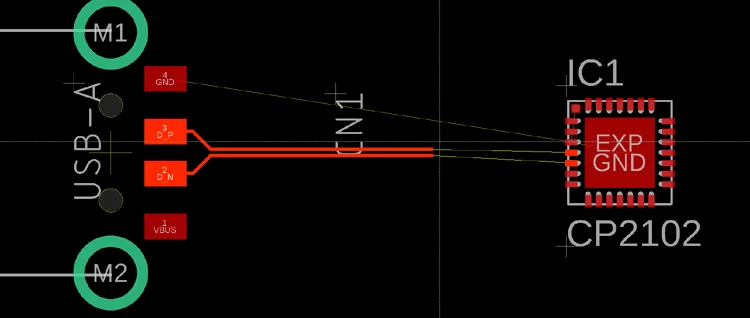
Avoid sharp corners in high-speed traces, as they can cause signal reflections. Use 45-degree angles or smooth curves instead. Also, maintain consistent spacing between differential pairs (e.g., 5-10 mils for USB signals) to ensure balanced signal transmission.
5. Select the Right Materials
Standard FR-4 material works for frequencies up to about 1-2 GHz, but for higher speeds, consider low-loss materials with a dielectric constant closer to 3.0-3.5. These materials reduce signal loss and improve performance in applications like 5G or high-speed data transfer.
Tools and Techniques for High-Speed PCB Design
Designing a high-speed PCB requires specialized tools and techniques to simulate and validate performance before manufacturing. Here are some commonly used approaches.
Simulation Software
Tools that offer signal integrity and electromagnetic simulation are invaluable for high-speed design. They allow engineers to model transmission line behavior, predict crosstalk, and optimize trace routing. For example, simulating a 3 GHz signal path can reveal potential impedance mismatches before the board is built.
Design Rule Checks (DRC)
Implement design rules to enforce constraints like minimum trace spacing (e.g., 5 mils for 1 GHz signals) and maximum trace length. Automated DRC in design software helps catch errors early in the process.
Prototyping and Testing
After design, prototype the PCB and test it with oscilloscopes or network analyzers to measure signal quality. For instance, a time-domain reflectometer (TDR) can identify impedance discontinuities with a resolution of less than 1 ohm.
Common Applications of High-Speed PCBs
High-speed PCBs are integral to many modern technologies. Some common applications include:
- Telecommunications: Supporting data rates of 10 Gbps or higher in routers and switches.
- Computing: Enabling fast data transfer in servers with PCIe 4.0 or 5.0 interfaces, operating at 16-32 GT/s.
- Automotive: Used in advanced driver-assistance systems (ADAS) with radar and camera modules operating at multi-gigahertz frequencies.
- Consumer Electronics: Powering high-definition video streaming devices with HDMI 2.1 signals at 48 Gbps.
Conclusion
Understanding when a PCB is considered high speed is critical for engineers working on modern electronic designs. It’s not just about frequency but also about signal rise time, trace length, and application requirements. A PCB enters the high-speed realm when signal transitions are fast enough to cause transmission line effects, often at rise times below 1-2 nanoseconds or frequencies above 100 MHz.
Designing high-speed PCBs requires careful attention to signal integrity, impedance matching, grounding, and material selection. By following best practices and leveraging simulation tools, engineers can overcome the challenges of high-speed design and create reliable, high-performance circuits for cutting-edge applications.
At ALLPCB, we’re committed to supporting your high-speed PCB projects with advanced manufacturing capabilities and expert guidance. Whether you’re tackling a 5G communication board or a high-speed computing system, we’re here to help bring your designs to life with precision and quality.