ALLPCB


Overview
EMC is a complex issue; this article outlines ways to address it from the source.
Classification of EMC Issues
By nature, EMC issues can be divided into three categories: power, clock (CLK), and ground imbalance problems.
The following sections summarize cause analysis and provide example analyses for each of the three issue types.
Power Supply Issues
- Diagnostic methods
- Problem analysis
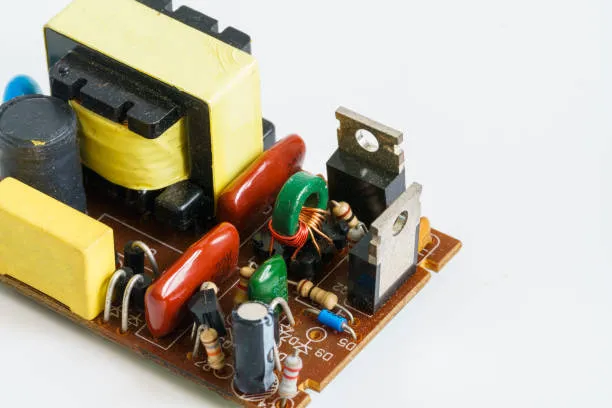
Common power-supply problems include DC-DC circuit component selection issues (DC-DC chips, inductors, diodes), and improper DC-DC PCB layout and design.
Root causes typically relate to component selection, layout, and filtering design.
Clock Issues
Traditional approaches for resolving clock-related EMC problems include careful signal integrity analysis, limiting clock edge rates where possible, and ensuring proper shielding and routing.
Ground Imbalance Issues
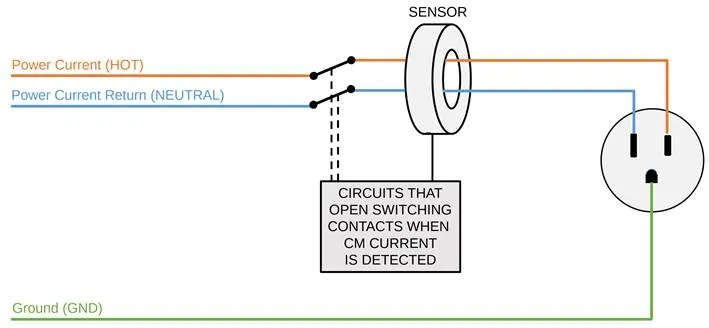
Ground imbalance problems arise from unequal return paths, poor ground stitching, or unintended common-impedance coupling between circuits.
Analysis approach: identify return paths, measure common-mode currents, and verify grounding and bonding strategies.
EMC Three Principles
- Cost-effectiveness: the earlier EMC is considered and resolved in the design cycle, the lower the cost and the better the results.
- Loop area: the larger the high-frequency current loop area S, the more severe the EMI radiation.
- Frequency dependence: the higher the loop current frequency, the more severe the EMI; radiated field strength increases roughly with the square of the current frequency.
Improving EMC is similar to diagnosing an illness. If a product fails EMC testing, the measurements only show which frequency points exceed limits; identifying where the interfering energy originates is often the most difficult task for engineers. EMC problems can be both difficult and straightforward depending on how clearly the source and coupling paths are identified.
To improve EMC, start by reasoning from the mechanisms and paths that produce EMI. Based on the EUT's (equipment under test) circuit schematics, make initial judgments about likely internal noise sources for different product categories (for example, IT equipment versus AV/audio-video equipment). Then use test data to look beyond symptoms and analyze the causes of failures so the noise sources and coupling paths are clearly identified.
For analyzing out-of-spec emissions, use a spectrum analyzer or a high-frequency oscilloscope with near-field probes to validate findings. Move between frequency-domain and time-domain analysis to locate the circuits and components responsible for EMC issues.
Three Elements of EMC Problems
Switching power supplies and digital devices generate pulsed currents and voltages rich in high-frequency harmonics, which produce strong radiation.
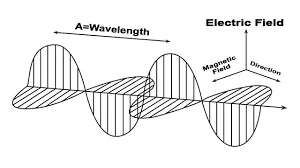
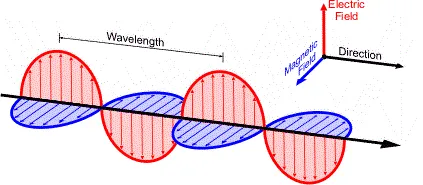
Electromagnetic interference includes radiated (high-frequency) EMI and conducted (low-frequency) EMI. EMC problems are generated via two main routes: space electromagnetic waves (radiation) and conduction. The three essential elements for EMC issues are: EMI source, coupling path, and susceptible device.
Radiated interference typically escapes via enclosures and connecting cables, contaminating the spatial electromagnetic environment. Conducted interference travels via power lines to the public network or through other terminals (for example, RF connectors or input terminals), affecting connected equipment.