ALLPCB


Overview
Nordic Semiconductor announced the first high-end multi-protocol SoC in its next-generation nRF5 series, the nRF5340. The device builds on the validated nRF51 and nRF52 multi-protocol SoCs and introduces a flexible dual-processor hardware architecture with advanced security features. It supports major 2.4 GHz RF protocols including Bluetooth 5.1/Bluetooth Low Energy (Bluetooth LE), Bluetooth Mesh, Thread and Zigbee.
Target applications
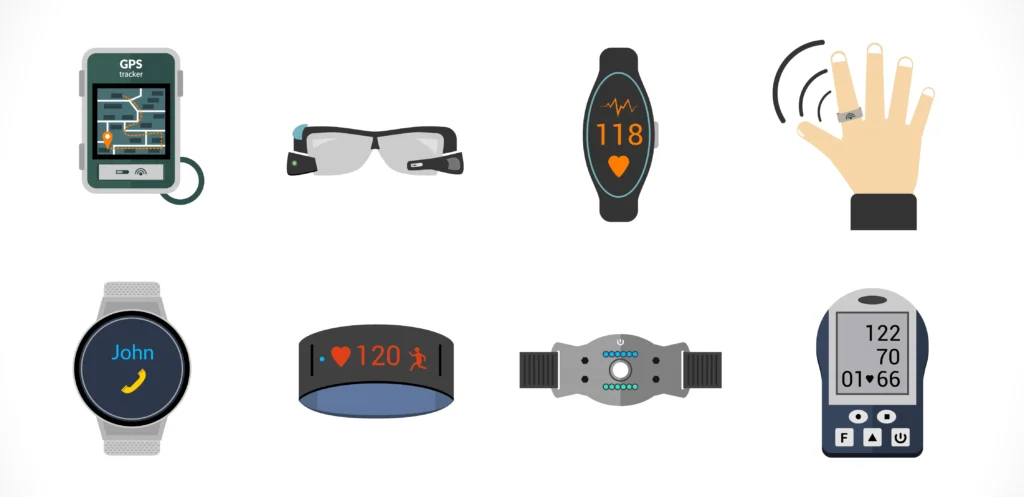
The nRF5340 integrates a high-performance application processor, a fully programmable ultra-low-power network processor, and an advanced root-of-trust and trusted execution security feature set into a single low-power multi-protocol SoC. It is intended for professional lighting, industrial automation, advanced wearables and other complex IoT applications.
Memory, peripherals and interfaces
The SoC is designed for an extended operating temperature up to 105 C and supports multi-protocol operation and advanced security features suitable for professional lighting and industrial use. The application processor includes 512 KB of RAM, intended to meet the memory needs of next-generation advanced wearable devices. The device provides an extended QSPI peripheral interface capable of connecting to external memory at 96 MHz, and a 32 MHz high-speed SPI peripheral that can be used for displays and complex sensor interfaces.
Security
nRF5340 integrates Arm CryptoCell-312 and secure key storage with Arm TrustZone support to provide device-level security. CryptoCell-312 provides hardware acceleration for common Internet cryptography standards, while Arm TrustZone creates secure and non-secure execution domains on a single core to provide system-wide hardware isolation for trusted software. The integrated security features enable a root of trust and secure firmware updates, and help protect the SoC from malicious attacks.
Processor architecture and performance
The nRF5340 is based on an Arm Cortex-M33 dual-core processor. The application processor runs at up to 128 MHz (510 CoreMark) and includes 1 MB of dedicated flash and 512 KB of RAM. The network processor is fully programmable, optimized for ultra-low-power operation, runs at 64 MHz (238 CoreMark) and includes 256 KB of dedicated flash and 64 KB of RAM. The application processor achieves high efficiency (65 CoreMark/mA), includes an 8 KB two-way associative cache, and supports DSP and floating-point functions along with voltage and frequency scaling options. It also integrates advanced security features including Arm CryptoCell-312 and secure key storage and exposes interfaces such as NFC, USB, QSPI and high-speed SPI. The fully programmable network processor delivers higher energy efficiency (101 CoreMark/mA) and is optimized for low-power radio operation and low-duty-cycle sensor acquisition. It also enables optimal implementations of 2.4 GHz proprietary protocols and ensures feasibility of porting from the nRF51 and nRF52 series.
Radio and power
nRF5340 integrates a newly power-optimized multi-protocol 2.4 GHz radio. Typical TX current is 3.2 mA at 0 dBm TX power, 3 V with DC/DC enabled; RX current is 2.6 mA at 3 V with DC/DC. Sleep current is as low as 1.1 uA. The radio supports enhanced dynamic multi-protocol operation, including concurrent operation of Bluetooth Low Energy and Bluetooth Mesh/Thread/Zigbee, and can be configured/debugged via a smartphone using Bluetooth LE while interacting with a mesh network. It supports the full feature set of Bluetooth 5.1 direction finding. The SoC operates from 1.7 V to 5.5 V, enabling operation from rechargeable batteries and USB power. Integrated XTAL load capacitors for 32 MHz and 32.762 kHz crystals reduce the required number of external components compared with the nRF52 series, lowering BOM and reducing solution size.
Software and development tools
The nRF5340 is supported by the nRF Connect SDK, which integrates the Zephyr RTOS, the Bluetooth Low Energy protocol stack, application examples and hardware drivers. With added nRF5340 support, the SDK unifies development for low-power cellular IoT and short-range wireless applications. The nRF Connect SDK source is hosted on GitHub and uses Git for source control, and SEGGER Embedded Studio IDE support is provided. Nordic also provides an affordable single-board preview kit, the nRF5340 PDK, which exposes all SoC functions and GPIOs and includes an onboard SEGGER J-Link debugger for SoC programming and debugging.
Market context
Nordic noted that Bluetooth, Thread, Zigbee and other low-power wireless technologies are central to IoT development across applications such as real estate technology, positioning services, healthcare, smart homes and industrial IoT. These applications require increased compute and security while maintaining compactness and energy efficiency. The nRF5340 is described as an evolution of Nordic's work on previous nRF series SoCs and is intended to address those technical demands.