ALLPCB


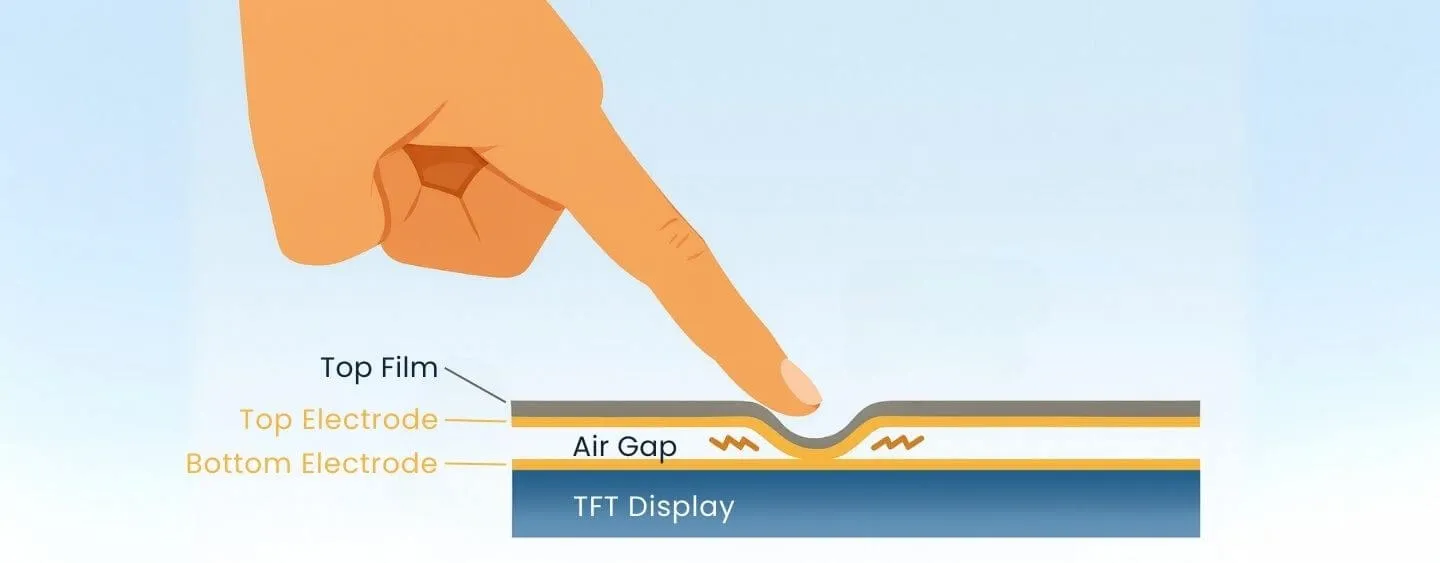
Resistive touchscreen structure
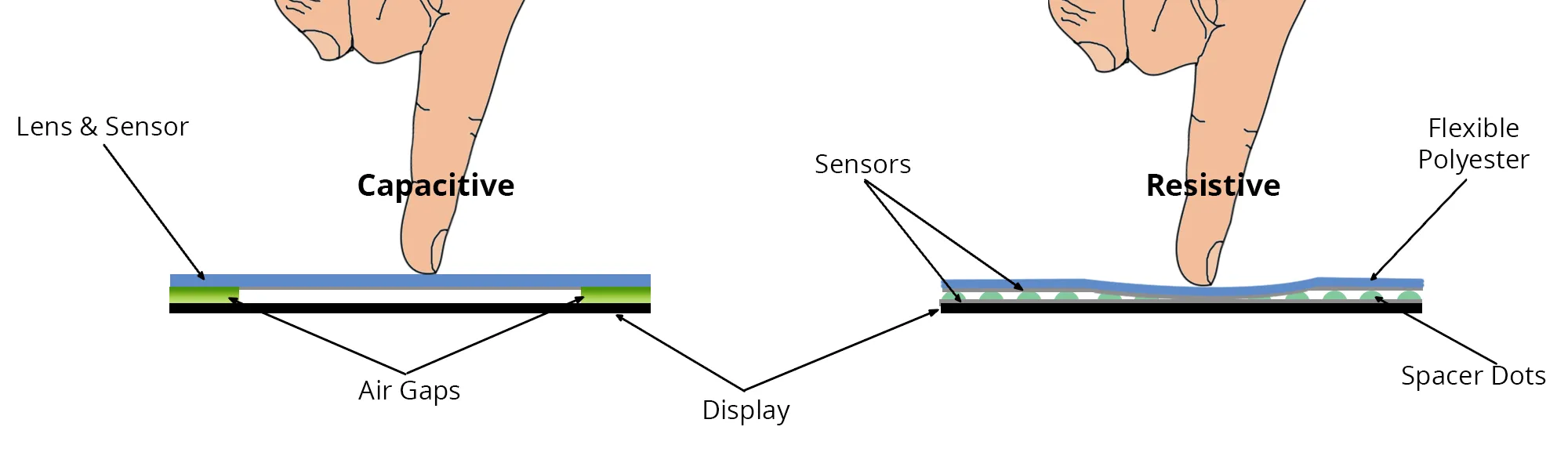
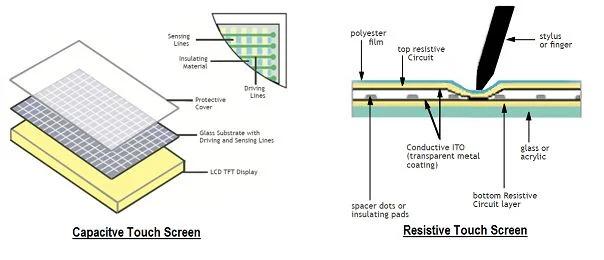
Resistive screen: The active part of a resistive touchscreen is a multilayer composite film. It uses a layer of glass or acrylic as the substrate, with a transparent conductive coating (ITO) on the surface, and a hardened, smooth, scratch-resistant plastic layer covering that. The inner surface is also coated with ITO, and many tiny transparent spacer dots (smaller than one-thousandth of an inch) separate the two conductive layers.
How a resistive touchscreen detects touch
When a finger presses the screen, the two ITO layers make contact and the resistance changes. The controller calculates the touch coordinates from the detected resistance changes and then performs the corresponding action. Therefore, this technology requires pressure on the screen to register a touch.
Capacitive touchscreen structure and detection
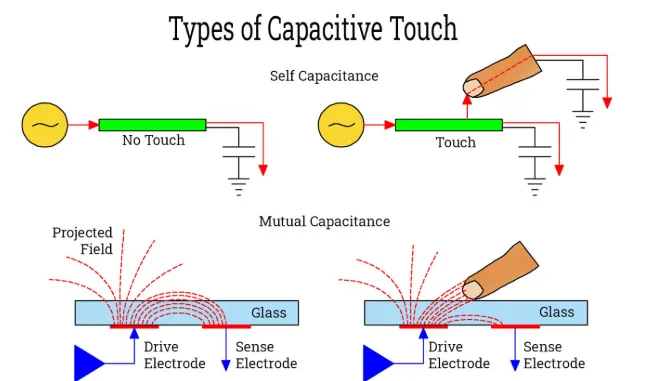
Capacitive screen: A capacitive touchscreen works by sensing the body's electrical current. The screen is made of a four-layer composite glass. When a finger touches the screen, the body and the screen surface form a coupling capacitance. For high-frequency currents, the capacitor behaves like a conductor, so the finger draws a very small current from the contact point. This current flows out through electrodes at the four corners of the screen, and the currents at those electrodes are proportional to the finger's distance to each corner. The controller calculates the touch position precisely from the ratios of these four currents.
Key differences
A capacitive touchscreen only requires touch and not pressure to generate a signal. Capacitive screens typically require at most a single calibration after manufacture, or none at all, while resistive technology requires regular calibration. Capacitive solutions tend to have longer lifespans because their components have no moving parts. In resistive screens, the top ITO film must be thin enough to be flexible so it can bend down to contact the lower ITO film.
Four simple ways to tell them apart
1. Visual check
Indoors both resistive and capacitive screens look good. Outdoors in sunlight the difference becomes clear. Resistive screens perform poorly because the extra screen layers reflect a lot of sunlight. For example, some older Motorola models have very poor visibility in bright sunlight.
2. Touch test
A resistive touchscreen requires pressure to bring the layers into contact, so it can be operated with a finger, stylus, or similar. A capacitive touchscreen is activated by the slight contact of the charged surface layer of a finger. Non-biological objects like fingernails do not work.
3. Feel and durability
The nature of resistive screens means the top is soft and can be pressed, which makes them prone to scratches. However, because resistive screens can be operated with a stylus or fingernail, they are more forgiving in terms of screen cleanliness. Capacitive screens often use a glass outer layer, which can shatter under severe impact but is easier to clean and resist everyday scuffs and smudges.
4. Cost
Resistive screens are relatively inexpensive, while capacitive screens cost more. This is one reason why tablets in the Chinese market are often priced below the Apple iPad, excluding software differences.