ALLPCB


Overview
Smartphone touchscreens typically use capacitive or resistive touch sensing technologies to detect touch input.
Common touch sensing methods
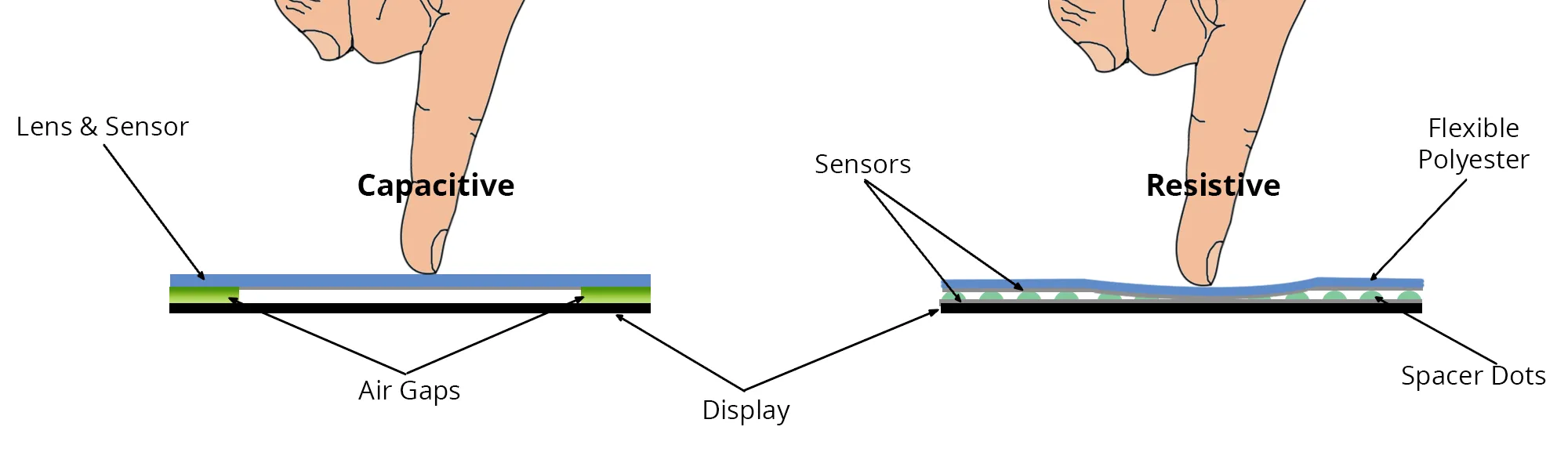
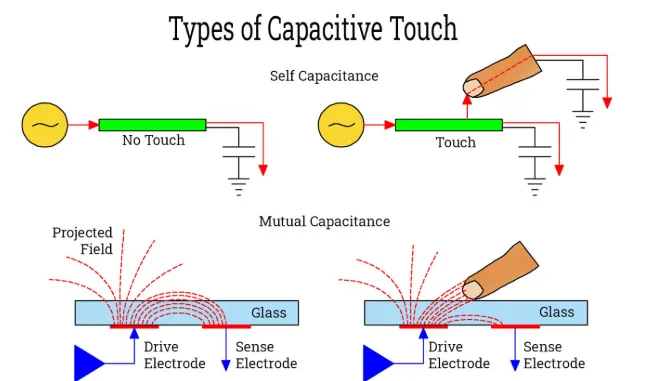
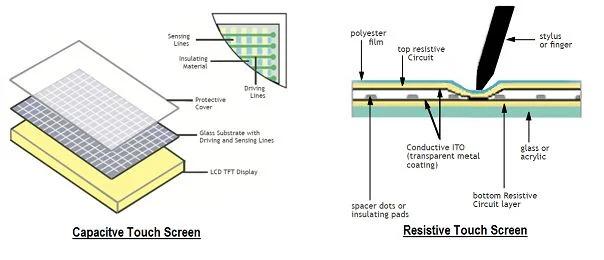
1. Capacitive touchscreens: Capacitive touchscreens detect touch position by sensing changes in capacitance when touched. A conductive layer covers the screen, and when a finger contacts the surface, the capacitance at the touch region changes due to the conductive properties of the human body. capacitance sensors on the screen detect this change and convert it into coordinates. Capacitive touchscreens offer fast response and high touch sensitivity.
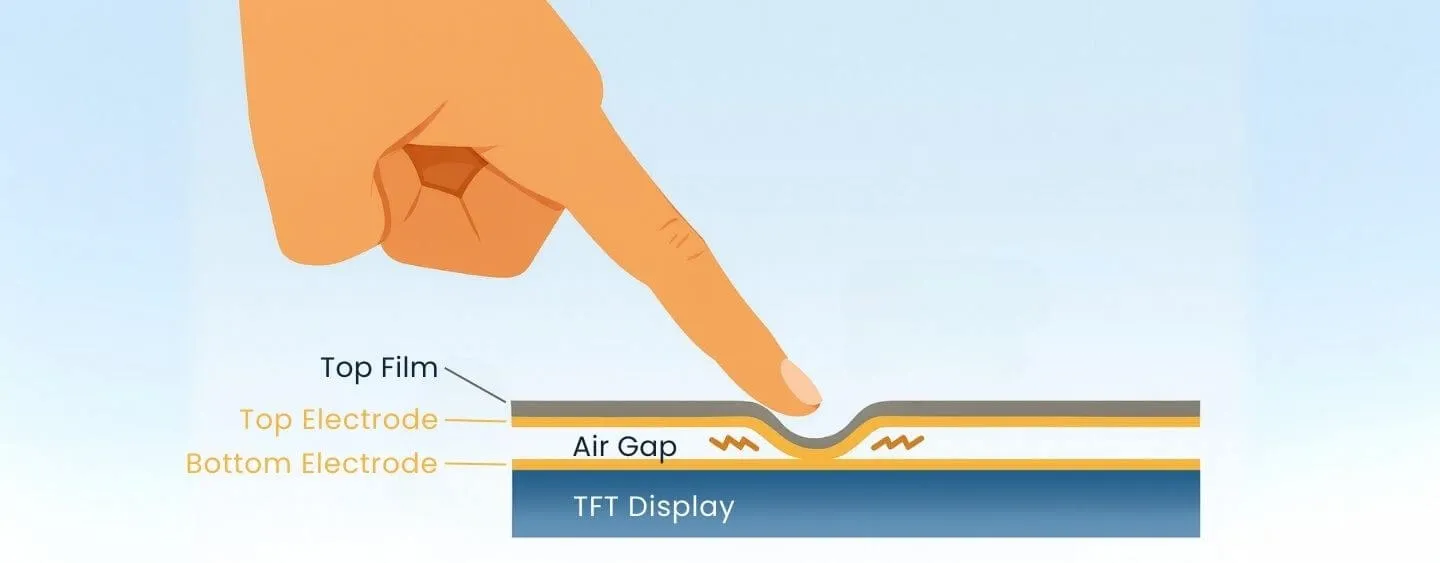
2. Resistive touchscreens: Resistive touchscreens detect touch position by sensing resistance changes between two conductive films. The screen is covered by two conductive layers; when a finger presses the screen, the layers make contact and the resistance changes. Measuring the resulting current change allows calculation of the touch position. Compared with capacitive touchscreens, resistive touchscreens can be more sensitive to lighter pressure inputs.
These touch sensing techniques enable smartphones to detect and recognize finger touches and translate them into corresponding operations. With technological development, multiple sensing methods may be combined to provide additional functions and improved usability.
Touch sensing principles
Touch sensing refers to techniques that use sensors to detect contact or proximity of the human body or objects. Common touch sensing principles include:
1. Capacitive sensing: This principle uses changes in capacitance of the human body or object to detect touch. A conductive layer covers the touchscreen; when a finger contacts the surface, the electric field changes and the capacitance sensor detects this change and converts it into coordinates.
2. Resistive sensing: This principle uses resistance changes between two conductive films that cover the touchscreen. When a finger touches the screen, the films contact and the resistance changes; measuring the current change determines the touch position.
3. Surface acoustic wave sensing: This principle uses ultrasonic waves emitted and received by sensors to detect touch. The screen emits acoustic waves; when an object contacts the surface, the waves are scattered or absorbed. Receivers detect this change and calculate the touch position.
4. Optical sensing: This principle uses optical sensors to detect touch. The screen has infrared emitters and receivers; when an object touches the surface it blocks or alters the infrared light path, and receivers detect this change to compute the touch position.
These principles are widely used in devices such as smartphones, tablets, ATMs, and vending machines. By sensing touch signals, they allow users to interact with devices.
Reasons for touchscreen failure and possible solutions
Touchscreen failures can have multiple causes. Common causes and corresponding remedies include:
1. Software issues: Sometimes touchscreen unresponsiveness is caused by software problems. Try the following steps:
- Restart the device: Press and hold the power button, select restart, and wait for the device to reboot.
- Clear app cache: Open settings, find the app manager or app list, select the relevant app, and clear the cache.
- Update system or apps: Check for available system or app updates and install them.
2. Screen protector problems: A damaged or poorly fitted screen protector can cause touch issues. Try the following steps:
- Inspect the protector: Check for scratches or damage; if present, consider replacing the protector.
- Clean the screen: Use a soft cloth or a dedicated touchscreen cleaner to remove dust and dirt from the surface.
3. Hardware problems: If the above methods do not resolve the issue, the touchscreen hardware may be faulty. Contact the device manufacturer or an authorized repair center for further inspection and repair.