ALLPCB


Trends in electric drive development
The electric drive system is a core factor in vehicle energy consumption and occupies an important position in global EV powertrain development. Current overall trends in electric drive development include the following characteristics:
- Lighter weight: Deep multi-in-one integration consolidates the motor, inverter, reducer, and power control subcomponents to reduce cost and mass while improving vehicle performance and packaging flexibility. Integration schemes include 8-in-1, 7-in-1, 6-in-1, 5-in-1, and 3-in-1, with some paths evolving toward chip-level integration and domain controller development.
- Higher efficiency: Adopting 800V high-voltage flat-wire stator technology, efficient hydraulic/oil circuit design, and temperature compensation techniques improves energy conversion efficiency, reducing losses and extending vehicle range.
- Quieter operation: To reduce noise and vibration, next-generation drives use multi-system NVH coupling development and multi-objective optimization, optimizing NVH performance at vehicle and drive-system levels to provide a quieter ride.
- Smarter: Domain-control architectures, software integration, and virtualization enable independent packaging of functional modules and scheduling via a hypervisor system, improving CPU resource allocation and system independence.
These trends toward lightweighting, efficiency, noise reduction, and increased intelligence pose significant challenges to automakers and Tier1 suppliers in the Chinese market.
Lighter | Multi-in-one integration for mass reduction
More efficient | Optimize drive efficiency to lower vehicle energy use
Quieter | Improved NVH characteristics for drive and vehicle
Smarter | Break down barriers between drive and vehicle modes
Challenges introduced by integration
The move to multi-in-one integration in electric drive systems is now inevitable. Not all engineers agree with this direction, and each integration scheme should be carefully evaluated for its value and effectiveness.
Forms of multi-in-one integration
Automakers and component suppliers choose integration schemes according to their development capabilities. Current tendencies favor integrating major and minor powertrain components. Automakers preparing for future chip-level integration or domain control tend to integrate powertrain controllers into 7-in-1 or 8-in-1 products.
Structure and advantages of multi-in-one systems
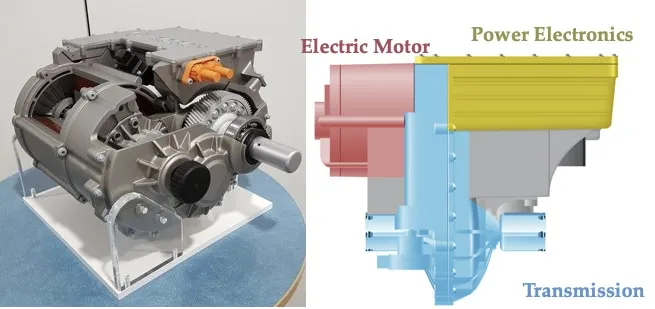
In simple terms, multi-in-one is a complex integrated architecture that includes at least three major subcomponents. It consolidates the electric drive system (motor, inverter, reducer, etc.), the power control system (OBC, DC-DC, PDU), and vehicle-level controllers such as VCU and BMS.
Integration brings several advantages:
- Reduced cost: Sharing housings, wiring harnesses, connectors, and other hardware, combined with integrated electronic circuits and software algorithms, lowers BOM cost.
- Simplified supply chain: Multi-in-one schemes simplify OEM supply chain management, shorten development cycles, and reduce costs more efficiently.
Market trends and challenges
According to NE Research Institute analysis, multi-in-one penetration in electric drive systems has risen rapidly and now exceeds 60%. In 2022, companies like BYD led in high integration, with up to 97.7% self-developed systems. This increases automaker demand for in-house development and forces Tier1 suppliers to shift their position in the value chain and increase R&D investment.
In China, Tier1 suppliers face the challenge of surviving in an ecosystem dominated by highly customized multi-in-one systems. The solutions are to maintain leadership in key technologies while controlling costs to achieve higher cost-performance ratios.
Industry viewpoints and technical direction
- Mainstream trend: Multi-in-one electric drive systems are one of the industry mainstreams, capable of lowering cost, reducing mass, and improving vehicle performance.
- Rapid penetration: Multi-in-one systems are quickly spreading across the EV industry, with many automakers trialing development, especially in front-wheel-drive pure EV models.
- Stronger automaker technical demands: Automakers require more control over component-level technologies, shifting the division of labor in the Chinese electric drive industry and changing Tier1 positions in the value chain.
- Technical challenges: Multi-in-one solutions currently face technical challenges such as EMC, NVH, and reliability, which require ongoing R&D and improvement.
- Development direction: Product forms are evolving from mechanical integration toward deeper power-electronics integration, with potential future moves to chip-level integration and power-domain controllers.
It is worth noting that although multi-in-one brings many benefits, it is not universally accepted. Many front-line engineers raise pointed concerns about reliability and after-sales maintenance.
Designing EMC for highly integrated electric drives
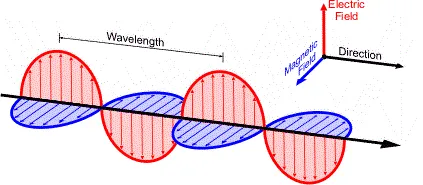
Electromagnetic compatibility (EMC) is a key issue for next-generation electric drive systems. Deep multi-in-one integration increases design complexity. To address electrical interference and coupling introduced by deep integration, additional design measures are required to achieve EMC levels comparable to separate modules when the motor control, power modules, and PDU are combined into a single controller.
Key challenges include:
- Increased number of external electrical interfaces for multi-in-one systems
- Internal interference and coupling between multiple modules
- Coupling between high-voltage and low-voltage domains
EMC solutions should be based on identifiable risk points and implemented during the design phase. Recommended measures include the following:
- Port filtering:
- Spatial separation of high-voltage and low-voltage ports: Layout high-voltage and low-voltage ports separately to avoid mutual interference.
- Maintain at least 5 cm spacing between high- and low-voltage harnesses: Keep a minimum distance of 5 cm to reduce crosstalk.
- Prohibit crossing of high- and low-voltage harnesses: Prevent intersection of harnesses to reduce interference.
- Provide shielding layers for high-voltage harnesses: Shield high-voltage harnesses to reduce radiation and susceptibility.
- Compartmentalization:
Design motor control and power modules in separate compartments and use simulation testing to detect interference between power modules.
- Isolation and shielding:
- Place protective components at ports: Use port filters such as ferrite beads to reduce disturbance in problem frequency bands.
- Two-stage filtering for AC input and DC output ports: Implement two-stage filters on AC input and DC output ports to reduce interference.
- Use ferrite and similar filters on other ports: Apply ferrite cores and similar filters on remaining ports to lower interference.
- Connect board GND directly to chassis FG: Tie the board ground (GND) directly to the frame ground (FG) to improve grounding continuity.
- Grounding design:
- Y-capacitor filters grounded to FG at ports: Use Y-capacitor filtering at ports and connect them to the chassis to enhance grounding effectiveness.
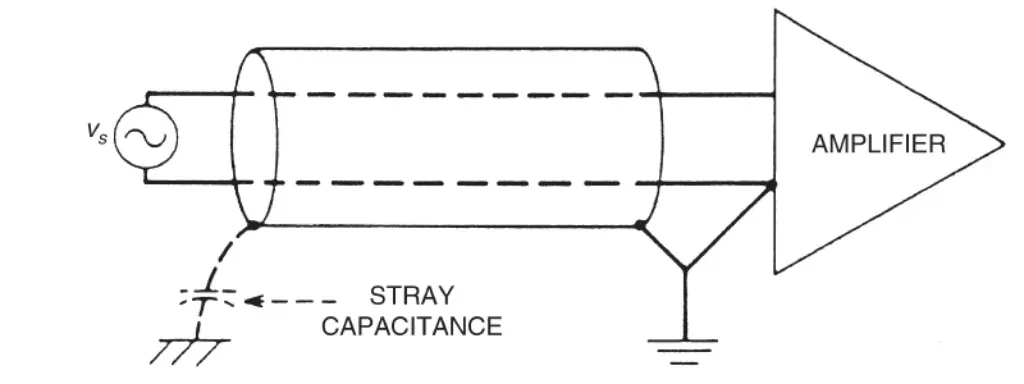
- Shield braid ends grounded on high-voltage harnesses: Ground both ends of high-voltage harness shielding to improve shielding performance.
- Use TVS and capacitors on low-voltage board ports to clamp ESD and transient surge waveforms: Place TVS devices and capacitors on low-voltage ports to suppress electrostatic discharge and transient surges.
- Surge and lightning protection:
Design AC ports with common-mode choke, gas discharge tubes, and varistors for surge protection.
Summary: Designing electric drives is an ongoing effort that translates advanced technologies into robust products. Over time, differences in technical capability will become more pronounced.