ALLPCB


Introduction
In the fast-paced world of electronics design, maintaining signal integrity is a top priority for electrical engineers. As circuit speeds increase and layouts become denser, interference between adjacent traces, known as crosstalk, poses a significant challenge. Differential signaling has emerged as a robust solution to combat this issue, offering enhanced crosstalk immunity for differential pairs. This article explores the principles of differential signaling, its role in reducing crosstalk, and practical implementation strategies for PCB design. By understanding and applying these concepts, engineers can ensure reliable performance in high-speed applications while adhering to industry standards. Whether you are designing for telecommunications, automotive systems, or consumer electronics, mastering differential signaling is essential for optimizing signal quality.
What Is Differential Signaling and Why It Matters
Differential signaling is a method of transmitting data using two complementary signals over a pair of conductors, often referred to as balanced lines. Unlike single-ended signaling, which uses one signal referenced to a common ground, differential signaling sends the same information as a pair of signals with opposite polarities. The receiver then detects the difference between these two signals, effectively canceling out common-mode noise and interference.
This technique matters in modern electronics because it addresses critical challenges in high-speed designs. As data rates climb into the gigabit range, crosstalk becomes a dominant issue, especially in densely packed PCBs. Crosstalk occurs when a signal on one trace induces unwanted noise on a neighboring trace, degrading performance. Differential signaling offers inherent crosstalk immunity for differential pairs, making it a preferred choice for applications like USB, HDMI, and Ethernet. By minimizing interference, it ensures data integrity, reduces error rates, and supports reliable communication in complex systems.
Technical Principles of Differential Signaling and Crosstalk Reduction
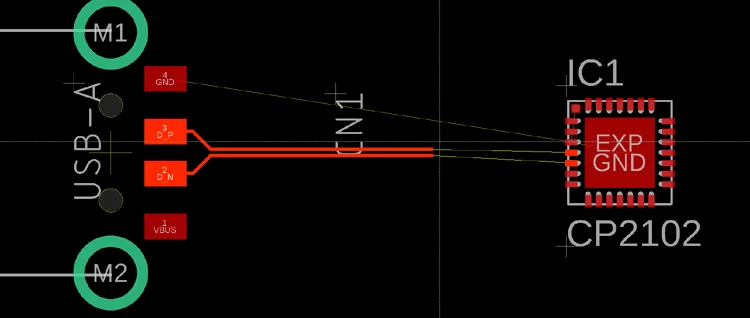
Differential signaling operates on the principle of transmitting two signals that are equal in magnitude but opposite in phase. These signals travel along closely routed traces, forming a differential pair. At the receiving end, the difference between the two signals is calculated, while any noise or interference common to both lines is rejected. This common-mode rejection is the foundation of crosstalk immunity in differential pairs.
Crosstalk in PCB designs arises from electromagnetic coupling between adjacent traces. When a signal changes state, it generates an electric field and a magnetic field that can induce voltage in nearby conductors. In single-ended signaling, this induced voltage directly affects the signal, leading to errors. However, in differential signaling, the induced noise appears as a common-mode signal on both traces of the pair. Since the receiver only processes the differential voltage, this noise is effectively ignored.
Balanced lines in crosstalk scenarios perform better because the tight coupling between the two traces ensures that external interference affects both signals equally. Standards like IPC-2221B, which provides guidelines for PCB design, emphasize the importance of controlled impedance and trace spacing to maintain balance in differential pairs. By adhering to such guidelines, engineers can optimize the noise rejection capabilities of differential signaling.
Another key factor is the symmetry of the differential pair. If the traces are not of equal length or impedance, skew can occur, reducing the effectiveness of common-mode rejection. This underscores the need for precise routing and layout techniques to preserve the benefits of differential signaling in combating crosstalk.
Practical Solutions for Implementing Differential Signaling
To leverage differential signaling for crosstalk reduction, engineers must follow best practices during PCB design and layout. Below are actionable strategies to ensure optimal performance.
Trace Spacing and Routing
Maintaining consistent spacing between the two traces of a differential pair is critical. Close coupling minimizes the loop area, reducing the susceptibility to magnetic field interference. A common guideline is to keep the spacing between the pair smaller than the spacing to adjacent unrelated traces. This helps enhance crosstalk immunity for differential pairs by limiting external coupling.
Impedance Control
Differential impedance must be matched to the system's requirements, often specified by standards like IPC-2141A for controlled impedance design. Mismatched impedance can lead to signal reflections and reduced noise rejection. Using simulation tools during the design phase can help verify impedance values and ensure compliance with industry norms.
Ground Plane Usage
A solid ground plane beneath differential pairs provides a return path for common-mode currents and shields the traces from external noise. Avoid splitting the ground plane under the pair, as discontinuities can introduce impedance variations and degrade performance. Standards such as IPC-2221B recommend continuous reference planes for high-speed signals to maintain signal integrity.
Length Matching
Ensuring equal length for both traces in a differential pair prevents timing skew. Even small differences can cause the signals to arrive out of phase, weakening the common-mode rejection. PCB design guidelines often suggest length matching tolerances based on the signal's rise time and frequency.
Avoiding Crosstalk Sources
Route differential pairs away from high-speed single-ended signals or switching components that generate significant electromagnetic interference. If crossing other signals is unavoidable, do so at a 90-degree angle to minimize coupling. This practice reduces the risk of differential signaling crosstalk from nearby aggressor traces.
Shielding and Guard Traces
In extremely noisy environments, adding guard traces or shielding around differential pairs can further reduce crosstalk. Guard traces, connected to ground, act as a barrier between the differential pair and potential aggressors. While this increases board space, it can be effective for critical signals.
By implementing these strategies, engineers can maximize the benefits of balanced lines in crosstalk reduction. Adhering to recognized standards ensures that designs meet performance and reliability expectations.
Troubleshooting Common Issues with Differential Signaling
Even with careful design, issues can arise when implementing differential signaling. One frequent problem is signal skew caused by unequal trace lengths or asymmetric routing. This can degrade the crosstalk immunity of differential pairs, leading to errors at the receiver. To address this, engineers should use length-matching techniques and verify layouts using design rule checks based on standards like IPC-2221B.
Another issue is impedance mismatch, which can result from manufacturing variations or incorrect stackup design. This mismatch introduces reflections that interfere with signal integrity. Conducting pre-layout simulations and post-manufacturing tests can identify and correct such discrepancies. Standards like IPC-2141A provide detailed guidance on achieving consistent impedance.
Noise coupling from nearby power planes or switching circuits can also affect differential pairs. If common-mode noise exceeds the receiver's rejection capability, it may manifest as differential noise. Adding decoupling capacitors near power pins and ensuring a clean ground plane can mitigate this. Regular design reviews and adherence to industry guidelines help prevent such issues from impacting performance.
Conclusion
Differential signaling stands out as a powerful technique for crosstalk reduction in high-speed PCB designs. By utilizing balanced lines, engineers can achieve significant crosstalk immunity for differential pairs, ensuring reliable data transmission in noisy environments. Understanding the technical principles, such as common-mode rejection and impedance control, is crucial for effective implementation. Practical solutions like proper trace routing, length matching, and ground plane usage further enhance performance. As designs continue to push the boundaries of speed and density, mastering differential signaling becomes indispensable for electrical engineers. Following industry standards and best practices guarantees that systems meet the stringent demands of modern applications.
FAQs
Q1: How does differential signaling improve crosstalk immunity for differential pairs?
A1: Differential signaling enhances crosstalk immunity by transmitting complementary signals over a pair of traces. Noise and interference affect both traces equally as common-mode signals, which are rejected by the receiver when calculating the differential voltage. This inherent noise cancellation makes differential pairs highly resistant to crosstalk, as outlined in PCB design standards like IPC-2221B.
Q2: What are the key factors in reducing differential signaling crosstalk during PCB layout?
A2: Reducing differential signaling crosstalk requires tight coupling of traces, impedance matching, and solid ground planes. Maintaining equal trace lengths prevents skew, while spacing pairs away from aggressor signals minimizes interference. Following guidelines from standards such as IPC-2141A for controlled impedance ensures optimal performance in high-speed designs.
Q3: Why are balanced lines effective against crosstalk in high-speed circuits?
A3: Balanced lines in crosstalk scenarios work effectively because they carry signals of equal magnitude but opposite polarity. External noise induces common-mode interference on both lines, which is canceled at the receiver. This symmetry, when paired with precise routing per IPC-2221B, ensures minimal impact from adjacent trace coupling in high-speed applications.
Q4: What challenges can affect crosstalk immunity in differential pairs?
A4: Challenges to crosstalk immunity in differential pairs include trace length mismatch, impedance variations, and noise from nearby circuits. Unequal lengths cause skew, while poor grounding introduces common-mode noise. Adhering to design rules and standards like IPC-2141A during layout and simulation helps identify and resolve these issues effectively.
References
IPC-2221B — Generic Standard on Printed Board Design. IPC, 2012.
IPC-2141A — Design Guide for High-Speed Controlled Impedance Circuit Boards. IPC, 2004.