ALLPCB


Common face recognition models
There are several face recognition models. Below are some common ones:
VGGFace: A model based on deep convolutional neural networks (CNNs). It stacks multiple convolutional and fully connected layers to extract facial features.
FaceNet: Uses a triplet loss function to learn facial embeddings. A deep convolutional network maps face images to a high-dimensional feature space, and similarity is computed between feature vectors.
DeepFace: An end-to-end system proposed by Facebook that combines deep convolutional networks and multi-task learning. It supports face detection, face alignment, and verification.
ArcFace: Enhances discriminative power by introducing an angular margin (ArcMargin) for feature vectors. ArcFace has achieved strong results on public datasets such as LFW, MegaFace, and CFP.
OpenFace: Uses 3D face modeling and local mean normalization to learn facial features, enabling fast recognition and feature extraction.
Dlib: A face recognition library based on deep learning and machine learning. It includes pretrained facial landmark detectors and face descriptor models.
These models are widely used in face recognition. Each has its own strengths and suitable application scenarios, so selecting an appropriate model requires evaluation against specific requirements and deployment conditions.
How face recognition is implemented
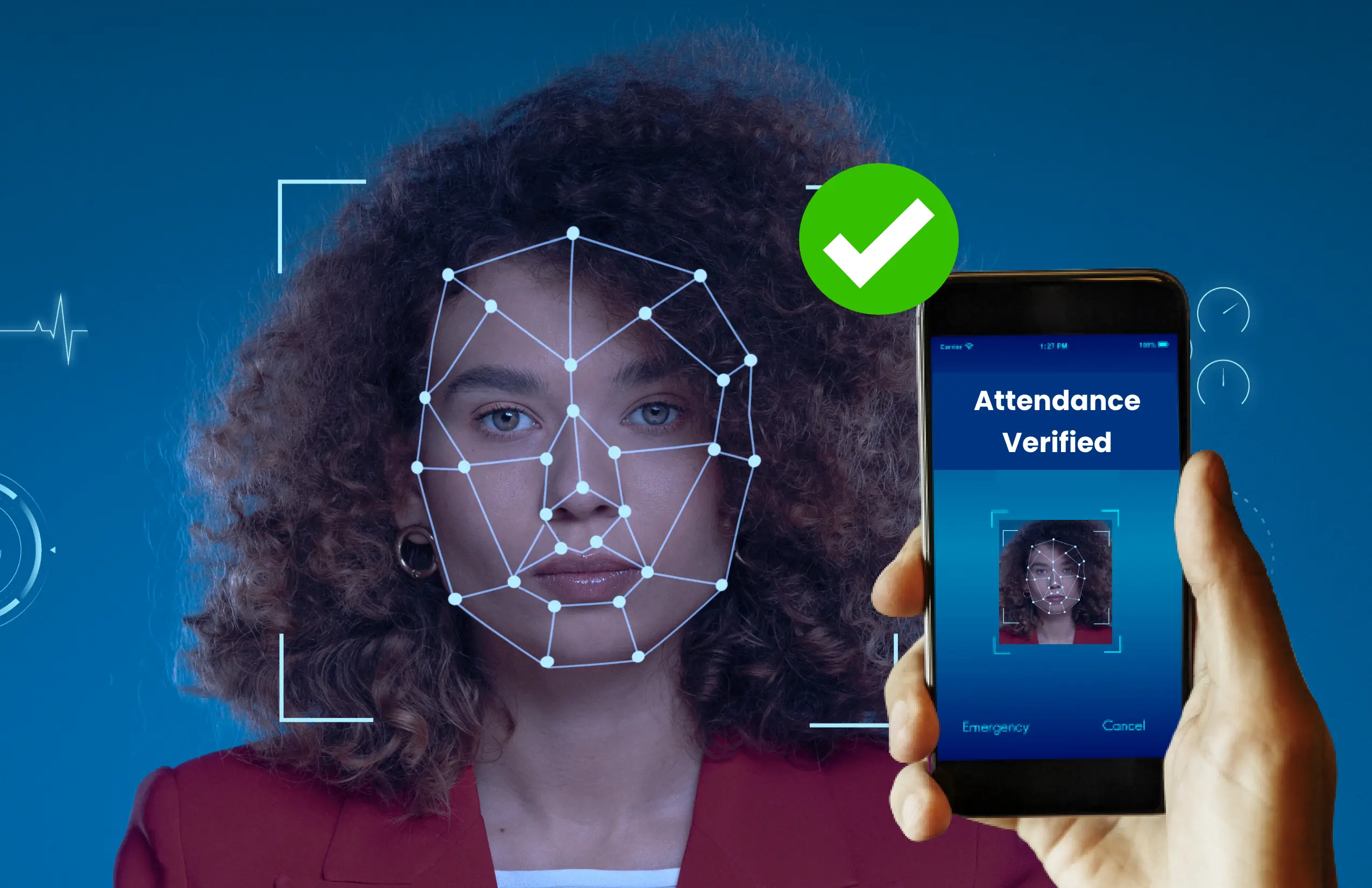
Face recognition analyzes and compares facial images to determine identity or recognize individuals. The basic implementation pipeline is:
Data collection: Acquire facial images using cameras, photos, or video.
Face detection: Use face detection algorithms to locate and extract face regions from images. This step typically employs machine learning or deep learning based detectors.
Feature extraction: Extract features from the detected face region and convert them into feature vectors or descriptors. A common approach is to use deep convolutional neural networks to obtain high-dimensional facial representations.
Feature matching: Compare the feature vector of the query face with stored face features and compute similarity or distance. Common metrics include Euclidean distance and cosine similarity.
Verification / identification: Decide identity based on similarity or distance thresholds. For verification, the system compares the query face with a known identity. For identification, the system compares the query face against multiple known faces and selects the best match.
Decision output: The system outputs the recognition result according to specific algorithms or rules, such as confirming identity, denying access, or returning labels.
Implementation details vary by application and chosen techniques. Protecting user privacy and securing biometric data are important considerations in any deployment.