ALLPCB


Battery capacity and contributing factors
The renewed popularity of smartwatches has brought attention back to wearable devices. In almost every product review or technical comparison, battery runtime is a primary concern. Regardless of a smartwatch's features, limited battery life undermines its usefulness.
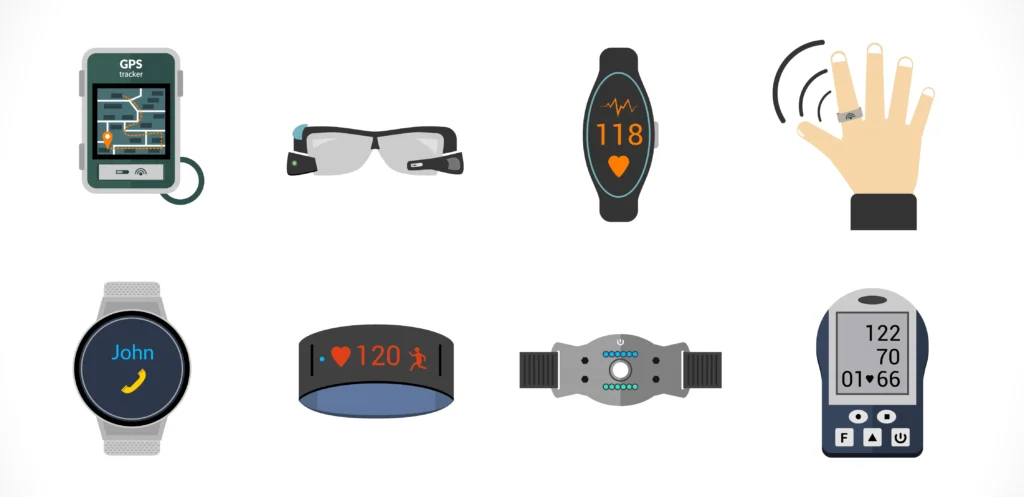
Battery runtime is affected by several factors, such as battery capacity, power consumption of PCB components, and user behavior. Of these factors, battery capacity is decisive. Capacity generally scales with physical size, and the compact form factor of smartwatches constrains internal battery size. Typical mainstream smartwatch batteries range from 130 mAh to 410 mAh, with runtimes from less than a day to several days. For fitness bands, Bluetooth headsets, smart glasses, and smart jewelry, battery capacities are even smaller, making every milliamp-hour (mAh) critical.
Leakage current and runtime impact
Battery leakage current and charge termination current are two primary parameters that affect usable battery capacity and runtime, and their impact is more pronounced for small batteries.
To illustrate the importance of leakage, consider a fitness band battery with 50 mAh capacity. In an ideal model with no current consumed by the battery management IC, the battery would last 30 days. Adding various levels of leakage current changes runtime significantly. As shown in Figure 1, a leakage current of 75 nA leaves runtime essentially unchanged at 30 days. However, increasing leakage to 5 μA reduces runtime by 2 days. At 10 μA, runtime decreases by 4 days. When leakage reaches 20 μA, the battery management IC consumes an amount of current equivalent to 25% of the battery capacity, reducing runtime by a full week. Clearly, the smaller the battery, the greater the impact of leakage current on runtime.
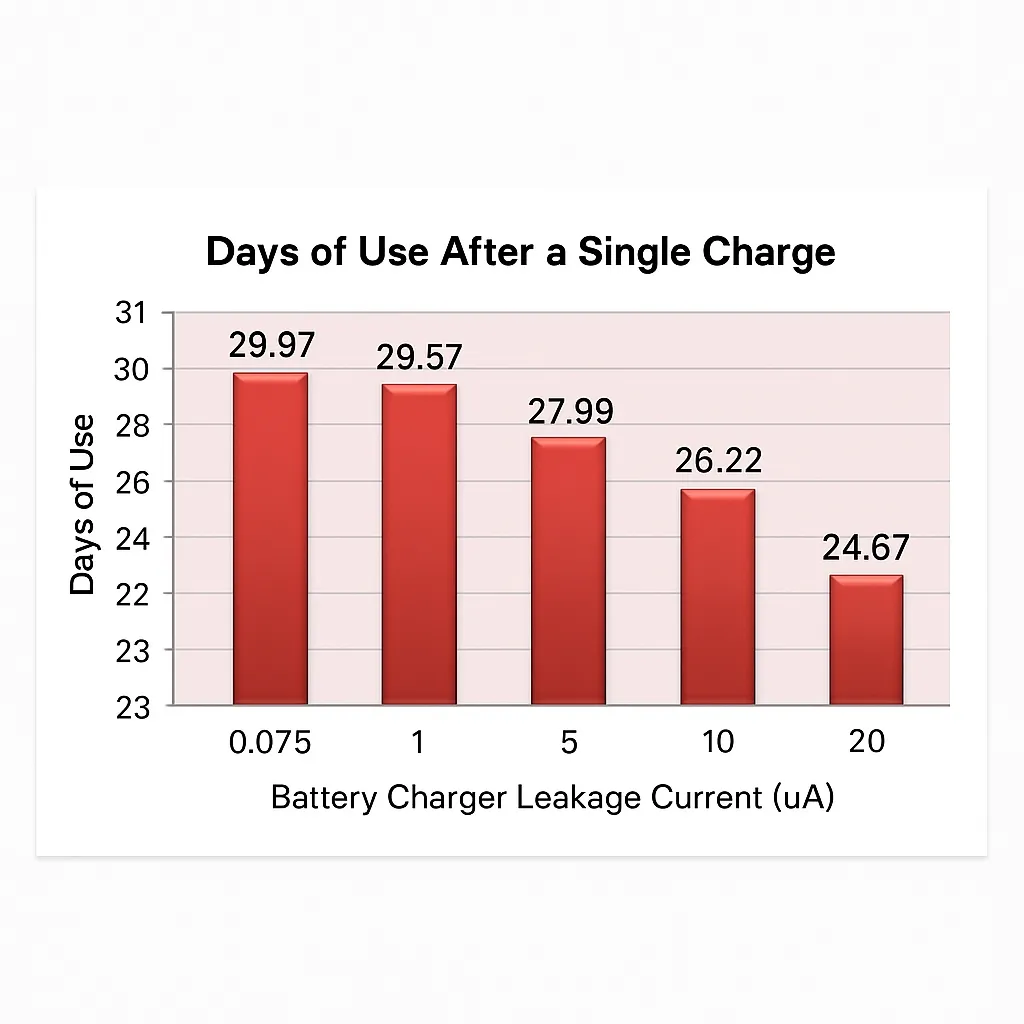
Figure 1: Effect of battery leakage current on runtime
Charge termination current and usable capacity
Termination current also affects usable capacity. Figure 2 shows two charge cycles for a 41 mAh battery. Both cycles use a 40 mA fast-charge current but different termination currents. The green trace corresponds to a 4 mA termination current (10% termination rate) with a charge time of 97 minutes. The red trace corresponds to a 1 mA termination current with a total charge time of 146 minutes. In the second case, charging takes 50 minutes longer and adds 2 mAh, about 5% of the battery's capacity. Spending 50 minutes to gain 5% capacity may be acceptable in some designs, since that 5% increase can extend smartwatch operation by roughly 2 hours.
Therefore, the smaller the battery, the more critical termination control becomes. For a 20 mAh battery, if termination current is not kept below 5 mA, up to 10% of the battery capacity can be lost before use.
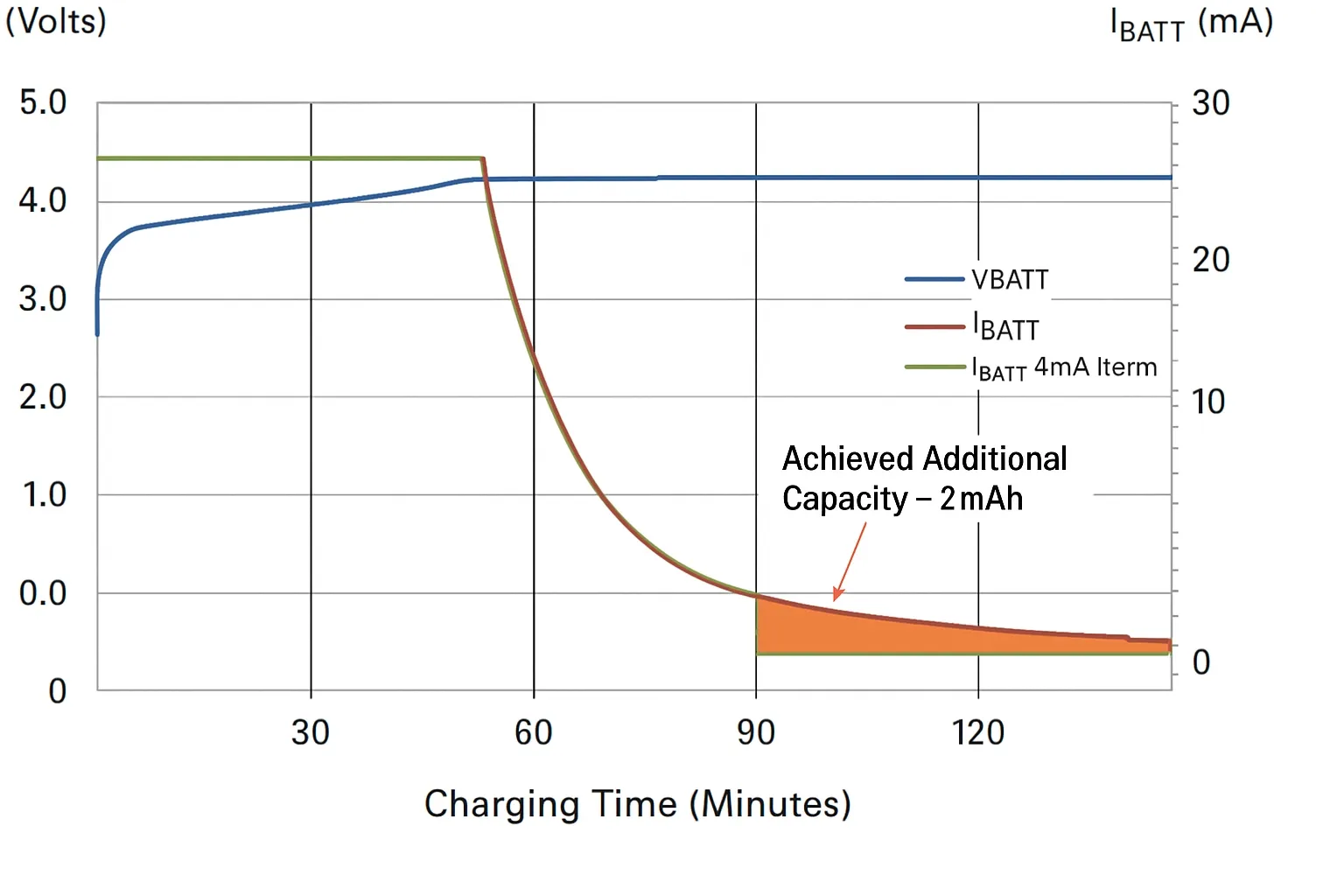
Figure 2: Charge cycles for a 41 mAh battery with 4 mA and 1 mA termination currents
Examples of charging ICs for low-power wearables
Several charger solutions are commonly used in low-power applications. For example, Texas Instruments (TI) offers devices such as the bq24040 and bq24232. To address wearable requirements, TI introduced the bq2510x charger series, which specifies battery leakage current below 75 nA and can control termination current to within 1 mA. The bq2510x series is offered in a 0.9 mm x 1.6 mm package, suitable for size-constrained low-power designs.