ALLPCB


Introduction
In embedded systems, system stability and reliability are core concerns for developers and users. The watchdog timer (WDT) is a critical safety mechanism in embedded systems that monitors operation and initiates recovery when faults occur. This article focuses on the watchdog function of the AS32S601 MCU from Guoke Anxin, analyzing its basic concepts, core roles, operating principles, configuration points, and practical value and challenges, and aims to provide researchers and engineers working with embedded technology a comprehensive technical review.
Watchdog: Basic Concepts and Core Functions
(1) Basic concept
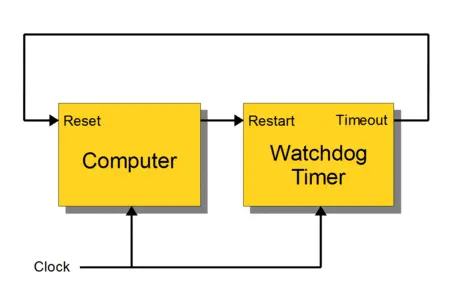
A watchdog is a timer circuit that monitors the operating status of a microcontroller (MCU). In microcontroller-based systems, the MCU can be affected by external electromagnetic interference, which may cause register corruption, instruction pointer errors, or indefinite loops, preventing normal operation. The watchdog, implemented as a hardware/software solution, uses a timed monitoring mechanism to trigger a reset when an anomaly is detected, allowing the system to return to an initial state and resume normal operation.
(2) Core functions
Prevent system deadlock: In embedded environments, external interference or software errors can cause a program to enter an infinite loop or run away. If the watchdog does not receive a periodic "kick" within a preset interval, it forces a system reset. For example, in automotive electronic control units (ECUs), harsh electromagnetic conditions and temperature variations can induce software faults; a watchdog reduces the likelihood of failures caused by deadlocks and helps maintain vehicle operation and safety.
Improve system reliability: By requiring periodic watchdog kicks, the watchdog can promptly detect anomalies and automatically recover the system. For devices that must run continuously, such as industrial controllers and medical equipment, this function is especially important. According to statistics, introducing a watchdog mechanism in critical safety systems can increase fault-free operating time by more than 40%, which extends maintenance intervals and reduces unplanned downtime in automation and medical applications.
Simplify fault handling: When a watchdog-triggered reset occurs, the system restarts from its initial state. This automatic recovery is often faster and more efficient than manual diagnosis and repair, and is particularly suitable for devices deployed in remote or hard-to-service locations, such as desert weather stations or offshore drilling platform monitors. Automatic reset reduces on-site maintenance effort and cost, helping ensure continued data collection and transmission under adverse conditions.
Enhance system safety: In safety-critical domains such as aerospace and medical devices, the watchdog provides an additional hardware-level protection layer against software faults. For example, in avionics, a software failure could compromise flight control systems; a watchdog can reset the system at the early stage of a fault to prevent escalation. In medical devices such as pacemakers and ventilators, a watchdog helps ensure correct operation at critical moments and reduces the risk that software anomalies will endanger patients.