ALLPCB


When it comes to PCB direct imaging, selecting the right resists is crucial for achieving precision and efficiency in manufacturing. Whether you're searching for PCB direct imaging resists, LDI compatible materials, or a resist selection guide, the answer lies in understanding how photoresist for direct imaging interacts with laser direct imaging (LDI) technology. In short, the best resists are those that match the wavelength of the LDI system, offer high sensitivity for fine-line accuracy, and ensure compatibility with your production process. In this blog, we'll dive deep into the world of PCB manufacturing materials, exploring how to choose the perfect resist for optimal results.
Introduction to PCB Direct Imaging and the Role of Resists
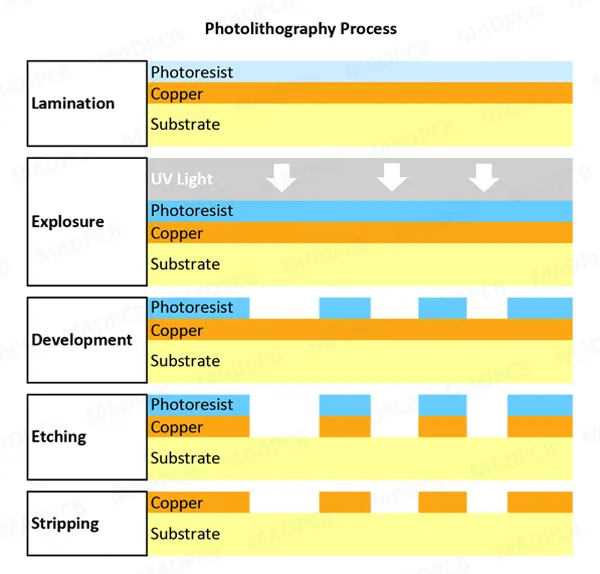
Printed Circuit Board (PCB) manufacturing has evolved significantly with the introduction of Laser Direct Imaging (LDI) technology. Unlike traditional photolithography, which uses film masks and UV exposure, LDI employs a computer-controlled laser to directly pattern circuit designs onto a photosensitive layer, known as a resist. This method offers unmatched precision, especially for fine lines and complex designs, making it a preferred choice for high-density interconnect (HDI) boards and advanced electronics.
However, the success of LDI heavily depends on the materials used, particularly the photoresist for direct imaging. The resist must be compatible with the laser's wavelength, respond quickly to exposure, and withstand the chemical processes of etching or plating. Choosing the wrong resist can lead to poor image quality, longer production times, or even defective boards. In this guide, we'll break down the essentials of PCB direct imaging resists and provide actionable insights for selecting LDI compatible materials.
What Are PCB Direct Imaging Resists?
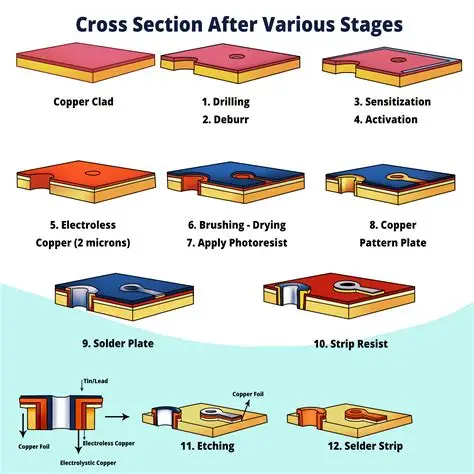
PCB direct imaging resists are photosensitive materials applied to the surface of a copper-clad laminate during manufacturing. These resists act as a protective layer, defining the areas where copper will remain or be removed to form the circuit pattern. In LDI, the laser selectively exposes the resist, altering its chemical properties to create the desired design. After exposure, the unexposed or exposed areas (depending on whether it's a positive or negative resist) are dissolved during development, revealing the copper beneath for further processing.
There are two main types of resists used in PCB manufacturing:
- Negative Resists: These harden when exposed to the laser, leaving the exposed areas intact while the unexposed parts are washed away.
- Positive Resists: These soften upon exposure, allowing the exposed areas to be removed during development while the unexposed areas remain.
For LDI, negative resists are often preferred due to their compatibility with common laser wavelengths and their ability to produce fine, sharp lines. However, the choice depends on the specific requirements of your PCB design and manufacturing setup.
Why Material Selection Matters in LDI
The shift to LDI technology in PCB manufacturing has brought incredible benefits, such as the ability to achieve line widths as narrow as 25 micrometers and spacing below 20 micrometers. However, these advancements come with a catch: the photoresist must be tailored to the LDI system's laser source, typically operating at wavelengths between 355 nm (UV) and 405 nm (violet). If the resist isn't sensitive to the laser's wavelength, the imaging process will be slow, inaccurate, or fail entirely.
Moreover, LDI compatible materials need to balance sensitivity and durability. A resist that's too sensitive may overexpose, leading to blurred lines, while one that's not sensitive enough requires longer exposure times, slowing down production. Additionally, the resist must endure the chemical baths used in etching or plating without breaking down or peeling off the substrate.
Key Factors in Choosing PCB Direct Imaging Resists
Selecting the right photoresist for direct imaging involves evaluating several critical factors. Below, we outline the most important considerations to guide your decision-making process.
1. Compatibility with Laser Wavelength
The laser wavelength used in your LDI system is the starting point for resist selection. Most modern LDI machines operate at 355 nm or 405 nm, requiring resists specifically formulated for these ranges. Using a resist designed for traditional UV exposure (typically around 365 nm) with a 405 nm laser can result in poor image contrast and incomplete exposure. Always check the manufacturer's specifications for both the LDI equipment and the resist to ensure compatibility.
2. Sensitivity and Exposure Speed
Sensitivity determines how quickly the resist reacts to the laser. High-sensitivity resists allow for faster exposure, which is critical in high-volume production environments. For example, a resist with a sensitivity of 10 mJ/cm2 can reduce exposure time by 30% compared to a resist with 15 mJ/cm2, significantly boosting throughput. However, overly sensitive resists may sacrifice resolution, so balance is key.
3. Resolution for Fine-Line Designs
For HDI and ultra-fine line PCBs, the resist must support high resolution. Modern resists can achieve resolutions down to 15 micrometers, enabling intricate designs required for advanced electronics like smartphones and medical devices. Test the resist's resolution capabilities with your specific LDI setup to ensure it meets design requirements.
4. Chemical and Thermal Stability
During PCB manufacturing, resists are exposed to harsh chemicals like etchants and developers, as well as elevated temperatures during lamination or soldering. A good resist should maintain adhesion to the copper surface and resist cracking or peeling. Look for materials with proven stability under temperatures up to 150°C and compatibility with alkaline or acidic solutions used in your process.
5. Ease of Development and Removal
After imaging, the resist must be easy to develop (removing unneeded areas) and strip (removing remaining resist after etching). Resists that are difficult to develop can leave residue, leading to defects, while those hard to strip can damage the board during cleanup. Opt for resists with well-documented development and stripping processes to streamline production.
Types of LDI Compatible Materials
Not all resists are created equal, and the market offers a variety of LDI compatible materials tailored for different applications. Here's a breakdown of common options:
- Dry Film Resists: These are laminated onto the PCB and are widely used for their ease of application and consistent thickness (typically 25-50 micrometers). They are ideal for standard and HDI boards but may require higher sensitivity versions for LDI to match faster imaging speeds.
- Liquid Photoresists: Applied via spray or dip coating, liquid resists offer better conformity to uneven surfaces and can achieve thinner layers (down to 5 micrometers) for ultra-fine features. They are often used in high-precision applications but may be less durable than dry films.
- Solder Mask Resists: While primarily used as a protective coating in later stages, some solder masks are formulated for LDI exposure, allowing direct imaging of the final protective layer. These are less common but useful for specific workflows.
Each type has trade-offs in terms of cost, application complexity, and performance. For instance, dry film resists are generally more affordable (around $0.50 per square foot for standard grades) but may not match the precision of liquid resists in sub-20 micrometer designs.
Resist Selection Guide for PCB Manufacturers
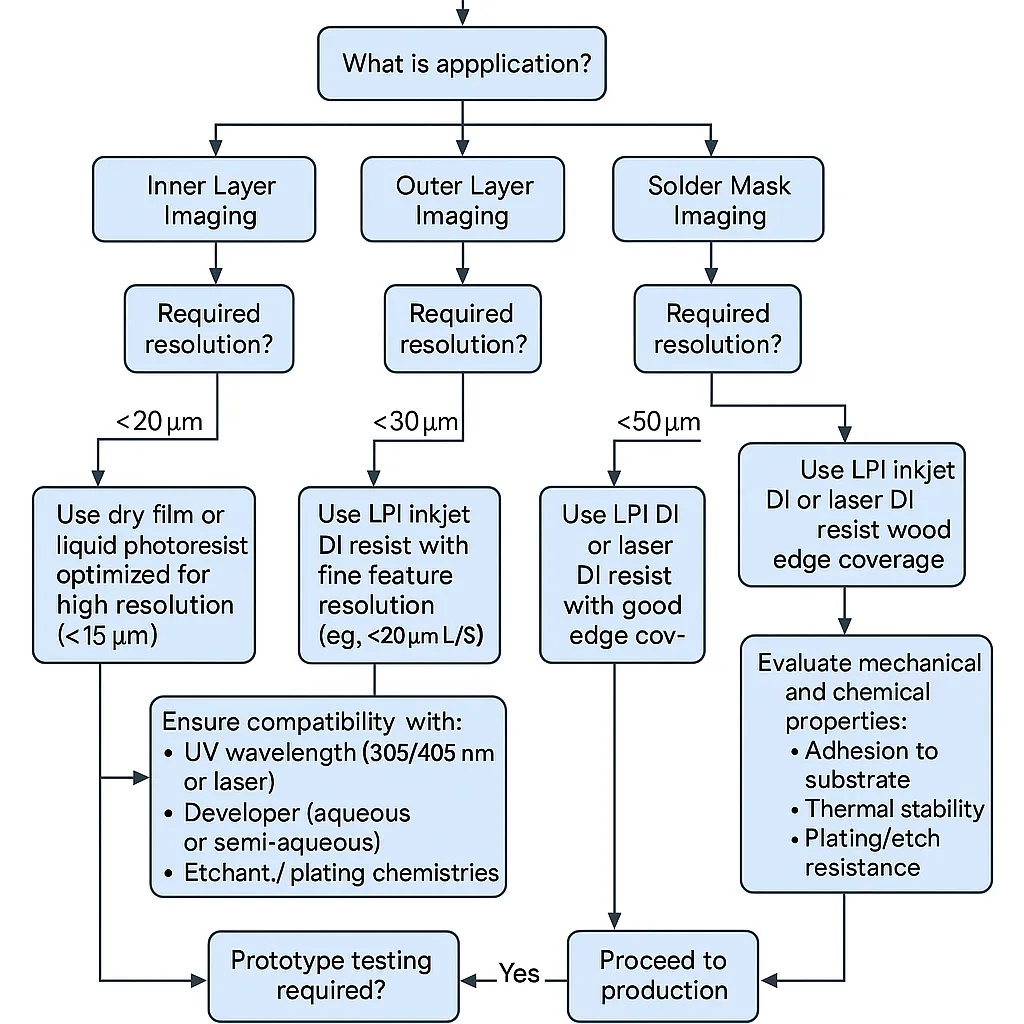
Navigating the world of PCB manufacturing materials can be daunting, so we've compiled a step-by-step resist selection guide to simplify the process.
- Identify Your LDI System Specs: Determine the laser wavelength and power output of your equipment. This will narrow down compatible resists immediately.
- Define Design Requirements: Assess the line width, spacing, and complexity of your PCB designs. For fine lines below 25 micrometers, prioritize high-resolution resists.
- Evaluate Production Volume: High-volume runs benefit from fast-exposure resists to minimize cycle time, while low-volume or prototype runs may prioritize resolution over speed.
- Test Chemical Compatibility: Ensure the resist can withstand your etching and plating chemistries without degrading. Request samples for testing if possible.
- Consider Cost vs. Performance: Balance the cost of the resist with the quality needed. High-end resists may cost 20-30% more but can reduce defects and rework, saving money in the long run.
Challenges and Solutions in Using LDI Compatible Materials
Even with the right resist, challenges can arise in PCB direct imaging. Below are common issues and practical solutions:
- Challenge: Overexposure or Underexposure
Solution: Fine-tune the laser power and exposure time based on the resist's sensitivity. Conduct test runs to calibrate settings for each batch of material. - Challenge: Poor Adhesion to Substrate
Solution: Ensure proper surface preparation, including cleaning and roughening the copper layer before applying the resist. Use adhesion promoters if recommended by the resist supplier. - Challenge: Residue After Development
Solution: Adjust the developer concentration and temperature. Avoid overdevelopment, which can degrade the resist, and ensure thorough rinsing.
Future Trends in PCB Direct Imaging Resists
As PCB designs continue to shrink and demand for faster production grows, the development of advanced resists is accelerating. Researchers are focusing on materials with broader wavelength compatibility, allowing a single resist to work with multiple LDI systems. Additionally, eco-friendly resists with lower chemical toxicity are gaining traction, aligning with global sustainability goals. Staying updated on these trends can give manufacturers a competitive edge by adopting cutting-edge PCB manufacturing materials early.
Conclusion: Make an Informed Choice for Better PCBs
Choosing the right PCB direct imaging resists is more than a technical decision—it's a strategic one that impacts the quality, speed, and cost of your manufacturing process. By focusing on LDI compatible materials that match your equipment, design needs, and production goals, you can achieve precision and efficiency in every board you produce. Use this resist selection guide to evaluate options, test materials, and optimize your workflow for success.