ALLPCB


A microcontroller is an integrated circuit that contains a processor core, memory, input/output interfaces, and peripheral interfaces. It is compact, low power, and widely used in embedded systems. Microcontroller programming refers to writing programs in appropriate programming languages to control the microcontroller's operation.
Basic Applications
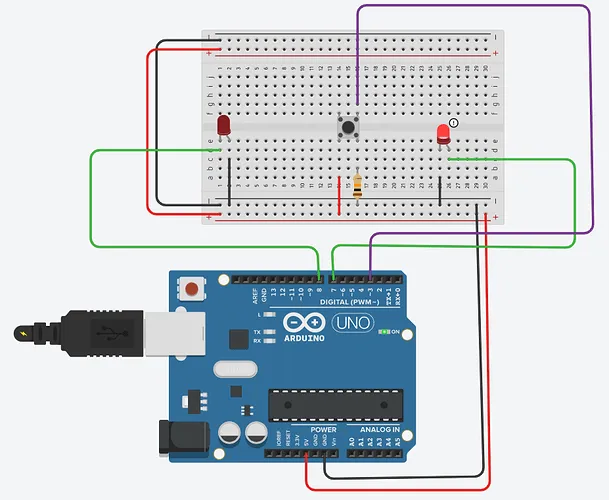
- LED chaser
An LED chaser sequentially lights different LEDs to create a running-light effect. - Digital clock
Use a microcontroller to drive an LED or LCD display to show the current time, with options for countdown and alarm functions. - Electronic scale
Connect a pressure sensor and a microcontroller to measure weight and display the result on LEDs or an LCD. - Thermometer
Use a temperature sensor and a microcontroller to measure ambient temperature in real time and display it on an LCD.
Sensor Applications
- Light sensor
Use a light sensor and a microcontroller to monitor ambient light intensity and display the result on an LED or LCD. - Infrared remote controller
Use an infrared receiver and a microcontroller to implement remote control functions for devices such as televisions or air conditioners. - Sound detection
Use a sound sensor and a microcontroller to monitor ambient sound levels and display the magnitude on an LCD. - Flame sensor
Use a flame sensor and a microcontroller to detect nearby flames and trigger an alarm via a buzzer or LED.
Communication Applications
- Bluetooth communication
Use a Bluetooth module with a microcontroller to enable wireless communication with a smartphone or other devices for data transfer or device control. - Infrared communication
Use an infrared transceiver and a microcontroller to implement infrared-based data transfer and remote-control functions. - WiFi control
Use a WiFi module with a microcontroller to connect to a wireless network and allow remote control from a smartphone or computer. - Wireless sensor networks
Combine multiple microcontroller modules into a sensor network for data collection and transmission, applicable to environmental monitoring, smart home systems, and related fields.
These examples represent common microcontroller applications; actual implementations and combinations can be more diverse. Mastering microcontroller programming enables the development of a wide range of embedded systems and supports work in intelligent control and automation.
Programming microcontrollers requires familiarity with appropriate programming languages and development tools, such as the C language and Keil. It is also important to understand microcontroller hardware architecture and the use of relevant interfaces.