ALLPCB


What is an embedded system?
The IEEE (Institute of Electrical and Electronics Engineers) defines an embedded system as "Devices used to control, monitor or assist the operation of equipment, machinery or plants."
An embedded system is a specialized computer system that functions as part of a device or piece of equipment. Typically, an embedded system is a controller board with an embedded processor whose control program is stored in ROM. In practice, all devices with digital interfaces—such as watches, microwave ovens, video recorders, and automobiles—use embedded systems. Some embedded systems include an operating system, but most implement the entire control logic with a single program.
A commonly accepted definition in China is: an application-centered computer system based on computer technology, with hardware and software that can be tailored to meet the strict requirements of functionality, reliability, cost, size, and power consumption demanded by the application.
Structure and components
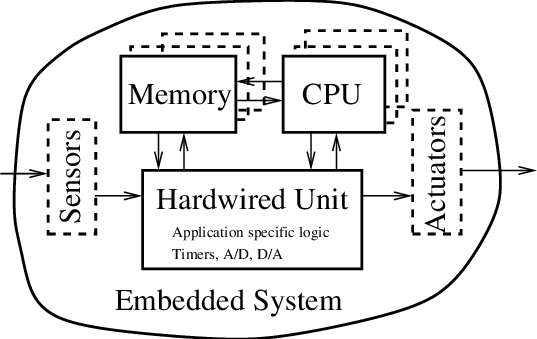
An embedded device generally consists of an embedded computer system and an actuator. The embedded computer system is the core of the device and comprises the hardware layer, middleware, system software layer, and application software layer. The actuator, also called the controlled object, accepts control commands from the embedded computer system and performs the specified operations or tasks.
An actuator can be very simple, such as a small motor in a mobile phone that activates when the phone is in vibration mode, or it can be complex, such as Sony's robotic dog, which integrates multiple small control motors and various sensors to execute complex movements and sense multiple state variables.