ALLPCB


Background: calibration on early mobile phones
Many of the mobile phones from more than a decade ago required screen calibration on first startup or periodically. Without calibration, touch accuracy would degrade over time.
Resistive versus capacitive touchscreens
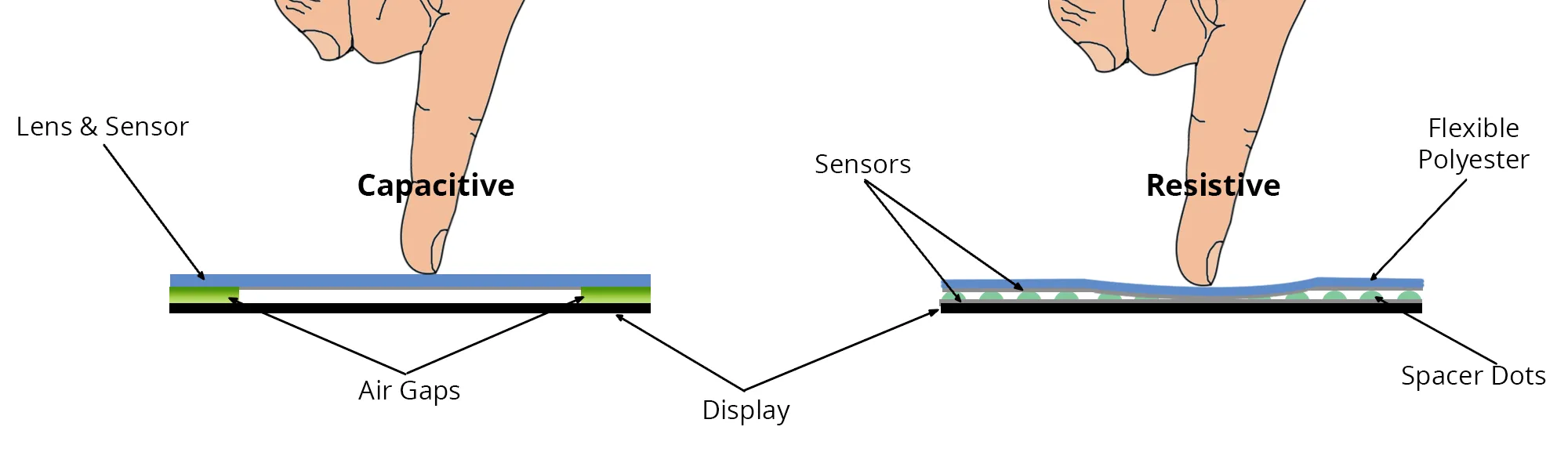
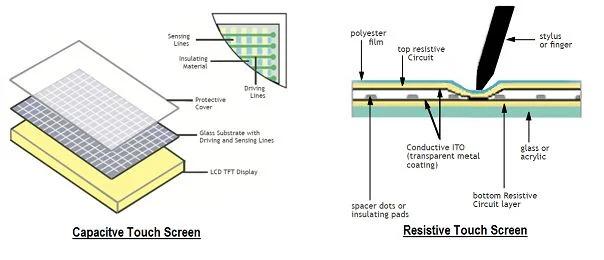
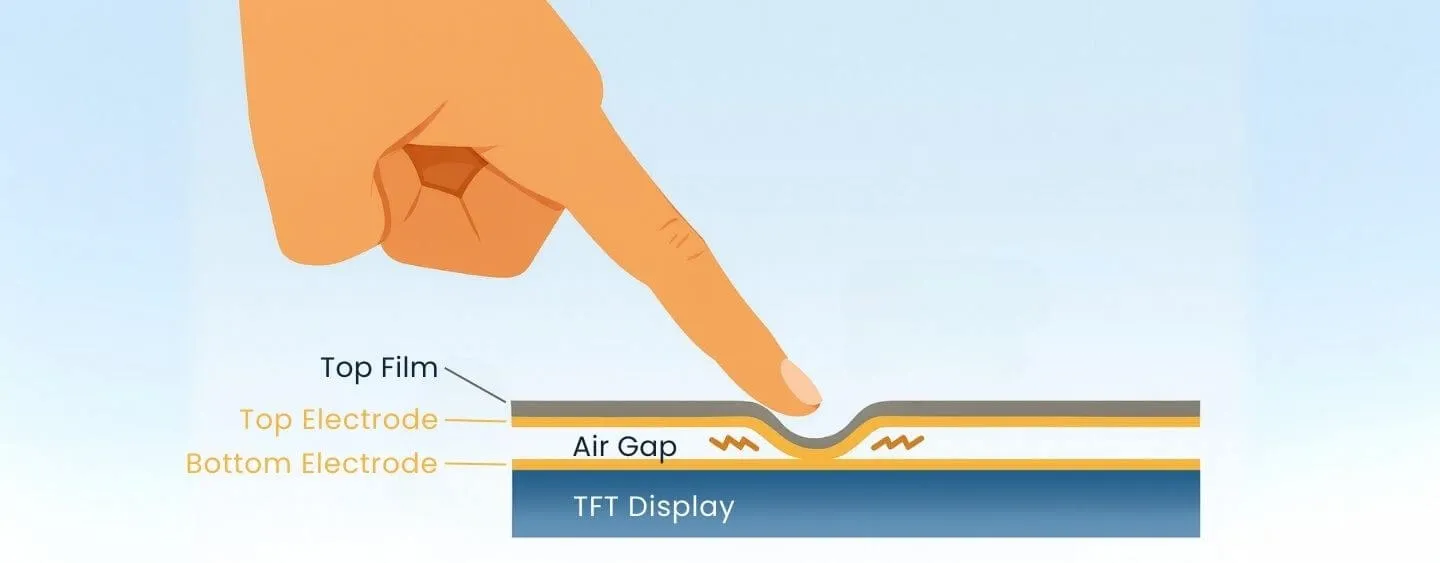
The main difference between older phones and modern phones is the switch from resistive screens to capacitive screens. A resistive touchscreen detects touch by measuring resistance where two conductive layers make contact. Conceptually, the screen establishes a coordinate system with one corner as the origin, and the touch position is computed from resistance values along X and Y axes.
Why resistive screens needed calibration
Individual resistive panels vary slightly due to manufacturing tolerances and aging. Calibration requires the user to touch several reference points so the system can determine the current origin and scaling. Subsequent touches are mapped using those calibration parameters to produce accurate coordinates.
How capacitive screens detect touch
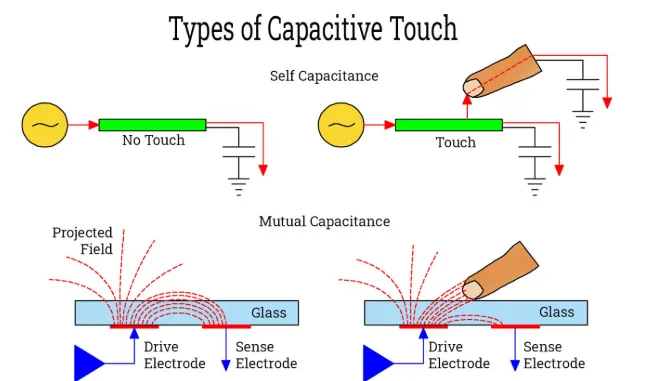
Capacitive touchscreens determine touch position by measuring changes in capacitance at multiple sensors. When a finger approaches the conductive layer, the human body couples with the screen and forms a small coupling capacitance. For the high-frequency sensing signals used, this capacitance behaves like a conductor and a tiny current is drawn at the touch location.
Why capacitive screens generally do not require calibration
The sensing current flows through electrodes at the screen corners, and the magnitudes of current at those electrodes are proportional to the finger's distance from each corner. A controller calculates the touch location precisely from the ratios of these currents. Because the measurement is based on relative capacitance/current ratios rather than absolute resistance values, the systematic error sources that required user calibration on resistive panels are largely avoided.