ALLPCB


Introduction
01
What is link aggregation? Link aggregation refers to bundling multiple physical links that share the same transmission medium type and the same transmission rate into a single logical link. Also called trunking, it allows peer physical links between switches or between a switch and a server to increase bandwidth concurrently. Link aggregation can be configured in static aggregation or dynamic aggregation modes.
Static Aggregation
01
Static aggregation, also called static trunk or On mode, requires manual configuration of the aggregation group ID and member ports. Multiple physical ports are added directly to the aggregation group to form one logical port.
Static aggregation does not run the LACP protocol. Because it cannot detect the state of the remote port, if the remote port is down while the local port remains up, the local port may continue to forward traffic toward the downed remote port, potentially causing partial service disruption.
Dynamic Aggregation
02
Dynamic aggregation runs the LACP protocol based on IEEE 802.3ad. LACP, the Link Aggregation Control Protocol, is the standard described in IEEE 802.3ad.
LACP is a protocol for dynamically aggregating links. In simple terms, it dynamically groups multiple physical ports into a trunk group to increase bandwidth and redundancy.
LACP allows switches to negotiate via control messages which physical links can be bundled together and to set parameters such as priority and activity state. When multiple physical links are bundled into one logical link, they share the same IP and MAC addresses and form a single logical high-speed channel.
How LACP Works
02
01
LACP establishes dynamic aggregation groups by exchanging LACPDU messages (Link Aggregation Control Protocol Data Units). When LACP is enabled on a port, LACPDUs include the device system priority, MAC address, port priority, port number, and the operational Key. Upon receiving these messages, the remote device compares them with information stored for other ports to select which ports can aggregate. Both ends agree on which ports join or leave the dynamic aggregation group and which links will carry traffic.
Both ends send LACPDUs. After creating the aggregation group, configuring LACP mode, and assigning member interfaces, LACP is enabled on those interfaces and LACPDUs are exchanged. The LACPDUs contain system priority, MAC address, port priority, port number, and operational Key.
Member interfaces join the aggregation group. Each device records the received remote information and compares it with the aggregation group member information to decide which links can join the group.
Active interfaces in the aggregation group are determined based on port priority. Traffic is forwarded across those active links using load-sharing methods.
LACP Operation Modes
02
LACP supports active and passive modes.
In active mode, a network device actively sends LACPDUs and waits for a response. If the remote device supports LACP and is in passive mode, it will respond to establish link aggregation.
In passive mode, a device only responds to received LACPDUs and does not initiate them. If both ends are passive, no LACPDUs are sent; if at least one end is active, LACPDUs can be exchanged and aggregation can be formed.
LACP Timeout Modes
03
LACP timeout modes include long timeout and short timeout.
Long timeout sends LACPDUs slowly at a 30-second interval and uses a 90-second timeout.
Short timeout sends LACPDUs quickly at a 1-second interval and uses a 3-second timeout.
The default is long timeout, meaning one LACP frame is sent every 30 seconds and negotiation is considered failed if no LACP frame is received within 90 seconds.
What Benefits Does Link Aggregation Provide?
03
Increase link bandwidth: Link aggregation increases network bandwidth by combining multiple physical ports into a single logical interface. The maximum bandwidth of the aggregated interface can reach the sum of the member ports, allowing peer physical links to increase bandwidth concurrently.
Improve network reliability: Link aggregation provides link redundancy. With aggregation configured, if an active link fails, traffic can switch to other available member links, improving the reliability of the aggregated interface and providing link redundancy. For example, across-slot link aggregation can prevent service interruption from a single-slot failure.
Enable traffic load balancing: Within an aggregation group, traffic can be distributed across all member links based on rules such as the five-tuple (including source IP and destination IP), so inbound and outbound loads are shared among member links, reducing stress on any single link.
Common Use Cases
04
01
Fixed broadband and campus network access
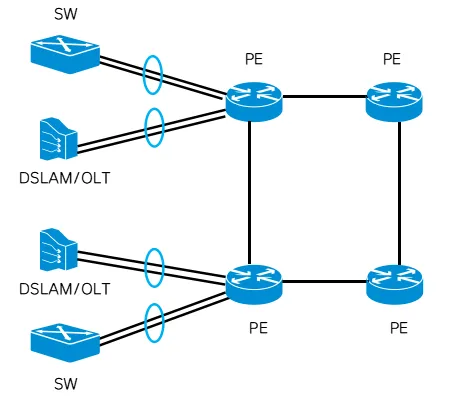
As fixed-line services including residential broadband and IPTV generate more traffic, access bandwidth pressure on OLTs increases. Link aggregation provides a quick and convenient way to multiply available bandwidth. Similarly, campus network access traffic can grow rapidly, and link aggregation is commonly used for campus switch connections.
02
Mobile backhaul access
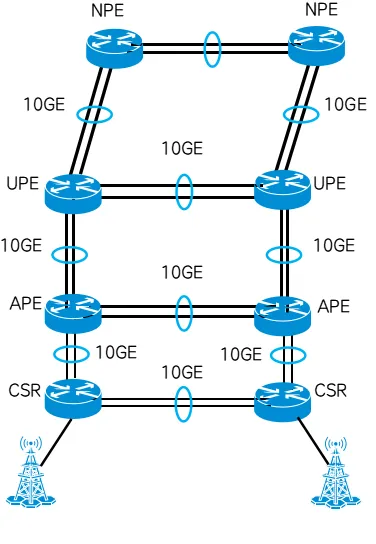
With rapid growth of mobile services such as data and high-definition video, mobile carrier networks require larger bandwidth and higher reliability. Link aggregation is widely deployed in mobile backhaul IP RAN networks to expand 10GE/100GE link capacity while ensuring redundancy and high service reliability.
03
BRAS network
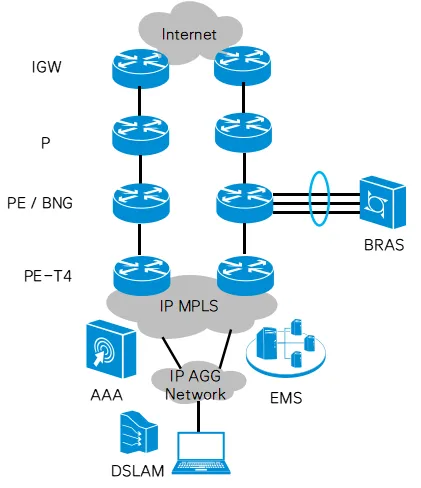
BRAS is a core device for authentication and authorization of fixed-line services. As user traffic and reliability requirements increase, link aggregation provides flexible bandwidth expansion. As access traffic grows, aggregation group members can be added to dynamically adjust bandwidth. Cross-board aggregation can protect tens of thousands of users per line card from single-board failures.
04
Data center scenarios
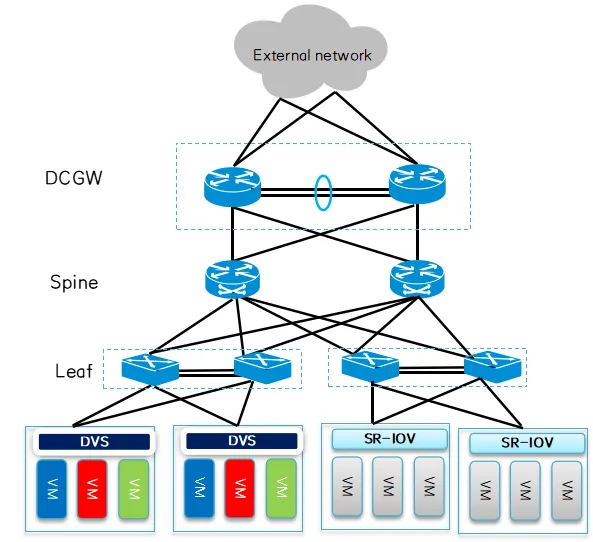
In data centers such as telecom cloud networks, link aggregation is widely used to ensure bandwidth expansion, link reliability, and efficient utilization of member links for mobile services.
Conclusion
This concludes the overview of link aggregation.