ALLPCB


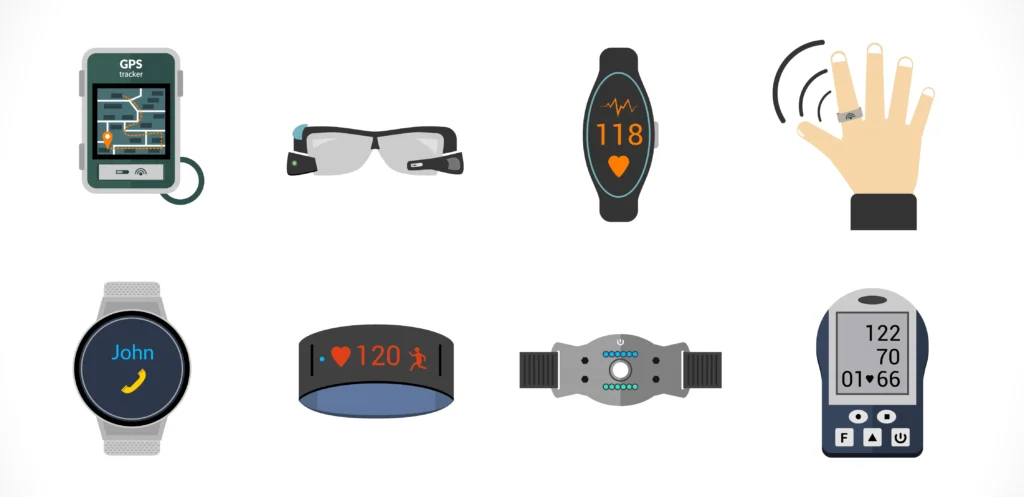
Wireless charging is expected to see a significant increase in adoption; over the four years to 2018 it could grow into an $8.5 billion market. Previously, the wireless charging market struggled with standards competition and low consumer interest, but the arrival and gradual adoption of wearables have given the technology renewed momentum. The combination of wireless charging and wearable technology is compelling on its own, and major companies such as Google, Microsoft and Apple have introduced smartwatches with wireless charging capabilities that have exposed mid-2014 consumers to the concept and value of wireless charging. By 2018, however, wearables account for only a small portion of the wireless charging market. Most of the opportunity still lies with phones, tablets and other applications. This article highlights several devices now on the market that include wireless charging technology across wearable, automotive and intermediate applications.
Wireless charging and wearables
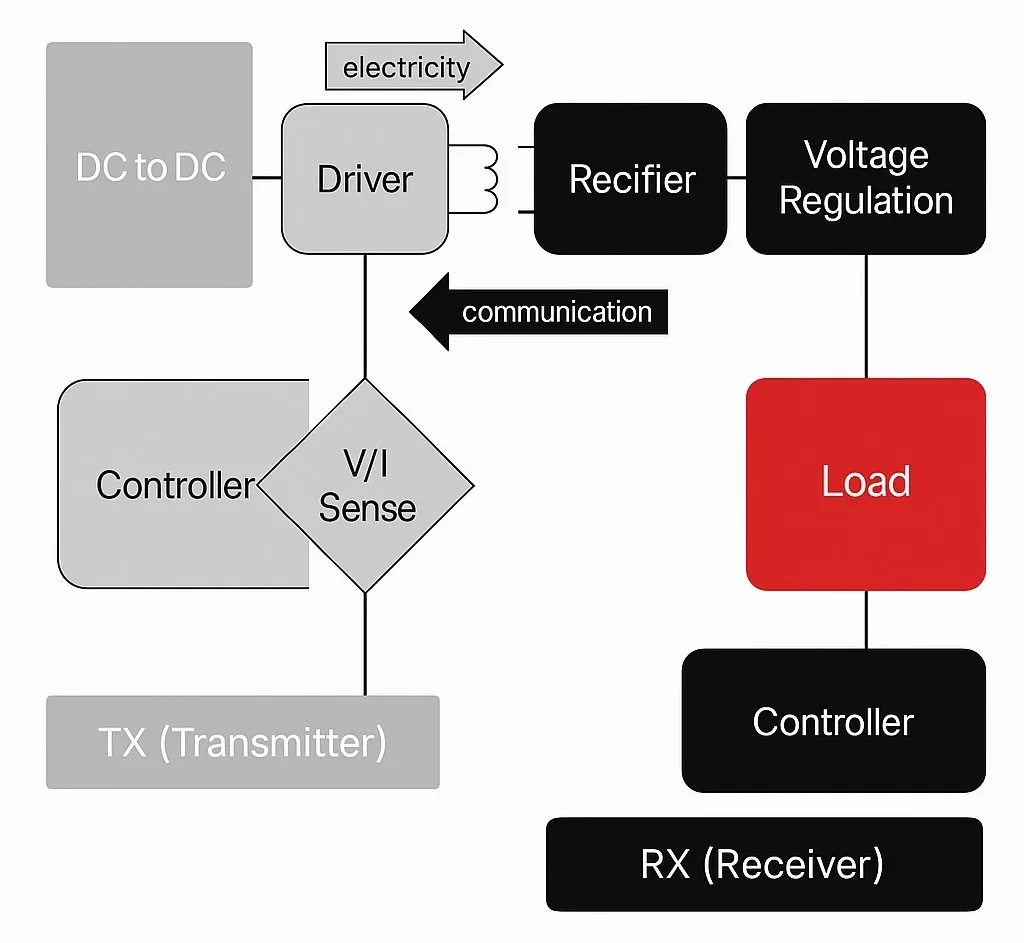
Wireless charging transfers alternating current through a transmitter coil (in a charging base) to create a magnetic field. That magnetic field induces a voltage in a nearby receiver coil (in the mobile device), and those voltages are then used to charge the device battery. Compared with USB charging or plugging into a wall adapter, wireless charging is less efficient because of conversion losses and therefore takes longer, so efficient enclosure and thermal design are important.
Wearable designs that use wireless charging typically have robust enclosures. Because wearables are worn for extended periods, they must be unobtrusive—small, light and thin—so only a very small area can be allocated to the battery and related circuitry. Simple wearables such as fitness trackers can use small batteries that last up to a week between charges, but current trends push wearables toward more powerful features, especially the newer smartwatches on the market.
These smartwatches include several high-power features such as full-color touch displays, phone and messaging interfaces, and more advanced fitness tracking. Even with the most efficient lithium-ion and lithium-polymer battery technologies, smartwatch battery life is generally poor. Most smartwatches require recharging after one to two days, and some need a charge in less than a day, a category that included the Apple Watch when it was scheduled for early 2015. Frequent charging motivates the need for a more convenient method than plugging in.
With wireless charging, a smartwatch battery can be charged by placing the watch on a dock or, as with the Apple Watch, by aligning a small magnetic contact against the back of the watch. Smaller wearable batteries require relatively short wireless charge times—around one hour from empty to full—compared with the larger batteries in phones and other devices. In addition to convenience and reasonable charge times, wireless charging enables wearables to be fully sealed or waterproof, which is an attractive protective feature.
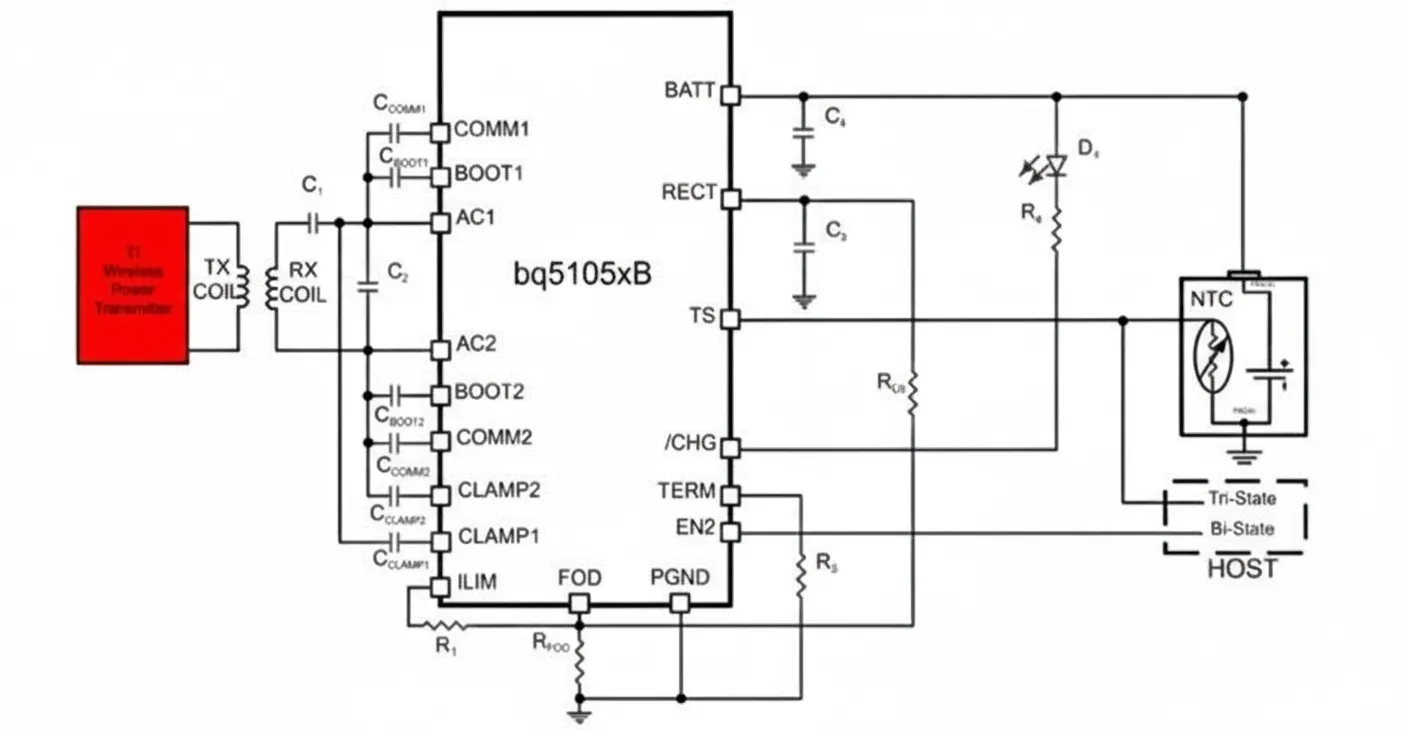
Typical system architectures use a receiver IC such as the bq5105x family for lithium-ion/lithium-polymer battery wireless charging. The complementary bq500210 is the transmitter-side controller. The bq5105x family can provide a complete wireless power transfer system for direct battery charging solutions.
Texas Instruments offers a broad power management portfolio that includes wireless and non-wireless (plug-in) solutions for wearables. The recently introduced Moto 360 smartwatch, one of the first Android Wear devices to offer wireless charging, uses the bq51051B wireless power receiver solution and interoperates with Qi-standard chargers. Although the Moto 360 ships with a dedicated charging dock, it is also compatible with any Qi-compliant charging base. The bq51051B integrates several key receiver-side components, including rectifiers, wireless-power receiver functions and a battery charger in a very compact package. For wearable devices that do not use wireless charging, TI also offers the bq2510x series, a single-cell lithium-ion and lithium-polymer battery charger IC that can charge from a USB input or a low-cost regulated wall adapter.
Wurth Electronics offers a full range of wireless power charging coils and is one of the market suppliers that produces both transmit and receive coils. New products 760308100110 and 760308100111 are circular pad transmit coils compatible with the Qi standard, suitable for circular wristband-style charging bases used with smartwatches. The 760308100110 and 760308100111 are designed for A10 and A11 Qi transmitters, respectively.
Automotive applications
Wireless charging for electric vehicles remains in its early stages; many solutions will be in pilot phases for the next two to three years. However, wireless charging solutions for vehicle consoles are already emerging. One example is Freescale’s WCT-5WTXAUTO wireless charging reference design for automotive applications. It is based on Freescale’s highly integrated, Qi-compatible WCT100xA wireless power transfer controller and targets a 5 W coil topology. The multi-coil reference design is fully Qi-compatible, achieves transmission efficiency greater than 65%, and addresses automotive-environment challenges such as handling large variations in input voltage from nominal 12 V DC vehicle batteries (6–14 V) depending on operating conditions.
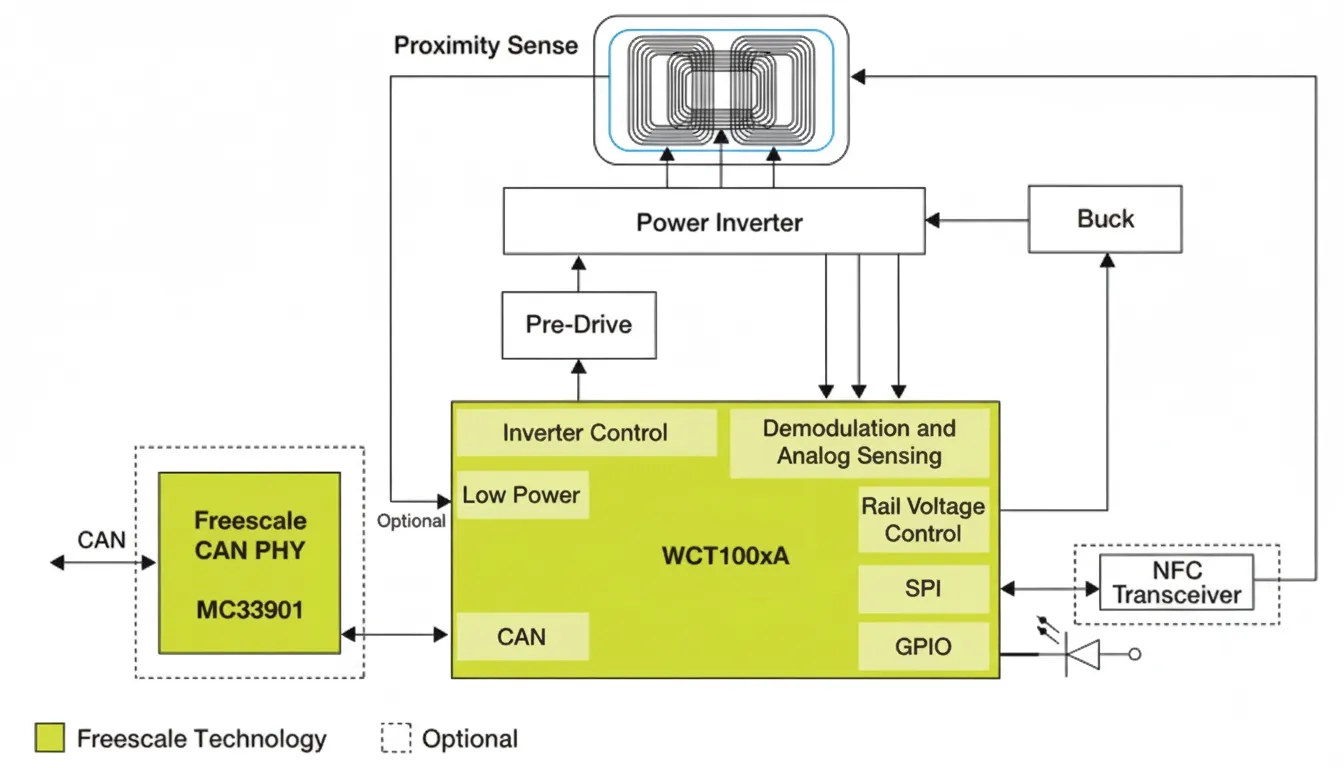
The design also reduces harmonic emissions to minimize interference with vehicle systems while meeting automotive EMC standards, supports foreign-object detection to warn when objects obstruct the coil, and allows charging devices to be placed freely on the console.
Smartphones, tablets and other applications
A broad set of more common wireless charging products for phones, tablets and similar devices is already available.
Recent wireless power receiver ICs include Panasonic’s AN32258A-PR and IDT’s IDTP9025A. Both are Qi-compatible and provide ultra-compact solutions for mobile applications. The IDTP9025A integrates a high-efficiency synchronous full-bridge rectifier, while the AN32258A-PR provides control for an external synchronous full-bridge rectifier. Both devices include foreign-object detection and a regulated 5 V output used by the power circuitry that charges the battery.
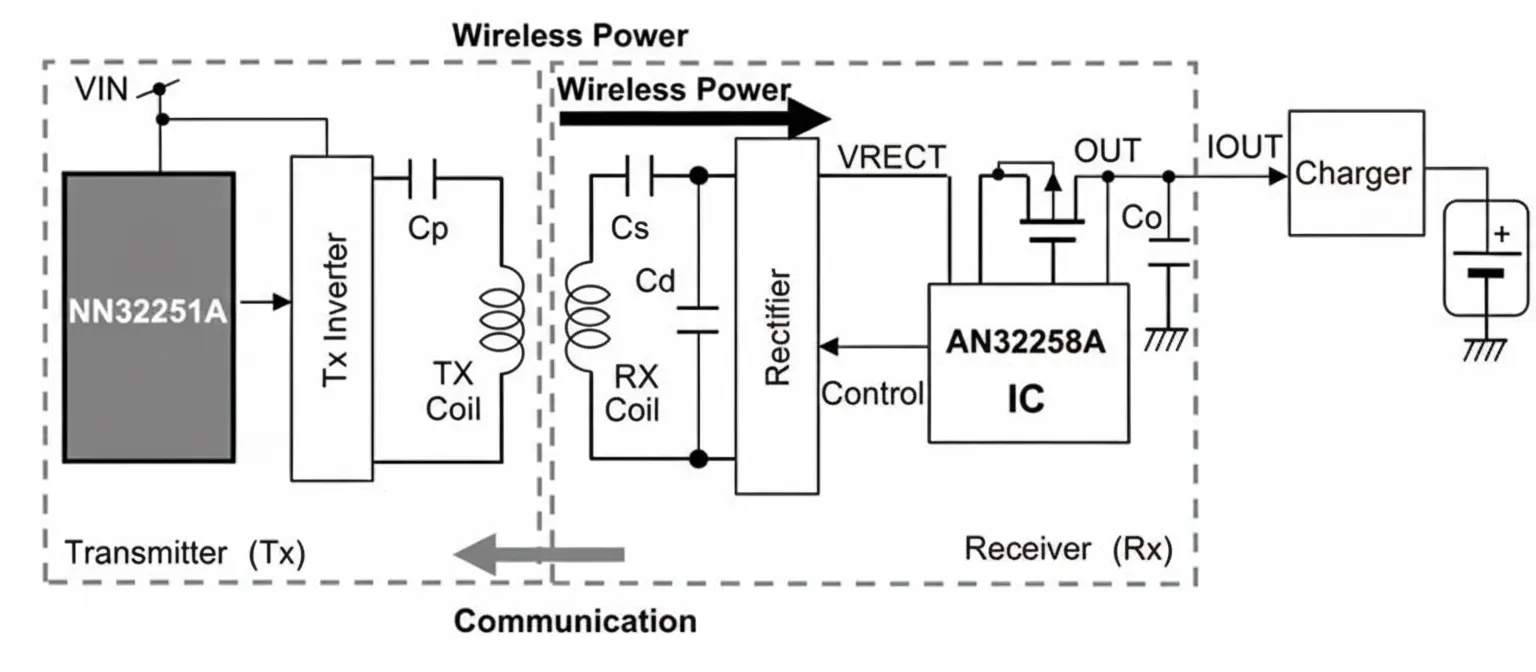
For public wireless charging stations, Freescale’s WCT100xA Qi-compatible wireless power transfer controller is a viable option. A common 5 W single-coil Qi transmitter reference design, WCT-5W1COILTX, uses the WCT100xA to manage all transmitter control functions and achieves transmission efficiency above 75%.
If a WPC-standard transmitter coil is required, consider Vishay Dale’s IWTX-4646BE-50. The 24 μH, 6 A coil features a high-permeability shield to guide the magnetic field toward the coupling area, maximizing efficiency and minimizing interference. The composite uses high-saturation iron powder to make the coil insensitive to positioning by any permanent magnets that might be used for device alignment.